first services

On Monday I led my first service all by myself, an hour-long morning service for Rosh HaShanah. (In June, at my bat mitzvah, I just led two parts of the service: the Amidah and the second part of the Torah service.)
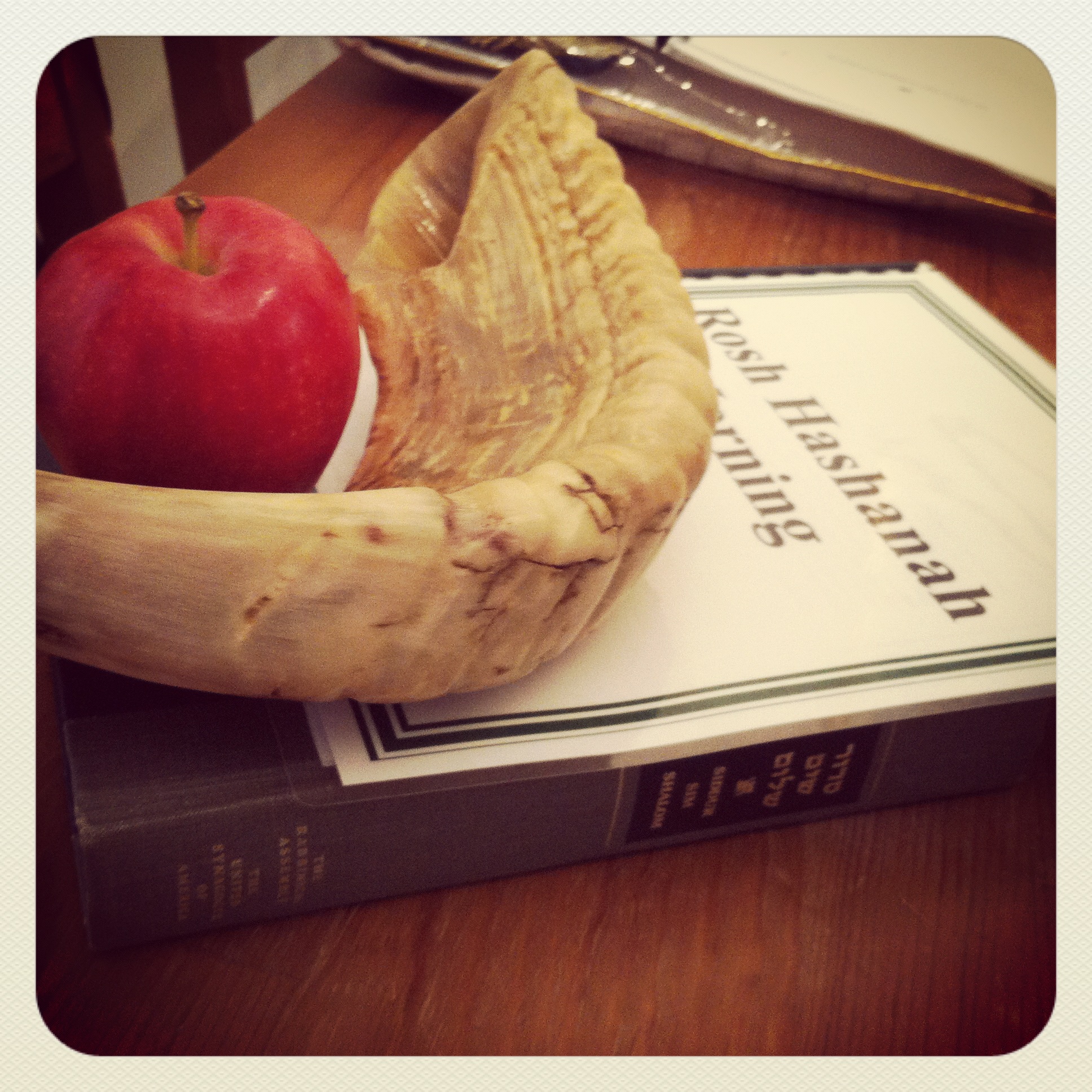
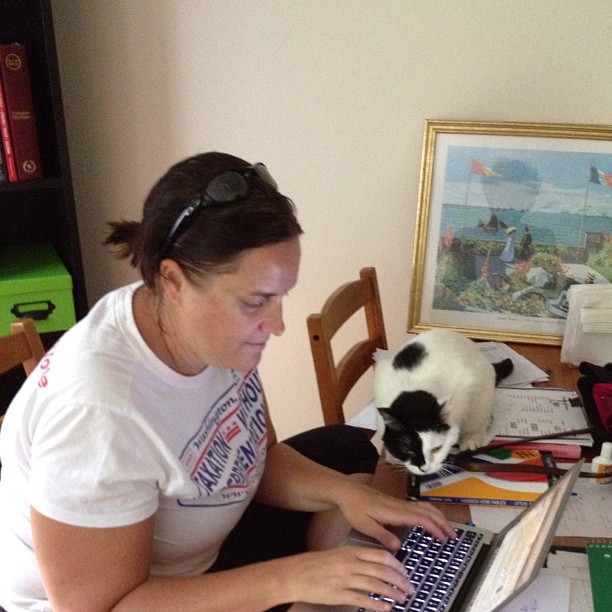
rosh hashanah prep; photo by salem pearce (via instagram)

A little over a week ago, the community relations coordinator at an assisted living facility about 10 miles north of Boston emailed the school to ask if there was a rabbinical student available for three one-hour services (on both days of Rosh HaShanah and on Yom Kippur). The director of job placement at the school then emailed the student body with the plea — and noted that it would be a great opportunity for someone with little experience, that it would be a real mitzvah for the center, and that the center would pay for the services. The first certainly described me; the second pulled at my heartstrings; and the third sealed the deal. I volunteered.

Helpfully, the center had a shortened service booklet (above) that had been put together specifically for its services, so I was able to work from that. I added a few parts and wrote a d’var torah; found tunes for parts of the liturgy that I’m not that familiar with (because they’re specific to the High Holidays, which are only once a year); got a crash course in shofar from a fifth year student (who was an awesome teacher!); and outlined and timed the serviced. And I practiced. And practiced. And practiced. At least as much as I could in a few days, during the first week of classes.

After the first day, I was just glad it was over. About two dozen people came, as predicted by the community relations coordinator. A few were the children of the residents, and I think they were my toughest audience. The residents were of varying cognitive and physical ability: about half were from the assisted living side of the center, and the other half, from the skilled nursing side.

I didn’t feel particularly nervous, but I performed with only mixed success. I did the parts I knew well (except when I started the Amidah in the wrong tune, which happened both days for some reason). And I was pleased with what I had written to say: an introduction, a kavanah (intention, or meditation, for the service); a preface to the shofar service; and my d’var. And, per the advice of the rabbi in charge of job placement — who sat down with me last week to offer advice — I greeted, and introduced myself to, and chatted with everyone before the service started. I think this went a long way in earning me some goodwill in spite of my mistakes.

Ah, yes: The mistakes. I just forgot most of the tunes for the High Holiday-specific parts of the liturgy. I do not have much singing ability, despite my performance at my bat mitzvah — which came after months and months of practice. And when I did remember how a part started, I usually got off track in the middle. These missteps were made worse by the fact that the tunes didn’t seem to be known very well — at all? — by the service participants. So it was just my poor singing that filled the room. I had wanted to learn them, though, to break up blocks of just plain reading in Hebrew; I think if I were a more skilled song leader, I could have repeated the refrains and gotten more participation.

I’m pretty sure that after I finished one “song” I heard a woman say, “This is terrible!” My husband maintains that the speaker was probably talking about something else, but I’m not sure she was wrong. I felt terrible at not doing well by the residents in their celebration of the holiday, and I felt even more terribly about representing Hebrew College poorly. I had, after all, told everyone where I studied when I introduced myself.

downtown boston from tobin bridge; photo by lehcar1477

When I left, I felt sick at the idea of going back the next day. I started to calm down as I drove away — and I began to feel better when I started to pay attention to the program that happened to be airing on Boston’s NPR affiliate: author Brené Brown spoke about her new book, Daring Greatly: How the Courage to be Vulnerable Transforms the Way We Live, Love, Parent, and Lead. I almost laughed aloud as I listened to Brown explain that “Overcoming shame, and allowing ourselves to take risks and ask for help is important not only for our personal and professional success, but also for our success as a culture.” Then I began to marvel at the view of downtown Boston from the Tobin Bridge (left), feeling grateful to be living in such a beautiful city and to have such unique opportunities.

By the next morning, I felt much less embarrassed and much more determined to do (and capable of doing) a better job on the second day. And so it went.

I slowed down and made sure to get the transitions from piece to piece right (calling out page numbers, opening or closing the ark, explaining the prayer that followed, etc.). I also decided to take one of the sefer Torahs from the ark. I wasn’t able to read the portion for that day (the akedah), but I knew the songs for the Torah service well, and people generally love to touch the scroll. I didn’t flub the Hebrew, and I remembered the tunes. After the service, I stood at the door and shook everyone’s hands, wished them a happy new year, and chatted briefly. It was a nice way to end the service; I wish I’d done it on the first day. Plus, it gave all of the participants a chance to tell me what a lovely service it was, which many of them did. Many also asked whether I’d be back for Yom Kippur.

Side note: As a rabbinical student (and as a rabbi, too, I imagine), the “holidays” are overwhelming. I spent all my free time before and during the holidays in preparation (for the services or the meals), and then three to seven hours a day at holiday meals. Several families associated with Hebrew College generously hosted me, but the majority of the people at these meals were unknown to me, and meeting new people as a rabbinical student can be exhausting. Rosh HaShanah is now over, and in a way I feel as though it didn’t really happen. Davenning as a service leader bears little resemblance to doing so as a service participant, and I didn’t have any time to do the reflection on the new year that I spent much of the last month preparing to do. Welcome to the rabbinate, I suppose. I need a chag from my chag.

Back at the assisted living facility, I was especially proud of the fact that I seemed to have won over a woman who was very cranky when she arrived. She sat down and basically began heckling me. At 10 minutes before the hour, she called out, “Let’s get this service started already!” Then she offered, “I suggest you introduce yourself to everyone before you begin!” When I told her where I went to school, she shook her head. “I’m very familiar with all of the rabbinical schools, and that’s not a rabbinical school.” Later she asked, “What will you call yourself? A rebbetzin?” She wrinkled her nose and gave me a doubtful look when I said that the term would be “rabbi.”

What took the cake, though, was her remark after the service. She came up to me and beamed, telling me what a great job I had done. She put her hands on my shoulders and looked straight at me.

“You’re going to make just a wonderful rabbi’s wife!”

UPDATE: The community relations coordinator called me on Thursday, two days after the second service to tell me how much the residents loved my services! She said they especially appreciated how I greeted each of them, asked their names, and then took the time to talk with them.


so it begins

I just completed my first week of school (well, sort of). Sunday and Monday were orientation, and Tuesday through Friday were the first four days of a pre-semester seminar. My classes will start in earnest next week.

It’s hard to relate all of the feelings I’ve had in the past week. Frankly, it’s been overwhelming, but in the best way possible. I’ve loved meeting my new classmates, the returning students, and the faculty, as well as beginning to learn as a class and to pray as a community.

I’ve also spent a fair amount of the week in a kind of emotional suspended animation: I’m waiting for the other shoe to drop. “It can’t really be that for once in my life I am in the right place.” “I can’t actually be doing what I supposed to be doing.” I know that not everything about this school and my experience as a student is or will be perfect. But I have never known peace like this.

First things first! The best thing about rabbinical school so far: I get to sing every day, and no one cares if (that?) I sing out of tune. I get to sing during morning prayers, and most communal time starts with a niggun (wordless melody). Even my class does! (Indeed, the fact that my admissions interview ended with a niggun solidified for me that Hebrew College was the right place for me.)

hebrew college’s selichot leader; photo by dena trugman (via instagram)

One of my favorite parts of the last week has been selichot, which unfortunately won’t be a regular occurrence throughout the year. Selichot are poems and prayers said during the Jewish month of Elul, which precedes the High Holidays. They explore themes of penitence and G-d’s mercy — not, perhaps, the most cheerful of topics — and at Hebrew College start at 7:00 a.m., before the morning service — giving an idea of how moving they must be to draw a crowd. (I have a limited music vocabulary, so I can only try to explain why.) In fact, more than one returning student told me that, despite the early hour, they were not to missed. Many of the tunes have strong beats and feature repeating lines, facilitating participation. And the Hebrew College tradition in many of the songs is that anyone can take a verse, while we all take the chorus together; I’ve loved hearing the variety of experience, accuracy, and ability that results. In this setting, not everyone sings well, but anyone can sing. I’ve never had an experience like selichot before, and I find that the songs stay with me all day.

Orientation was great mix of practical and spiritual. We met administrators, did icebreakers, told and heard personal journey stories, and started learning about core elements of the Hebrew College curriculum: personal and spiritual growth, tefila (prayer), beit midrash (literally, “house of interpretation”) and hevruta (study partners), and (good, old-fashioned) learning. I was particularly struck by something the director of admissions said as he welcomed us to orientation. He noted that school begins at an odd moment in the Jewish calendar, during the month Elul, a time of preparation for the High Holidays in which we reflect on teshuvah (literally, “return”). We atone for our sins by trying to make right our relationships with our fellow human beings and with G-d. Taking the first step in a new journey may feel out of sync with the prevalent theme of repentance, but, he said, “I know that for many us this beginning may represent a return in a very real way.”

This combination (which doesn’t even include the practical side of rabbinic education, which is to come in the curriculum), exemplified in the orientation schedule and in the introduction to the core elements of the school’s curriculum, is the essence of what I was looking for in a graduate program. I know I would not have been happy in a purely academic setting (as for example a Ph.D. program). I ultimately want to use my knowledge of Judaism in the service of others, and I am so excited to be an institution that recognizes the importance of spiritual and personal growth.

hannah, whose story is read on the first day of Rosh Hashanah

The seminar for first-year students is about the passages from the Tanakh that we read in synagogue on Rosh Hashanah and Yom Kippur. We’re looking at the primary texts in the Hebrew Bible as well as a variety of commentary on them: sections of Talmud and other rabbinic sources, modern and contemporary perspectives, and Israeli poetry. The rabbi who teaches the course is our class advisor (and will be teaching one of our fall semester courses); he assigned a text, Beginning Anew: A Woman’s Companion to the High Holy Days, as part of his commitment to looking at the primary texts through a feminist lens. I am thrilled that this perspective is given such importance, especially since so many of the High Holidays’ stories feature women.

This week marked for me the beginning of the hevruta study experience, as mentioned, a hallmark of the Hebrew College curriculum. Every morning after selichot, shacharit (morning prayer), and our facilitated Elul reflection, the first-year students split up into pairs to work, in the beit midrash, on the assignments for class that day. We switch partners every day (although we will eventually choose permanent study partners for the year). I was nervous about this part of the learning process. I’ve had a few experiences with hevruta learning, but nothing this consistent or systematic, and I have always thrived well in a very traditional, individual learning setting (lecture by professor and supplementary reading). I wasn’t sure I was going to like working in hevruta. To be sure, I chose Hebrew College in part because of its emphasis on hevruta learning, but I did so with trepidation, anticipating that it would be a challenge, pushing me out of my safety zone.

On Tuesday my first partner, who spent last year in Israel studying in hevruta, told me that it would ruin me for me classroom learning. I’m not sure I’m ready to go quite that far, but I have absolutely loved this week, completely confounding my expectations. It helps that I’ve jibed well with the four classmates that I’ve worked with so far: I’ve really appreciated their different strengths, and partnered learning has helped me to realize my own strengths (to wit, and unsurprisingly, grammar and translation of the Hebrew texts).

My final thought from this first week takes me back to the first day of orientation, Sunday — and my birthday. When I first found out the week’s schedule, I had the fleeting thought that it would be an odd way to spend my birthday (not least because I’d be among a fair number of strangers), but the more I considered, the more I thought that it might actually be perfect. The director of admissions in particular made a big deal of it, leading the group in “Happy Birthday” singing not once but twice, and when I thanked everyone after blowing out my candles, I said, “There is no place or group of people I would rather be on my birthday.”

And it really was true: I am incredibly privileged to be able to pursue this dream. What better gift could I ask for on my birthday than to be taking the first step on that journey?

the unlikely disciple

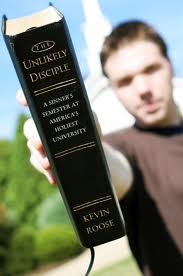
In mid-May I tore through Kevin Roose’s The Unlikely Disciple: A Sinner’s Semester at America’s Holiest University. It was recommended to me by my friend Michelle, who knows from good memoirs, her (and my) favorite genre: She reads two or three books a week! (When I ask how she has the time to do so, she says, “I don’t watch any television.”)

Roose was a student at Brown University and a writer’s assistant to A.J. Jacobs, he of the extreme lifestyle challenges, when work on Jacobs’ The Year of Living Biblically took him to the mega-church of Dr. Jerry Fallwell in Lynchburg, Va. There he met students from Falwell’s Liberty University, became intrigued by his brief interaction with them, and the rest is this book. Roose takes a leave of absence and enrolls at Liberty during the spring semester of 2007.

I spent most of the book alternately laughing and shuddering at his description of the self-described “evangelical liberal arts college” and its students (both of which hit pretty close to home for me) and marveling at Roose himself.

I kept having to remind myself that Roose was only 19 when he attended Liberty. He approached the experience with incredible self-assurance and a true desire to understand what for him was pretty much “the other side” in our nation’s ever more vicious culture wars. He did everything that his classmates did — and almost always enthusiastically. He takes the requisite creationism course (though it completely baffles him); he finds a “devotional” buddy (someone with whom he studies the Bible outside of class); he sings in the choir at Falwell’s church; he prays every day; and, in one of the book’s most hilariously uncomfortable parts, he even goes to a self-help group for men who are struggling with masturbation (forbidden according to the school’s sect of Christianity).

I generally found Roose extremely thoughtful and open-minded about these experiences (sometimes to the horror of his liberal family, especially his aunt and her female partner). By far my favorite part was his reflection on his experience of daily prayer. He struggles at first to do this authentically, because he’s not sure that he believes in G-d. So he begins by articulating his hopes for his family and friends, and he comes to find that — non-belief in G-d notwithstanding — he actually enjoys the opportunity for reflection. One day his prayers for a friend motivate him to write a letter of encouragement to that friend, which was received with gratitude at a difficult time in that friend’s life. This book was an unlikely impetus for my own reflection on prayer — but I certainly felt motivated by Roose’s thoughts.

As Roose himself acknowledges, one of the reasons his experiment has success is because he is a straight, white, (at least nominally) Christian man. He thoughtfully reflects on this privilege on more than one occasion: in his interaction with one of the few black guys in his dorm, harassed for dating a white girl, then as one of his roommates because more outspokenly and virulently homophobic as the semester progresses, and then when he hosts a Jewish friend from Brown for a weekend. Unfortunately, Roose falls short in considering the experience of women on campus, except insofar as he and his friends date them. I would have appreciated his delving into a little deeper into the attitudes towards and expectations of women as evangelical Christians (besides how to date Christian men). By giving ink to only that aspect of the female experience at Liberty, Roose is as reductive of women’s roles as Liberty (presumably) is.

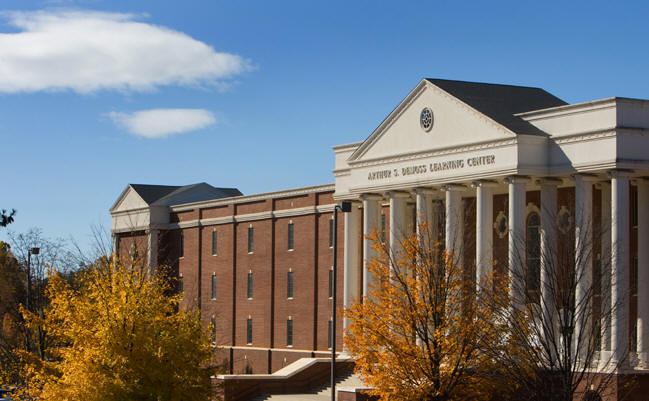
liberty university, lynchburg, va.

There is also the issue of the book’s subtitle: Liberty as presented is hardly a “holy” institution; no place as obsessed with demonizing gay folks, or home to such casual racism, could be described as such. In fact, one of Roose’s takeaways is that the students at Liberty are in the main similar to their counterparts on the other side of the culture war: Good-hearted people struggling to find a way to live out their values in the world — and just as flawed as anyone else. (Yes, many students at Liberty engage in the taboos of drinking, drugs, swearing, and premarital sex.) And a “sinner”? While that’s likely how the adherents to Fallwell’s brand of Christianity might characterize Roose, I was consistently struck by his earnestness and sincerity.

Coincidentally, Roose is at Liberty during two historical events: the massacre at Virginia Tech in nearby Blacksburg, and the death of Dr. Falwell. Both provided interesting windows into the university’s culture. The reaction to the Tech shooting is hardest for Roose to comprehend, as the campus ultimately settled on a this-is-part-of-G-d’s-plan-and-therefore-must-have-happened-for-a-reason interpretation of events, which attitude enfuriates Roose.

And in a turn of events that Roose couldn’t have scripted better, he ended up conducting the final print interview of Falwell’s life. Unsurprisingly, he finds Falwell to be neither the monster nor the saint that he is usually considered — but just an ordinary guy, even a decent human being. There was a time when I might have found this hard to understand, but after living in North Carolina for three years and witnessing the love locals have for Jesse Helms, a similarly polarizing national figure, I get it.

As Dostoevsky writes, “In most cases, people, even wicked people, are far more naive and simple-hearted than one generally assumes. And so are we.”

and hell followed with him

It’s time to play catch-up with my book reviews, even though I haven’t read as much as usual and these are not the most popular posts. But I like reflecting on and writing about what I’ve read. This summer I finished three books dealing with death and its pursuant hell: of war, of the criminal justice system, and of the otherworldly variety. It was not as gloomy a turn as it sounds. Plus, all three were fiction, which is unusual for me.

It started at the beginning of the summer with The Shining, my first Stephen King novel. A few days after moving to Boston, I joined the Brookline Public Library, a branch of which is just up the street from our apartment, and on a whim decided to pay homage to New England’s adopted son. I did this with not a little trepidation, since I generally can’t stomach anything in the horror genre. And it probably didn’t help that I read most of the book while at a remote Mexican resort during Tropical Storm Debbie, making leaving even the room, let alone the grounds, almost impossible. And, yes, the image to the left is indeed the cover art of the book I checked out: It probably should have been harder to scare me with visuals like those, but King is a master. The story has become such a part of popular culture — particularly because of Stanley Kubrick’s film adaptation, starring Jack Nicholson — that even I was familiar with the plot, though I was surprised that some of the most iconic features of the story are from the film rather than the book. I won’t call it great literature, but King certainly knows how to write a page turner and a scary, suspenseful story: I couldn’t put it down, even would it would have been advisable to do so as I grew stir-crazy, trapped in a hotel of my own. Tortured writer Jack Torrance, his conflicted wife Wendy, and their clairvoyant son Danny all provide their perspectives on the events that occur when Jack accepts the winter caretaker position at the haunted Overlook Hotel in Colorado, leading to their months’ long isolation with only the company of the ghosts of residents past. It’s hard not to want them all to make it out alive, which the survivors do only with the help of cook Dick Hallorann, an early occurrence of the unfortunate “Magical Negro” stock character. Overall I am glad I read it, if for nothing else than the fact that I now get the references to it (even if most of them are from the movie). I am somewhat embarrassed to admit that my previous knowledge of the book had come from a Friends episode in which Joey and Rachel trade favorite books. “‘What’s so great about The Shining?'” Joey asks incredulously. “The question should be, ‘What is not great about The Shining?’ — and the answer is, ‘Nothing!'”

I next tackled Téa Obreht’s highly acclaimed The Tiger’s Wife, which was the only decent choice in the Cancún airport after I had disposed of The Shining. It was another page turner: I finished it on the return journey to Boston (which admittedly was made longer than it should have been by delayed flights). Despite its glowing reviews, I didn’t love it. And I should have! Obrecht has been compared to some of my favorite authors, including García Márquez, Hemingway, Bulgakov, and Dinesen. And the novel was quite a good story: A young doctor in a war-torn Balkan country, searching for answers in the mysterious death of her beloved grandfather, turns to the magical stories he told in her childhood. His fanciful folklore is told against the backdrop of a country, based on Obrecht’s homeland of the former Yugoslavia, enveloped by a heartbreaking succession of wars. Maybe it was the crankiness of travel that intruded on my reading experience. Conceivably the narrator’s attempts to justify a character’s beating of his wife — she actually says, “Luka was a batterer, and here’s why.” — lost me. Or perhaps I found distracting the photo of the author, who looks all of 12. I realize these are not all good reasons; then again, I’ve disagreed with award bestowers before (see The Inheritance of Loss).

Finally, I just finished Margaret Atwood’s Alias Grace, recommended as a summer beach read by one of my favorite blogs, CrimeDime. I’ve loved Atwood’s fiction in the past, and this one did not disappoint. Like the two above, it was also a quick read. Based on the true story of a 16-year-old Irish servant convicted of murdering her employer and his housekeeper and lover in antebellum Canada, the book jumps between the young woman’s story and that of the physician she tells it to during her incarceration. Atwood also makes use of contemporary historical accounts as interstitials. The real Grace Marks was one of the world’s most notorious criminals at her trial in 1843. She and a fellow servant were convicted of murdering their employer; after receiving death sentences, the trial for the murder of the housekeeper was deemed unnecessary. Her accomplice was hanged while her sentence was commuted, mostly due to her age, and public opinion — as well as that of those closest to her — remained divided about whether she was femme fatale or naif. Readers will likely remain as confounded, as Marks claimed not to remember the murders and later gave at least three different versions of what happened at the time of the deaths. Atwood writes to give Marks the chance that she wouldn’t have gotten in her time to tell her story — but draws no conclusion. Trigger warning: Atwood brings to light the issues of gender and class (but only race incidentally) that permeate the 19th century, most of which seem to be sexual advances of powerful men towards vulnerable women. In Atwood’s imagining, Marks holds herself a victim, and thus, she relates, her stints in an asylum and a penitentiary constitute a special hell for her.

What were your enjoyable, light summer reads?

open thank-you letter

Dear –,

I am writing this here because I don’t know how to write you directly — and because what I have to say deals directly with my journey to the rabbinate, which this site chronicles. I am writing on the off-chance that you have found or will find my blog. I know it is at least a possibility. And if you don’t make your way here, I’ll feel better at least putting this out there in the universe.

I’ve thought about you often in the past year as I applied to rabbinical schools and reflected on my reasons for doing so. Almost every time I answered the question, “Why do you want to be a rabbi?” (and it’s been asked quite frequently, in various contexts), I alluded to you.

Things did not end well between us, and that still does not sit well with me. But I want to tell you how much I valued your support at the beginning of my Jewish journey. I’ve had the opportunity to tell everyone else who helped me along the way.

You were the first Jewish guy that I dated, and maybe the first Jew with whom I was close. You made the fairly obvious to most — but stunningly  liberating to me — observation that I did not have to remain in the religion of my family of origin. It was a revelation. And you knew of what you spoke, because your mother is a convert.

I went to shul with you for the first time, I opened a siddur with you for the first time, I stood on the bimah with you for the first time. You encouraged me to learn about Judaism, and you helped me to realize that I have a Jewish soul. You’re who I think of when reading Anita Diamant‘s words:

[T]he fact is , many people find a home in Judaism as a result of falling in love with a Jew. As one Jew-by-choice wrote, “What better way to discover Judaism than through love? People sometimes say deprecatingly, ‘Oh, she converted for marriage.’ Or, ‘Oh, he converted for her.’  . . . The point is: in these instances, the non-Jewish lover sees the beautiful in his beloved and identifies with it. What is it but the Jewishness of the Jew that he wants? And so he chooses to become a Jew himself. This is not something to scoff at.

It’s hard for me to see how I would have gotten here, on the cusp of the beginning of rabbinical school, without you. We did not last, but what I gained from you lasts yet.

Thank you.

through the looking-glass

I made it.

!ברך אתה יי אלחינו מלך העולם שהחינו וקימנו והגיענו לזמן הזה

Summer classes ended yesterday, and I passed Hebrew 4, as my teacher told me this morning. She asked me to meet with her the day after the final because I panicked during it and couldn’t quite finish. We talked through the text together, and then she gave me opportunity to answer the questions I hadn’t gotten to. This is just one of the ways in which she is a great teacher.

It was disappointing to leave the last class feeling completely frustrated by my performance (although there was also an odd symmetry to having the last class end in the same way the first class did). But yesterday was not at all indicative of my experience in the second four-week class. I got an A- on my midterm, and almost everyday the teacher told me that my homework was “superb.” I felt relaxed in class, and I even made Hebrew jokes (dorkiness acknowledged). Perhaps most importantly, I feel prepared for Hebrew 5, which begins in just a few short weeks, since I will continue with the same teacher. In fact, I pity my future classmates, the ones who did not share with me in the experience of this summer, because they have no idea what they’re in for. She is fair but tough, and I am so glad that I now know what to expect from her class.

Recalling the anxiety, fear, and complete incompetence that I felt during the first course (Hebrew 3), I can still feel the knot in the pit of my stomach that I had almost every day. In this case, ignorance served me well, as I don’t know that I could have knowingly put myself in this situation. (Well, one type of ignorance served me well: I certainly wouldn’t have minded actually knowing more Hebrew before the start of the class.) But as the cliché goes, I am stronger for this experience.

One of the highlights of the summer was the minyan on Wednesday mornings. Two upperclassmen started it, and we had a consistent if small showing each week, a mix of faculty and students who were still in Boston this summer. I loved starting those days with prayer, quiet, reflection, and meditation. It’s not a surprise that I enjoy davening, but it has been a bit of surprise to me how much I’ve loved it. While I enjoy praying on Shabbat, I haven’t had a more regular prayer practice until now. Even when I was facing the possibility of more sleep, I went to minyan anyway, and I was always glad that I did. I felt calmer and more centered — and so ultimately more ready for class on Wednesdays. Various people led the morning service, and the different selections, melodies, and readings made what can become rote into a new experience each time. This is an intentional prayer community, and I am excited to do this regularly in the school year.

Peeps supervises midterm studying; photo by joe grossberg

I have learned more Hebrew in the past two months than I have in the previous two years, when I started studying seriously to be able to enter the rabbinate. I unearthed all of the skills that I developed in college (most of which were based on already having a good grasp on the material) — and learned new ones (based on generally not knowing what the hell is going on). I also got a glimpse of some of what I might be able to expect of myself as an older student, especially in contrast to the other students in my class, all of whom are 7-10 years younger than I am. First and last days notwithstanding, I felt like I generally panicked less and apologized less, trusting that the instructor would both see my effort and know where I was developmentally, as a good teacher does. And she is an excellent educator.

I also realized the difference between a class taken simply to fulfill a requirement, or even to learn something interesting, and one that is the basis of vocational calling. My success in this class is vital to my future as a rabbi, and I had to be mindful not to let my frustration and anxiety about my limitations become dislike of Hebrew, while still giving myself permission to count down the days and be glad that this intensive Hebrew experience is over. A two-hour Hebrew class three times a week is going to feel like a breeze after this summer!

Orientation starts a week from Sunday. Bring it on.

bat mitzvah

after the ceremony, with the sefer torah; photo by gay lee pearce

My bat mitzvah ceremony was almost two months ago, and with all that has happened since then, it seems even further in the past. But yesterday in Hebrew class our book included a text about the ritual of Orthodox boys’ first haircuts — traditionally at the age of three, on Lag B’Omer, at the tomb of Rabbi Simeon bar Yohai in the Galilean town of Meron, in case you’re interested — and one of the book’s exercises asked us to reflect on one of our own meaningful Jewish rituals. Since I have to do it in Hebrew, I may as well attempt it in English first . . .

I completed the adult b’nai mitzvah class in June, after seven months of study. The group of 15 — all young adults in the D.C. area — met for two hours each week; the class was held at Sixth & I and was the first of its kind for the synagogue. Sixth & I hired an outside rabbi to teach the class, a woman I had first met — and loved! — when she taught one of the sessions of the Jeremiah Fellowship I completed a year ago. As I noted at the end of our ceremony dress rehearsal, I am likely one of the few who can say that her bat mitzvah prepared her for rabbinical school. I don’t know what this first step in my journey to the rabbinate would have been like without all that I gained from the class, the rabbi, and my classmates.

We read about prayer and the liturgy, talked about the holidays, learned how to put on a tallit and lay tefillin. We wrote d’vrei torah and practiced leining our parts of the parshah. Even after all these years of my adult Jewish education, it continues to thrill me that there is always more to learn.

The class was an interesting mix of Jewish backgrounds. A few people had had b’nai mitzvah as teenagers but had not found the experience particularly meaningful and hadn’t been involved in the Jewish community since then. Like me, others had never had one, despite having been raised as Jews, and some of us weren’t raised Jewish. I in particular was in a different place in my Jewish journey than everyone else, as I began visiting and applying to rabbinical schools shortly after the class started. But we all shared a desire to deepen our commitment to Judaism.

In addition to the opportunities for spiritual and intellectual development and liturgical proficiency, the class also gave me a glimpse into the future. A curious thing happens when you say that you are planning to become a rabbi, probably not unlike what happens when you say that you are studying to become a rabbi, or that you are a rabbi: in the class and elsewhere, people began jokingly referring to me as “rabbi,” asking me questions about Judaism, and deferring to my leadership. More than one person whom I do not know well at all wanted to talk about G-d in the course of otherwise fairly pedestrian conversations. In all of those moments I felt acutely inadequate.

I am going to rabbinical school because I don’t have answers, in more than one sense. I need and want to know more to be able to serve the Jewish community, and I am well suited for the rabbinate in part because I don’t require certainty.

The class was my first experience of being a part of a Jewish community with the “rabbi lens.” As rabbinical school became a reality, what I wanted to get out of the class changed. I watched the rabbi teach and observed how she handled the class and its questions. I listened to what others said about why the class was meaningful to them. I led one of the rehearsals when the rabbi couldn’t make it to class. I began to feel less a part of the class and more an aide to the class. Of course, this position came with risks. After a tense second-to-last service rehearsal, in which we were all nervous and on edge, I snapped at one of my classmates. She was understandably upset with me, and righting that wrong and repairing that relationship (which I am happy to report did happen) took on a different import. I felt a power imbalance and a new responsibility — and the crushing guilt that must always come with being a “bad representative” of a group’s leadership. I knew it behooved me to make amends, no matter the extenuating circumstances. I asked myself for the first, but presumably not the last, time, “Can I be a good rabbi if I . . .?”

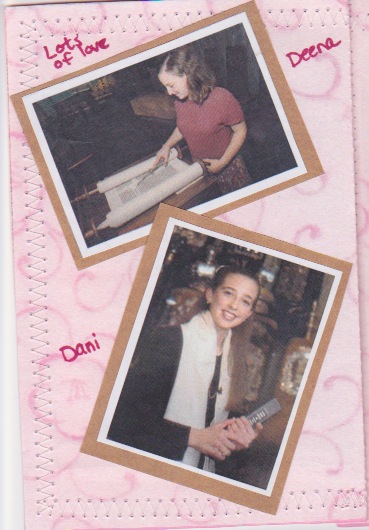
part of the amazing card my friends gave me, with pictures from their own b’nai mitzvah

The service itself was wonderful. For some reason I’ve always been cavalier about milestones, ceremonies, and celebrations. I don’t remember attaching much import to high school or college graduations, and I was fairly blasé even about my wedding (noting again for my reader(s?) that this was not my attitude towards my marriage). And it took me a while to warm to the idea of this one: My cousin found out about it a few months prior and said to me, “Hello!? You have to tell us about these things!” But the excitement came. I practiced every day, I invited friends and family, I got my hair done, and I bought new clothes (a true sign of how meaningful I held the occasion, since I loathe shopping; the best present I’ve ever gotten was when my mom bought me a wedding dress and sent it to me).

At the Saturday morning service on June 4, 2012, I gave my d’var torah, I led the amidah and the second half of the Torah service, and I had two aliyot. Almost of this involved carrying a tune, and the truly hilarious part of the day was finding my family in the social hall downstairs after the ceremony and hearing each of them exclaim as they hugged me, “I didn’t know you could sing!” I didn’t either, and I am happy to now have the confidence that I can lead services and not embarrass myself.

I remember Sixth & I’s rabbi, acting as gabbai while we read Torah, giving me a hug after I finished my aliyah, and saying, “Nice job, rabbi.” I remember that so many of my friends came to support me. I remember my mom’s thrill at meeting the rabbis who helped us lead the service, women who were both holding at least one of their small children after the ceremony. It’s not clear to me what my mom’s conception of being a rabbi is, but she turned to me as we were leaving the synagogue and said, “See? You can be a rabbi *and* have kids!”

I almost started crying when I saw my father-in-law after the service. He has known more than his fair share of tragedy and thus is understandably staid, with a deadpan sense of humor. He drove 12 hours from his home in Louisville, Ky., to attend the service, a generous gesture from a fairly cynical atheist and generally non-practicing Jew. His face lit up when he saw me after the ceremony, and with a huge smile that I’ve never seen, he told me what a great job I did. In my mind I can still see his expression, and I think it would have been enough just to have that memory.

death of a mensch

On Monday I woke up thinking about him, a man I never knew — and didn’t even consider the existence of until last week.

On Sunday I attended the funeral of the father-in-law of the rabbi who taught the b’nai mitzvah class I completed in D.C. last month. Her in-laws are local, and since I consider the rabbi one of my mentors and one of the reasons I decided to go to rabbinical school, I — along with a classmate who also knew her in her past job — made the drive to a small town outside of Boston to be a part of the mitzvah of k’vod hameyt, honoring the dead.

His death on July 4 was a random accident, one so terrible that the rabbi, one of the most articulate and thoughtful people I know, just shook her head when I saw her: “There’s nothing to say.”

There certainly isn’t much to say about his death, although the rabbi who presided over the ceremony did a yeoman’s job. He took to task the chief of police who had declared the accident “an act of G-d.” “Oh, really?” he rejoined scathingly. “That is not G-d.” And then he cautioned the large crowd that allowed only standing room in the sanctuary by the time the service started, “Before you ask, ‘Why?’, I ask you to consider whether there is any answer to that question that you would find satisfactory.”

There was certainly, though, very much to say about his life. From his obituary: “Loved nature, music, writing short stories, studying Torah, discussing politics, dancing with [his wife], and the Red Sox. His goodness and love will be missed.”

The service started with the synagogue’s cantor, who had known him and his wife since she began her job at the congregation. (They were involved in selecting the rabbi as well.) Next was his sister, then his son (my rabbi’s husband), then his daughter. And then his wife.

His son talked about how his father had taught him how to be a father. The rabbi and her husband have two children, and he recalled how much joy his father had gotten out of being a grandfather. And he sounded like the best kind of father and grandfather. The son recalled, “Dad could do anything. Wrote down the wrong gate and missed your flight? Let dad know: he’ll fix it. Don’t understand how student loans work? Ask dad: he’ll explain them. Get lost on the way to an important meeting? Call dad: he”ll get you there.”

A heartbreakingly young woman, his daughter talked about all of her many childhood activities that her dad never missed: Practices, performances, meets, competitions. In school he stayed up late with her the night before a paper was due in case she needed help breaking through writer’s block. She ended up in technology, the same field as his, and she spoke fondly their attending a recent conference together. There he introduced her to a colleague as his daughter; later, the man found her again and said, “When your father introduced you, I didn’t realize that you are actually his daughter. I thought he was saying that you were like a daughter, that he was your mentor.” She recalled at the service, “The colleague wasn’t wrong. He was my father, but he was also my mentor.”

Last was his wife, who was unbelievable. And by that I mean that I almost couldn’t pay attention to what she was saying because she was so unexpectedly poised at a moment when everyone around her, including people who hadn’t even known him, were sobbing. She shared how they had met, in college: two atheist, anti-Jewish Jews. They bonded over activism and late night philosophical talks, but, although she wasn’t all that interested in marriage, she didn’t want to move in with him if they were unmarried. “I told him that I didn’t understand that. If two people wanted to commit to one another, they should just do it, go all the way.” And five months after they met, he asked her to marry him on bended knee and with a toy ring with a green stone (which she promptly dropped, losing the stone, as soon as he handed it to her). So at ages 18 and 19, they were married, in a Jewish ceremony to satisfy their parents — and one entirely in Hebrew “so that we couldn’t understand all the stuff about G-d.”

I wish there had been time to hear more about their journey together from kids to having grandkids, from rebels to pillars of the community, from G-d denying to G-d embracing. But what followed next was well worth that omission.

His wife explained that she had asked people from various points in his life to speak about him because what she had known about him was not all there was to know about him. We then heard from a childhood friend and one from his young adult years, then from a member of the synagogue’s men’s group that he founded, and from a colleague. We heard about his mischievousness, his reflections on Torah, and a vacation dinner in a nice restaurant that ended with his young son covered in spaghetti and chocolate ice cream. A woman from a job or two ago said that after several people had left the company, they committed to getting together for dinner every few months to stay in touch. She had been in charge of scheduling those dinners, and he was always the hardest one to nail down. But, she added, after hearing that day what others had to say about him and his commitment to his family, friends, and community, she understood why he was always so busy.

I loved his wife’s tribute, her acknowledgement that she doesn’t own the memories of him, that all of the community carries pieces of him — then and now. This is how remembrance stays alive, and I am blessed to now be a bearer of his life and death as well.

And then she began to talk about the night he died. They had attended a James Taylor concert, just one of the activities that had begun to form the shape of their (soon-to-be) retired life. They sat on the lawn and talked about their ballroom dancing lessons and their financial future. The last song of the concert, she informed us, was Taylor’s “How Sweet It Is To Be Loved By You.” And the cantor joined her at the podium, and they invited everyone to sing. And when we weren’t spirited enough, his wife admonished us to sing louder and to clap harder. It was hard to do through my tears. But she just laughed and clapped and sang.

In the end, she concluded by thanking him for their 43 years together, declaring, “I regret nothing.”

“I regret nothing.” How many of us can say that about our relationships? About our lives? About anything? How many of us can say that, whether we actually don’t experience regret, or whether we have made peace with our mistakes?

I just want to stop. And thank you, baby.

How sweet it is to be loved by you.

life unrecognizable

Last night I dreamed that I blogged here, so I’m taking the fact that I didn’t conjugate Hebrew verbs in my sleep as a sign that it is time to write again.

Since I last posted (excluding my d’var torah, which wasn’t written for this site), I left my job, celebrated my bat mitzvah, said goodbye to my D.C. life of seven years, moved to Boston (or Brookline, or Chestnut Hill, or West Roxbury, depending on whom you ask), attended my brother-in-law’s wedding in Mexico, and started the first of two intensive Hebrew courses this summer.

Please excuse the completely unoriginal observation that moving, particularly to a new city, is one of the hardest events in the life cycle. My life has indeed become almost unrecognizable to me: I feel so little connection to who and where I was just a month ago, were it not for the anchor of my husband and my cats, I might be convinced that I had landed in an alternate universe. I don’t remember feeling this way (at least not as intensely) when I last uprooted myself and moved from Raleigh to D.C. And I can’t even think about my past life. As I hung my print of Washington, D.C., neighborhoods the other night, I almost started crying as I read the names of the places I know and love — places that seem so familiar and so far away.

The main issue here is, I think, the class. I am taking Hebrew 3 (and next, Hebrew 4) to be ready to take Hebrew 5 in the fall as part of the Mekorot curriculum (the preparatory year at Hebrew College). Four days a week, it’s four-and-a-half hours a day, with perhaps two 5 or 10 minute breaks, and with eight hours of homework each night. I’ve studied many languages, and more than one intensively, but I’ve never had an experience like this.

I’ve done almost nothing but go to class and study for the past three weeks. In the afternoons and evenings, I look at the clock and decide when my next break will be, and I actually look forward to taking 15 minutes to unpack a box or call the pharmacy (that’s what I do for fun these days). I work until midnight or beyond and then get up at 6:00 a.m. to run, shower, and then head to class. I’m not eating much. Joe works from home for now, and even though we’re in the same space more than we’ve ever been, we barely spend time together. My rabbi called last week before she left for Israel for the summer, and my first thought was, “It’s good that she’s leaving the country tomorrow; the phone call can’t last too long.” When today’s holiday was announced, I wondered, “Do we celebrate the Fourth of July here, in this land of never-ending Hebrew?”

Part of the academic struggle is my inadequate preparation: My two years of classical Hebrew and then working my own way through the Hebrew 1 and 2 book did not ready me for this particular class. It is some consolation that none of my classmates seem adequately prepared for the class. Two others have a classical background and are similarly struggling with vocabulary and speaking, while the two who completed traditional modern Hebrew courses are struggling with grammar. I’ve been playing catch-up since day one, and that’s an unpleasant and unfamiliar feeling.

I’m used to being a “good student” in the most conventional way: In previous language classes I’ve understood grammar, learned vocabulary, read texts, absorbed nuances of pronunciation — and all easily. Learning languages, I would have said, is a joy and a strength. I don’t think I realized what an amazing gift that was: The rug has now been not pulled, but jerked, out from under me.

What I am expected to digest and to produce isn’t manageable. I can only figure out some of what I should be working on to improve my skills, and even if I could determine my weaknesses, I would haven’t time to work on them. I make innumerable, embarrassing mistakes because my brain has become Hebrew mush, and right now I can’t even do correctly what I already know. Each morning as I walk into class I wonder if I’ll be able to do what’s asked of me, and sometimes I’m not. The water is at my nose, and I’m struggling to keep my head above it.

So I’m learning how to be a “good student” in a different way. I complete all of the assignments; I make myself say something even though I know my mangled Hebrew must cause my Israeli teacher’s ears to bleed; I ask my classmates for help; I remind myself that there are no grades and that I only have to pass. When the thought “I hate this language!” begins to flicker at the edge of my brain, I reach for my new mindfulness practice of reminding myself that I’m only going to get through the next six years if I love Hebrew. I meditate before class. I do my best and let go of the rest.

hydrangeas at apartment complex; photo by salem pearce via instagram

I had some inkling of this challenge: I postulated in my application that I would likely not have in rabbinical school the same experience as in undergrad, where everything came so easily to me. But I couldn’t have anticipated feeling like this.

And it’s not all bad or challenging. I’ve learned more Hebrew in the past two weeks than I have in the past two years. Along with all of my classmates, I passed my midterm. New England is unbelievably beautiful in the summer. I run almost every day. My husband cooks amazing dinners. I appreciate Shabbat more than ever.

There are things to look forward to as well: Joe and I have tickets to a Red Sox game, and my mom visits in two weeks. This weekend I get to see my friend Emily, up from D.C. We’re planning a day trip for Joe’s mid-month birthday, and I’ll make my first visit to Cape Cod in mid-August. And I just got an email from a fifth-year rabbinical student who is organizing a once-a-week summer minyan: An hour of morning prayer will go a long way in easing my anxiety. Plus, I got my fall semester schedule! I can’t wait for some variety in my studies. I’m taking Genres and Themes of Biblical Literature; Introduction to Mishnah; Cantillation; and Jewish Life and Practice.

And yes, Hebrew 5. The beat goes on.

lift up your head

part of parshah naso in the sefer torah; photo by kera bartlett

On Saturday, I read the following reflection at the ceremony for my adult b’nai mitzvah class at Sixth & I Historic Synagogue (more on the ceremony in a later post). The speech is called a d’var Torah (literally, “word of Torah”), a close study on one aspect of the weekly portion of the Torah that is read that week in synagogue. It’s traditional for a bar or bat mitzvah to write and give such a speech at his/her ceremony. The parshah last week was Naso, Numbers 4:21–7:89.

Naso et rosh.

Thus begins our parshah, with a directive generally translated as “Take a census.” But it literally means, “Lift up the head.” It’s G-d’s command to Moses to number the groups of Levites entrusted with the care of the Tabernacle. And at its essence, a census is a just a list.

In his book The List: The Uses and Pleasures of Cataloguing, my friend Bob Belknap grapples with the ancient literary tradition of lists in the authors of the American Renaissance: Emerson, Whitman, Melville, Thoreau. He’s puzzled by his graduate school roommate’s dismissive attitude towards such sections of text, “I just skip over all that stuff.” Indeed, Bob’s love of lists may be unique: Most of us, when confronted with a lengthy enumeration – say, of the descendents of a patriarch in the Torah – at best skim. Almost all of us desperately search for the beginning of the next paragraph: Why on earth should we care about the names of each man who get us from Seth to Noah?

What has been described as our parshah’s overall theme, order and structure, is evidenced in its abundance of lists: G-d tells Moses to take a census; G-d spells out who is to be counted; G-d enumerates the specific parts of the Tabernacle that the Levites are responsible for; G-d lays out procedures for the physically impure, for betrayal, for a wife accused of adultery; G-d explains the laws of the nazarite. And via one of the more challenging examples of a list, repetition, G-d tells us about the dedication offerings from the twelve chieftains of Israel, each of whom brings the exact same gifts. And those gifts take a paragraph each time to describe. So the parshah ends with a list of 12 identical lists.

I wonder how these sections struck Moses at the revelation at Mount Sinai (if it’s the case that, as some postulate, Moses received then the entire Torah and not just the Decalogue). I assume he took a moment to read what G-d had given him before he went down to the Israelites and proclaimed it a sacred text. I like to imagine Moses as editor, sitting atop the mountain with a red pen, trying to reason with G-d. “There may be an opportunity here to cut this part down a bit. No one’s going to read all this 12 times in a row.”

But as my friend argues in his book, “The value of lists is that they ask us to make them meaningful.” If we are engaged in the text – and as Jews we are asked to engage with Torah – we have to consider these challenging sections.

Lists catalogue and lists omit; they highlight differences and they emphasize similarities; they create patterns of possibility and they make assessments of importance. They honor the fallen, the lost, the loved.

Naso et rosh.

Through the years, commentators have expounded on the various meanings of this verb. Rashi sees naso as a play on words: He connects its meaning of “to lift or raise” with the function of the Levites who are engaged in carrying parts of the Tabernacle.

Another rabbi understands its connotation of pride: When one shows or feels pride, one lifts up one’s head and stands tall; the Torah wants to tell us that the Levites were proud of their responsibility.

Yet another rabbi interprets the verb as a metaphor for lifting up one’s spiritual station: The Levites were given an incredibly important task that helped them reach an elevated ability of patience and coping with adversity.

I can think of another meaning. As any student knows, engaging with a text often finds us hunched over, staring into the pages of a book. But as any teacher knows, in a classroom deeper meaning takes root when students are actively listening instead of reading the bullet points of a lecture on a handout. With naso et rosh, G-d is reminding to consider that deeper meaning, to ponder that larger picture. “I’m giving you these lists, instead of narrative, to make you stop. Lift up your head and behold me.” The stories in the Torah – of creation, of the flood, of Abraham and Isaac, of Sodom and Gomorrah, of Jacob and his sons, of the Exodus out of Egypt – don’t make us stop. These are great stories, and we want to keep our heads down and find out what happens.

But we’re also called to be like Moses at the end of the parshah, which concludes with him standing by himself (and I imagine, with his head raised), listening to G-d speaking to him from above the cover of the ark.

In these moments, we can reflect, dwell, exult in detail, even rejoice in minutiae. As my friend so beautifully puts it in his book, lists challenge us to stop: “The rhythm of the repetition interrupts the forward drive of the text, and for a moment we are invited to dance.”