the submission

Last week I finished The Submission, by Amy Waldman. The book was a gift from my boss who pronounced it “an amazing read, but not light.” It is certainly compelling — and beautifully written! — if also problematic in significant ways.

The title refers to a proposed design for a memorial for the victims of 9-11, chosen in a blind competition in an re-imagined New York two years after the attack. The plan details a walled, rectangular garden, bisected twice by perpendicular canals, with pathways lined by trees in a grid in each of the quarters. The names of the dead would be inscribed on the garden’s inner walls. The book opens with the contentious deliberations by the jury, composed of mostly artists and other art world professionals plus one representative of “the families,” who is the main proponent of the garden. The other design, preferred by the the most vocal of the artist contingent, is known as “The Void,” a proposal distinctly less comforting or inviting. In a vote largely determined by the emotion of the widow, the garden barely wins, whereupon the identity of the submitter is revealed: an architect named Mohammad Kahn. Dun, dun, DUN.

The freaking out begins with the chairman of the jury embargoing what he now considers to be a tentative decision. The designer’s name is soon leaked to the press, however, and the jury is forced to acknowledge its choice. To mitigate the ensuing controversy, the jury chairman — under pressure from the governor of New York — decides not to finalize the memorial design without a public hearing. The novel details the mobilization of the stakeholders on various sides of the debate over whether it is appropriate for the memorial to victims of a terrorist attack by followers of radical Islam to be designed by an American Muslim.

As expected, the political right opposes the choice. The debate quickly becomes principally about the architect himself instead of his design, which is, however, interpreted as having Islamic influences, then re-interpreted as being the paradise described in the Quran, then re-interpreted again as a heavenly cemetery for martyrs of radical Islam. Other opponents include ad hoc groups formed in response to the jury’s choice, as well as, it seems, the majority of the families of the victims. The governor also falls into the opposition camp. Its proponents include a coalition called the Muslim American Coordinating Council (MACC) as well as, on principle, the artists on the jury who hadn’t advocated for the design in the first place. It’s the widow from the jury and, ultimately, Kahn himself who struggle with their ambivalence.

Simply put, this book was hard to read at times. The extreme opposition in the novel is rooted in reality, which we saw in the debate over the so-called “ground zero mosque.” And Waldman really brings to life one of the victims’ families, whose surviving son acts as spokesperson for that contingent. They are working class family from Brooklyn, and the son is rudderless before and after the attack and becomes increasingly conflicted about his parents’ marching orders to stop the construction of the garden at any cost. At the public hearing, the father of another of the victims is given a particularly sympathetic portrayal; calling the choice “insensitive” and citing the example of the pope’s decision to move a proposed convent from Auschwitz, he notes, “We, who have carried the weight of the loss, are now being asked to carry the weight of proving America’s tolerance.”

The motivations of MACC are fairly easy to understand, and Waldman does a great job of portraying the difficulties of that coalition, coalesced around a shared identity as Muslim Americans which is nevertheless interpreted very differently by its members, religious and secular.

Hard to understand was the character of Claire Burwell, the jury’s widow. Her reaction to discovering the identity of the creator of the garden she loves and fights for is initially unchanged. But upon meeting and getting to know Kahn, she becomes increasingly doubtful of her ability to continue to support the design — mostly, it seems, because Kahn won’t say whether his proposal is “an Islamic garden” and won’t say that he condemns the 9-11 attack. As he says to her when they finally sit down together towards the end of the novel, “‘What is the principle behind demanding that I say it, when your six-year-old son can tell you its wrong? Wouldn’t you assume that any non-Muslim who entered the competition thinks the attack was wrong?'” She is extremely wealthy from her husband’s money, and although great pains are taken to establish her discomfort with the lifestyle she married into, her assertion of her privilege is off-putting. She thinks herself the gatekeeper to design approval, that she represents all of the families — as she goes, so go they, she implies — and that she is entitled to answers from Kahn. The novel is supposed to be about her internal journey towards her true self during this emotional time in her life, but ultimately it’s simply not compelling or sympathy-inducing.

It is Mohammed Kahn who is the standout in the novel. Raised in Virginia by parents who only get involved in a local mosque after the attacks, Mo, as he is known, is Muslim by birth alone. He wrestles with ritual observance during his time in the spotlight, but he is characterized by his talent, drive, and ambition in his field. He is above all supremely rational (and stubborn) and finds completely confounding that he is collapsed into identification with a religion that he hardly knows. His is the experience of many Americans in the post-9-11 world, starting with the scene that introduces him to readers in which he is detained at LAX for flying while Muslim. He is complex, frustrated, principled, lost by the situation he finds himself in, and honestly struggling to make sense of it however he can, all in the center of the extreme pressure cooker of the national debate into which he is thrust.

Missing from the novel are significant contributions from evangelical Christians and Jews of any kind, both of which would have to factor into this situation. And the thought that a memorial design could have been chosen a mere two years after the attacks strains credulity (especially as the actual memorial barely managed to open ten years later). The end of the story is rather puzzling as well; after the protagonists have expended unknowable time and energy panicking about the “source” of the garden — which question is set up to come across as unfounded paranoia — the final scene shows that Kahn did indeed draw his inspiration from a garden he happened across in Afghanistan. The horror! (And it seems clear that this inspiration is purely aesthetic, not religious.) This frustrating development, its placement at the end of the story making it function as a big “reveal,” undermines the narrative argument that Kahn suffered a great injustice in his treatment as the memorial’s creator.

The reader is left with a dull disappointment with Waldman’s America, at the very least for the fact that human prejudice is shown to have vanquished human-made beauty. It is not worthy of the novel’s honest attempts to grapple with how we honor the dead of 9-11.
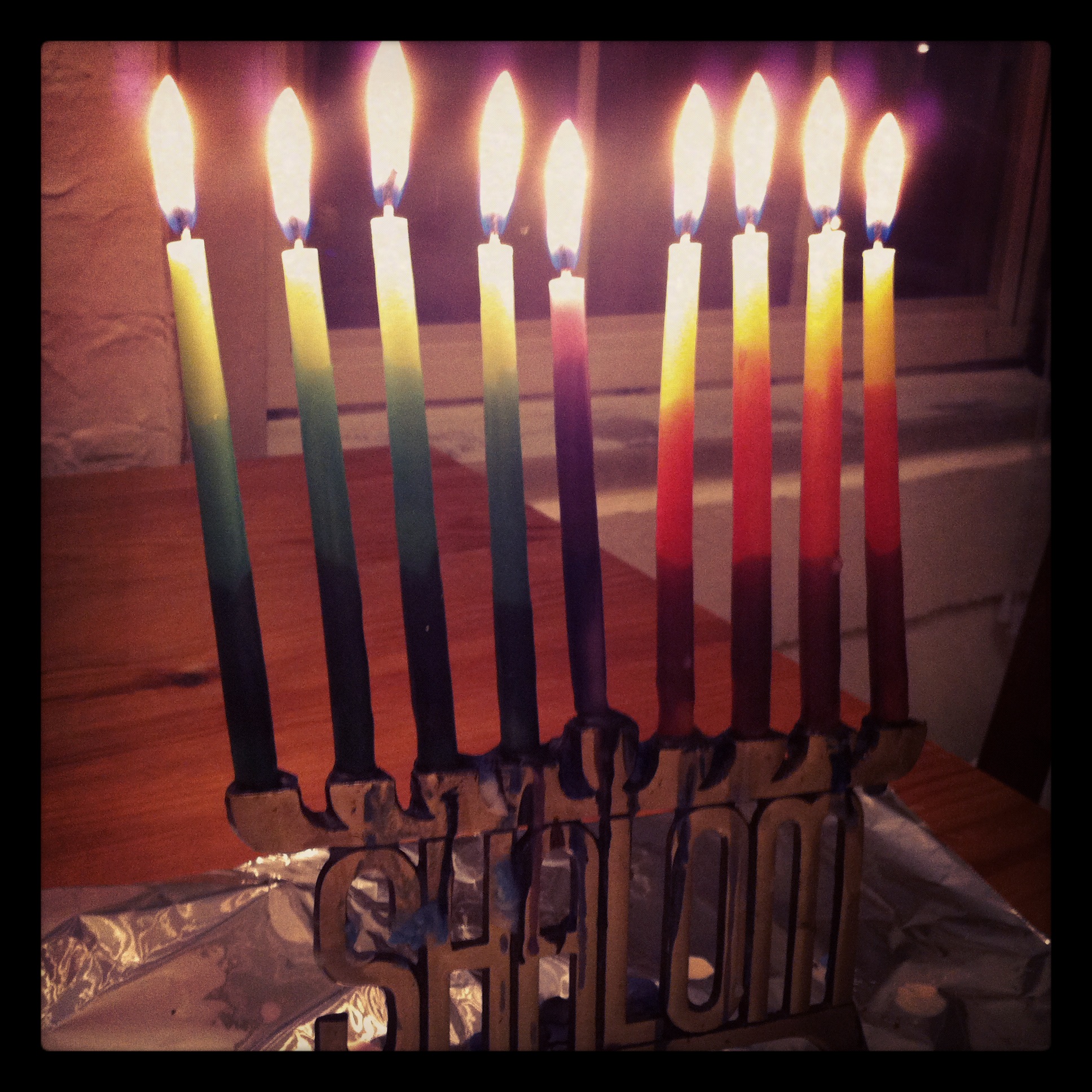

do you believe in miracles?

Mai chanukah? So the rabbis of the Talmud begin their discussion of this holiday: “What is Chanukah?” The fact that they start with a question should be a big red flag that this will be an extended discussion, as scholars of the Talmud are apt to give lots of answers even when no question is posed.

It’s a good question, and the rabbis were fairly prescient on this point, as far as 21st century American society goes. Chanukah is the only holiday that the non-Jewish world is consistently knowledgeable of the timing of, even if it’s only because Chanukah is considered as the “Jewish Christmas.” To be fair, though, lots of Jews think of it that way, too. A little more on that below.

eighth night of chanukah; photo by salem pearce (via instagram)

Chanukah technically commemorates the rededication of the second Temple in Jerusalem in the 2nd century BCE after the Maccabean victory over the Seleucids in Syria, who had outlawed Jewish religious observance. (The name of the holiday is derived from the Hebrew verb for “rededicate.”) After the battle, the Maccabees were able to light the menorah in the Temple for eight nights even though they found in the temple only enough consecrated oil for one night. Others have written better than I about the various interpretations of this rather strange holiday, but what I’ve been thinking about this year is the “miracle” of the oil.

In the second prayer after candle lighting each night, we say, “Blessed are you, Lord, our God, sovereign of the universe, who performed miracles for our ancestors in those days at this time.” I hadn’t thought about what that prayer really meant until this year, when the Maccabeats, the Yeshiva University a cappella sensation, released its annual Chanukah video. A cover of Matisyahu, the catchy song asks in its chorus, “Do you believe in miracles?”

Well, no. I don’t. At least not literally. I’m more of subscriber to Heschel’s dictum: “Pray as if everything depends on God, but act as if everything depends on you.”

What, then, do I make of the story of the small cruse of oil that lasted beyond what it should have? I don’t have the answer I want . . . yet. I hope that when I’m in rabbinical school I’ll be able to access textual and historical criticism of the sources for the holiday. At the very least, I can say now that the holiday’s proximity to the winter solstice, the shortest day of the year, perhaps accounts for the emphasis on light.

zechariah 4:6; print from my grandmother

For now, I really like what Michael Strassfeld says in The Jewish Holidays:

[T]he meaning of Hanukkah is that the miracle of that first day was the deep faith that it took to light the menorah, knowing their was not enough oil for eight days [the time that it would have taken to consecrate more oil]. The same faith led the Maccabees to revolt against impossible odds . . . They believed they would prevail “not by strength, nor by power, but through My spirit — says the Lord.” This faith allowed them to light the menorah, and it is this faith that made it burn for eight days.

The “miracle” becomes the commitment of the Maccabean army to principle — and its willingness to fight with only the slimmest hope of success. I can relate to that layer of meaning.

Despite my annoyance at the disproportionate importance given to Chanukah by the non-Jewish world, I do tend to associate Chanukah and Christmas together in my mind. There’s the obvious: Chanukah begins on the 25th of Kislev, as Christmas begins on the 25th of December. And Christmas commemorates its own miracle, the virgin birth of the son of G-d. (I imagine there are Christians who believe that, too, might not be literal.) More personally, my grandfather died at the end of 2004. His birthday was on Christmas (he would have been 93 this year), and he died on the first day of Chanukah (which that year was December 7, Pearl Harbor Day). I now look forward to the holidays at the end of the year to remember him on both his yahrzeit and his birthday. As the rabbis finally answer, Zot chanukah (this is Chanukah).

the test

I walk to an office building in downtown D.C. early on a weekend morning. I take the elevator to the second floor and enter a room where lots of other people are sitting on chairs, waiting. I show my ID to check in; the man at the desk scrutinizes both me and and the picture on my driver’s license, literally squinting and looking between both several times.

what my cursive looks like

Then he hands me a confidentiality agreement I’m meant to sign — but not before I write, in cursive, the three-sentence statement at the bottom of the page. I haven’t written in script since third grade, so I anticipate that this may be the most challenging part of my day. I began the laborious task of writing with loops and linking letters together; I can’t even get the sentences to fit in the space prescribed, and I am barely halfway through when he asks if I’m ready to move to the next step.

When I finally finish what cannot seem like an adult’s rendering of the statement, I’m directed first to put all of my belongings into a locker and then to proceed to the next room with only my ID and the key to the locker. I sit down in front of another man, who again checks my ID — and then asks me to stand up so he can wand me. He directs me to lift up my shirt so that he can see my waistline, then to pull out all of my pockets — why did I choose to wear cargo pants today? — so that he can verify that they are empty. He warns me not to make any unusual movements once I’m in the next room, and not to take off my sweatshirt. I begin to worry about whether it’s going to be hot in the next room.

He hands me back my ID, points to the line on the paper to sign in, and hands me approved pencil and paper. I enter the next room and am led to my seat by yet another staff member. I leave the room three times and return twice during my four-and-a-half hours inside, and each time I go through the same process of ID check, signing in and out, wanding, and pocket inspection. I’m also reminded that accessing my cell phone during these breaks will lead to my being kicked out of the facility. Finally, while I’m sitting in my cubicle, the innermost room staff periodically walks by to adjust the angle of the camera that is trained on various parts of the room.

And this is how you take the Graduate Record Examination (GRE) in the U.S. today.

Obviously I am terribly naive, because this shocks me. It beggars my belief that anyone would cheat on an admissions test, even as I question its value as a predictor of success in graduate school. But apparently all of this rigamarole is the logical response to past scam attempts, so I have to concede that it’s necessary.

You may be asking, “What relevance do analyses of your writing, verbal reasoning, and high-school math abilities have to do with rabbinical schools, especially since applications to those institutions are compromised principally of multiple essays?” And the answer clearly is, “Very little if at all.” Two of the schools I’m applying to require the GRE, but one does not; the fellowship I’d like to get only requires it if the school does. I don’t know what accounts for the difference between otherwise fairly similar schools.

I prepared for the exam in the simplest and cheapest way possible: I worked my way through the official GRE book published by the Education Testing Service. I’m guessing that the decision to admit or not admit me to rabbinical school will not hinge on my GRE scores; it seems most likely to me that it’s some kind of idiot check, which is still odd because it’s not like these schools haven’t already met everyone who is applying. I’ve certainly talked at length with the admissions directors of all three schools.

But I am a neurotic student, and I hate taking tests that I can’t fully prepare for. I found myself disagreeing with the “correct” answers of more than one “verbal reasoning” question and was annoyed that I won’t be given the chance to argue my point.

what quantitative reasoning looks like

The math drove me even crazier. I actually like math, and in high school, I was pretty good at it: I got a 5 on the AB Calculus exam. In college, I considered double majoring in math and Classics. So I was frustrated by my complete inability to figure out how to proceed on many “quantitative reasoning” problems. The book takes what in my mind is a puzzling attitude to this. First, I was never able to discern a pattern for the questions — but the book’s explanations were always of the sort, “Of course, it’s clear that you should do x  approach (and obvious from first glance that y approach is not going to work).” And there was no big-picture guidance whatsoever about how to recognize which approach — solving the equation, plugging in numbers, estimating, etc. — would be best. Maybe there are students who just get math — in the way I just get verbal reasoning — for whom this is not a problem. Ultimately, all I was able to do was to tell myself that it simply wasn’t worth the time it would take to get really good at the math section. Math, I’m guessing, is not going to be a large part of my rabbinate.

crying to the walls

Note: I updated this post on 12/21/11 with a photo that better illustrates it.

On Thursday night I went with my friend Noah to see singer-songwriter David Broza at Sixth & I Synagogue. It was an awesome night, not least because, since the concert was sponsored by the America-Israel Cultural Foundation and the Israeli Embassy, it was free! Noah first introduced me to Broza years ago, with the song “Crying to the Walls.”

As with most concerts at Sixth & I, Broza played in the sanctuary, on the bimah. Noah and I were in the balcony, looking down on the “stage.” I followed the lights that were coloring the wall behind Broza to the ark. Two nights ago, I had stood in front of the ark with the members of my adult b’nai mitzvah class while the rabbi explained the significance of its architecture.

david broza at sixth & i; photo courtesy of embassy of israel

And then I had a moment that made sound fade away and time slow down: I realized I was looking at a scene that perfectly expressed the confluence of the past, present, and future of Judaism. Thinking back, it seems so simple; I feel like this should have occurred to me before, at previous events. But of course, I’ve been thinking a lot about this topic recently.

The ark at Sixth & I holds four sefer Torahs, each of which had been hand-lettered by a scribe’s quill on pieces of animal skin that were stitched together into scrolls — as they have been created for generations. The features of the ark itself — the parokhet (curtain), ner tamid (eternal flame), menorot (candelabras), and ten commandments’ tablet — all have their roots in the first temple.

An Israeli, Broza himself presumably led to the search of attendees before the concert — byzantine security measures that have come to characterize any event in the United States having to do with the modern state of Israel. And he sang that night to a crowd of diaspora American Jews in Hebrew before the Israeli ambassador addressed the crowd.

Sixth & I is an unique space: a synagogue, turned church, almost turned nightclub, turned non-membership, non-traditional, non-denominational synagogue. It’s where young Jews connect to their Judaism in often non-religious ways. (I saw Ani diFranco in the same place six weeks earlier.) Attendance at its events continues to increase even while synagogue membership is down.

The ancient, the contemporary, and the world to come, all swirled together in a mix of rainbow lights and guitar strums and stained glass. I looked at the salmon-colored walls of the building and thought, “Remember this.”

Crying to the Walls

meridian hill park

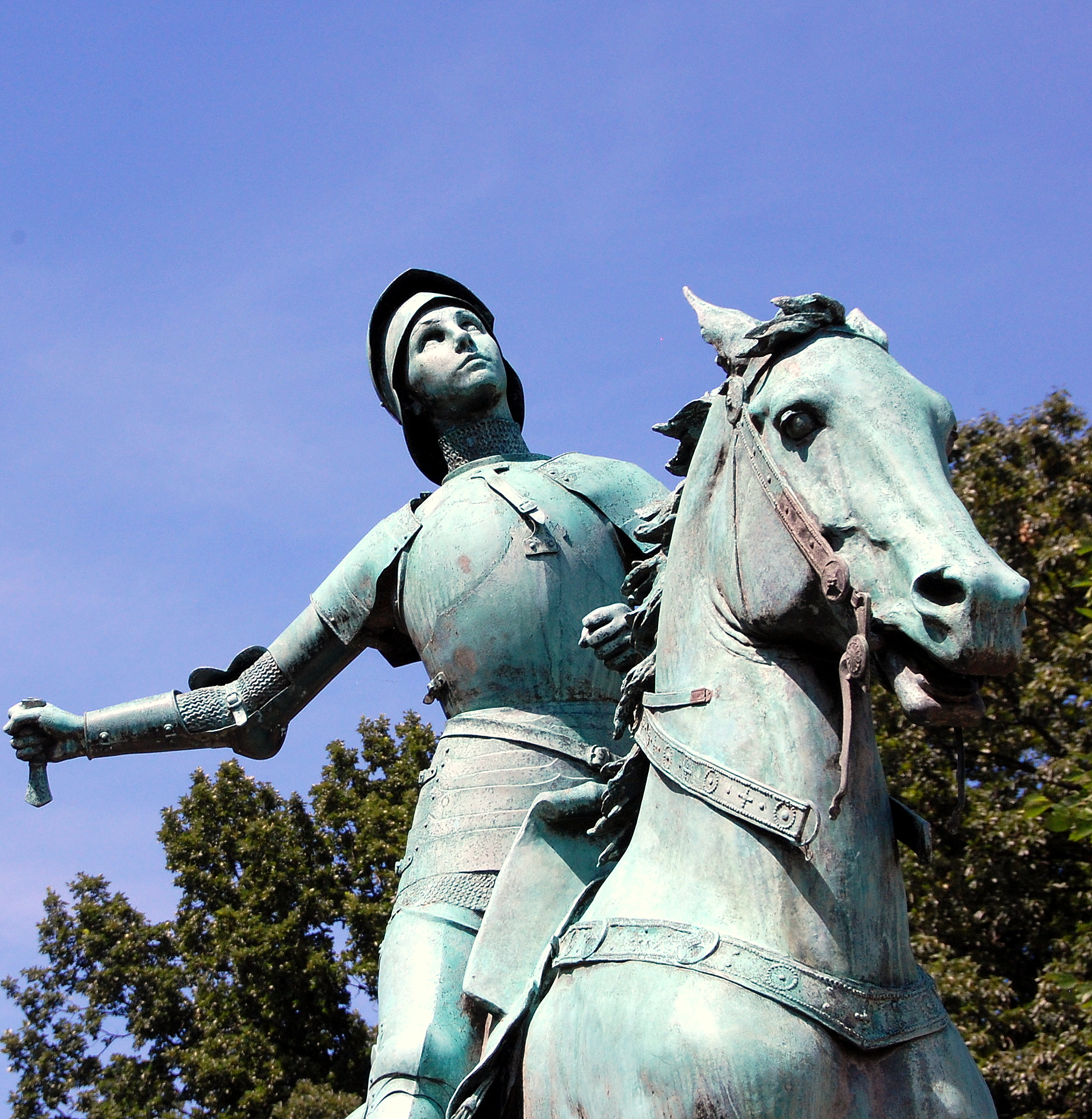
joan of arc in meridian hill park; photo by salem pearce

I took the day off from work today and decided to take photos en route to my massage appointment at Mint (yeah, my life is tough, I know). Since “Mint Dupont” is actually in Adams Morgan, I choose Meridian Hill Park, where I’ve only been once before, and that was really early in the morning during boot camp. Under those conditions, it was hard to appreciate the design and flora.

I find Meridian Hill Park a little wacky. First of all, the park reminds me of both of Morningside Park in New York and of the gardens around the Villa Borghese in Rome. I’m not wrong about the latter: Apparently the architect meant to design a “grand urban park modeled on parks found in European capitals.”

Secondly, its name is rather abstruse. The National Park Service website explains that John Porter built a mansion on the hill and so named it “because it was on the exact longitude of the original District of Columbia milestone marker.” This line is apparently one of the “Washington meridians” — but three pages into Wikipedia, and I still don’t really know what those are, except that there are markers for them all over the district.

Next, its nickname is Malcolm X Park . . . for no reason. That’s just what people call it. And the statues are no help: They consist of a U.S. president, an Italian poet, a French warrior, and a bare-breasted representation of “Serenity” — the whitest statue in the world.

Finally, the building material, concrete aggregrate, experimental (and groundbreaking?) for the early 20th century, doesn’t really stand the test of time. The material is now employed almost exclusively for utilitarian, not decorative, projects. Basically, it looks like design by sidewalk.

With all of those caveats, I do find the park charming and relaxing — despite the disturbing number of people running stairs there in the middle of a summer day. It’s certainly an under-appreciated part of D.C.

a peeps profile

Note: This post, originally published on my Tumblr, was the second in a two-part series about our cats that I wrote as a birthday present for my husband. The first part is about the boy cat, Miju.

In late 1998, a small black-and-white cat was born, and Joe Grossberg adopted her two years later from the Washington Humane Society. Records indicate that Joe paid $65, provided by his mother, since the cat was a Chanukah present and (meant to be) a friend for her big brother.

She was being fostered in the Adams Morgan apartment of Marjan Philhour along with many other dogs and cats. A solitary and … tempermental creature, the little cat was often on edge in this environment. So naturally, she bit Joe when he first visited. And thus, Joe met Peeps.

photo by katie jett walls of red turtle photography

Over the years, Peeps has gained more names than pounds. Because of her size, people always think she’s a kitten. But she’s not; she’s full grown.

Peeps’ hobbies include sunbathing, staring at the wall, sleeping in the puff chair, eating cat grass, and jumping on bookshelves. She would more often opt to be alone than with others, but she at times likes to snuggle underneath a blanket. She earned the nickname “Spider Peeps” via her intrepid climbing to the top of wherever she can mange to get.

Peeps’ favorite food is tuna. She gets a can twice a year — on her birthday, and then again on Miju’s birthday; she devours each serving in one sitting. She also likes ice cream, milk, and coffee, much to Joe’s chagrin.

Peeps is not good at understanding the concept of “the phone.” She is good at detecting arrival at the apartment. She likes sniffing and hates being brushed.

Peeps’ most prized possession is her cardboard scratcher, which she somehow managed to gain dominion over, despite her brother’s alpha cat tendencies toward all their other shared possessions in the apartment. On the few occasions he has dared to use it, her eyes turn black upon hearing the noise of claws on cardboard, and she shoots over to it and hisses and bats at him until leaves.

When she wants to be petted, Peeps rolls over on her back and shows the potential petter her “secret dot.” A majority white cat, Peeps has seven black patches (seven being a mystically significant number in Judaism), including one not readily able to be seen. Her face is half-black and half-white, like a yin-yang symbol, or a black-and-white cookie.

In her free time, Peeps studies Torah. She recently became bat mitzvah (on her 12-1/2 birthday) and has shown supernal devotion to learning. Indeed, as Joe is fond of noting, Peeps is an angel from heaven.

All About Peeps
Full name: Peeps Labanit Choni Hamagel Chetzi v Chanukah Heather Feather Grossberg-Pearce

Nicknames: Pea, Peebee, Peapod, Peasoup, Peek-a-souk, Peashoot, Peashoot Salad, Soup, Soupy, Soupy Sales, Soupselah, Peepselah, Bubelah, Spider Peeps, Speep, Bean, Beanselah, Chetzi

Breed: domestic black-and-white shorthair

Gender: female

Birth date: November 15, 1998

Adoption date: November 14, 2000

Total adoption cost: $65

Adoption weight: 5.3 lbs

Current weight: 6.1 lbs

Likes: talking to Joe, sitting on the heater, sleeping in the couch crack, eating cat grass, barfing up cat grass, grooming, small cakes, Torah study, alone time, smelly clothes and shoes

Dislikes: being picked up, large groups of people, other cats, sneezes

a miju memoir

Note: This post, originally published on my Tumblr, was the first in a two-part series about our cats that I wrote as a birthday present for my husband. The second part is about the girl cat, Peeps.

In the summer of 1999, a small orange cat was born, and Joe Grossberg adopted him the following July from the Montgomery County SPCA. Records indicate that Joe paid $75, made a $20 donation to the organization, and spent an additional $5 on a “box.”

The kitten still had the rather unfortunate name of Tommy Tune when his foster mom, Kim Deserio, entrusted Joe with his care. After some brainstorming, Joe quickly invented a new name and Miju was (re)born.

photo by katie jett walls of red turtle photography

By all accounts, Miju was a rambuctious kitten, a quality he continues to exhibit today. In those early days Joe would come home from work to find Miju bouncing off the walls. Miju was also very soft and very sweet: As soon as Joe picked him up in the shelter, Joe just knew this one was the one he wanted to adopt.

Now fully grown, Miju is deceptively large because of his fluffy coat (which is simply luxurious), but also in comparison with his sister (who is just a very small full-grown cat).

Miju’s hobbies include yowling, eating flowers and other plants, sleeping in the box at the bottom of Salem’s closet, and chasing after his baby sister. Miju feels that focus should always be on him, so, for example, he insists on lying between Joe and Salem when they are in bed. At Passover this year, Miju tried to sit on the seder plate.

The need for attention also makes a very afffectionate cat. Miju is a champion head-butter and loves to sit next to new people (particularly if they pet him).

Miju and Salem engage in an ongoing power struggle for control of what should be Salem’s pillow. He slept with Joe for six years before Salem came along, so in his mind, she’s sleeping on his side of the bed.

Miju’s favorite food is string cheese, and he knows as soon as Joe opens a package. His eyes widen, and he camps out in front of Joe until the treat is gone. Meanwhile, he generally lets his sister eat most of his birthday tuna. However, Miju has to eat the shabbos wet food before she does; in fact, it takes six seconds or less for Miju to appear in the kitchen once the wet food bowl clinks on the counter on Friday night.

Miju is not good at sunbathing or sitting in cat beds. He is good at relaxing on the back of the couch. He loves being brushed with the Furminator and drinking water out of glasses. If he were allowed outside, it is thought that Miju would like to climb trees.

Miju has a heart murmur, a tiny nick in his right ear, mottled gums, and (according to Joe) only five nipples. And he defies convential wisdom about cats by being kind of a klutz. But as Joe is fond of noting, he is still perfect.

All About Miju
Full name: Miju Boon Grossberg

Nicknames: Mooj, Mista Mooj, Mi-juuuuuuuuuuu, Mookie, Mee-who, Mijou, Miju Las Vegas, Mijulicious, Hazzan

Breed: domestic medium hair orange tabby

Gender: male

Birth date: August 15, 1999

Adoption date: July 9, 2000

Total adoption cost: $100

Adoption weight: 7.8 lbs

Current weight: 10.3 lbs

Likes: licking books, batting at any small object that can move, sitting in the highest place in the room, stalking Peeps, grooming Joe

Dislikes: belts, having his undercarriage brushed, grooming himself

the jazz baroness

On Sunday I attended a screening of the documentary “The Jazz Baroness” at the Washington D.C. Jewish Community Center, the kickoff event of the Washington Jewish Music Festival.

I can’t really remember what motivated me to buy a ticket: I’m not a music person, so I generally don’t even skim the program listings for this annual event. But something must have intrigued me about this documentary.

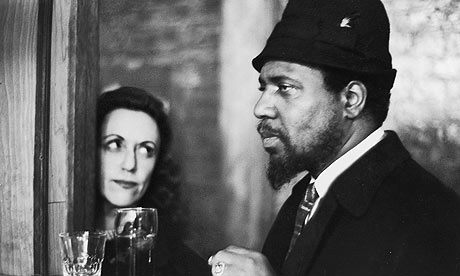
The film was written, directed, edited, and produced by Hannah Rothschild, whose great-aunt Pannonica, known to everyone as “Nica,” had a long friendship with Thelonious Monk, from when they met in Paris in 1954 until his death (at her house in Weehawken) in 1982.

By all accounts, they were not lovers, although Monk’s son tells the filmmaker that he believes Nica to have been “in love” with his dad. Indeed, both Nica and Monk were married when they met; Nica’s husband, Baron Jules de Koenigswarter, divorced her in 1956, at least in part because of her carrying on with New York jazz musicians.

The relationship seems to have been more one of patronage and caregiving on the part of Nica, who simply adored Monk’s music. In the film, she (voiced by the incomparable Helen Mirren) tells the story of the first time she heard it. In 1951, she stopped by a friend’s apartment in New York on the way to the airport to catch a flight to Mexico, where she was living at the time with de Koenigswarter and her children. He played for her “‘Round Midnight,” and she was completely captivated. She’d never heard anything like it, and she made her friend play the record over and over again. She missed her flight back to Mexico, and shortly thereafter, she moved to New York.

For his part, Monk was a musical genius but suffered from fairly severe mental health issues (undiagnosed in his lifetime, but later speculated to be manic despression, bipolar disorder, and/or schizophrenia). Several friends and his long-time manager also testified to his use of marijuana and heroin. Another friend explained that Nica, together with Monk’s wife, Nellie, shouldered the burden of caring for Monk, as his behavior was too much for one person to manage. Nica even took the rap for Monk when they were arrested for marijuana possession on the way to a gig in Delaware.

Overall, I liked the film. I certainly learned a lot, and I *loved* that Monk’s music played all throughout the film. You really can’t go wrong with his bebop. A few small items distracted me: Hannah Rothschild’s voice sounds remarkably like Helen Mirren’s, so at times during voiceovers it was hard to tell whose experience was being narrated. And a few of the interviewees were only identified during their first appearance in the film, leaving me to wonder in later scenes on what authority they were speaking. (Compounding this problem is that many of the Rothchilds interviewed were old, wrinkly, and therefore practically indistinguishable, women.)

My other complaint concerned the filmmaker’s attempt to show parallels between Nica’s and Monk’s lives. I don’t think that her search was in vain, but when she likened Monk’s upbringing — the son of a sharecropper in rural North Carolina — to Nica’s childhood — a member of one of Europe’s most prominent dynasties — she strained my credulity.

Mostly, though, I very much enjoyed the story of this “beautiful friendship.”

first person

Yesterday I heard a Holocaust survivor speak in-person for the first time in my life. A few weeks ago, after finishing Refuge in Hell, with its many survivor interviews, I realized that I hadn’t ever heard a survivor speak about his/her experience firsthand, save the film that runs at the end of the permanent exhibit “The Holocaust” at the United States Holocaust Memorial Museum.

I went to the museum for the first time in the spring of 1995, right after it opened, and I haven’t been back since (except for a quick visit to the gift shop — for classroom supplies with my mom — last July). But I’ve been thinking about the site a lot recently since Stephen Johns was murdered one year ago today.

On June 10, 2009, a man dressed in a confederate coat walked up to the museum’s entrance. Johns, a security guard at the museum, saw him and moved to open the door for the 88-year-old man, who then opened fire on the museum with the rifle hidden in his coat. Johns died at GWU Hospital, where my friend Rabbi Tamara Miller, as the Director of Spiritual Care, was called to minister to the Johns family — a job which later played a role in the hospital’s firing her in July. I’ve been working for Rabbi Miller for the past six months, helping her to build her new private practice in the wake of her dismissal.

This is how I found myself, a little before 1:00 p.m., making my way to the museum to hear Inge Katzenstein (née Berg) as part of its “First Person” series.

I was already thinking about senseless loss of life as I walked up to the building. And my sadness only increased as I navigated to the Rubenstein auditorium. The architecture of the museum is purposefully inescapable. Imposing. You can’t pretend that you’re anywhere except a memorial to the genocide of 6 million people, even if you just want to hear a nice Jewish lady tell about her family’s escape from Germany to Kenya, and then to the United States.

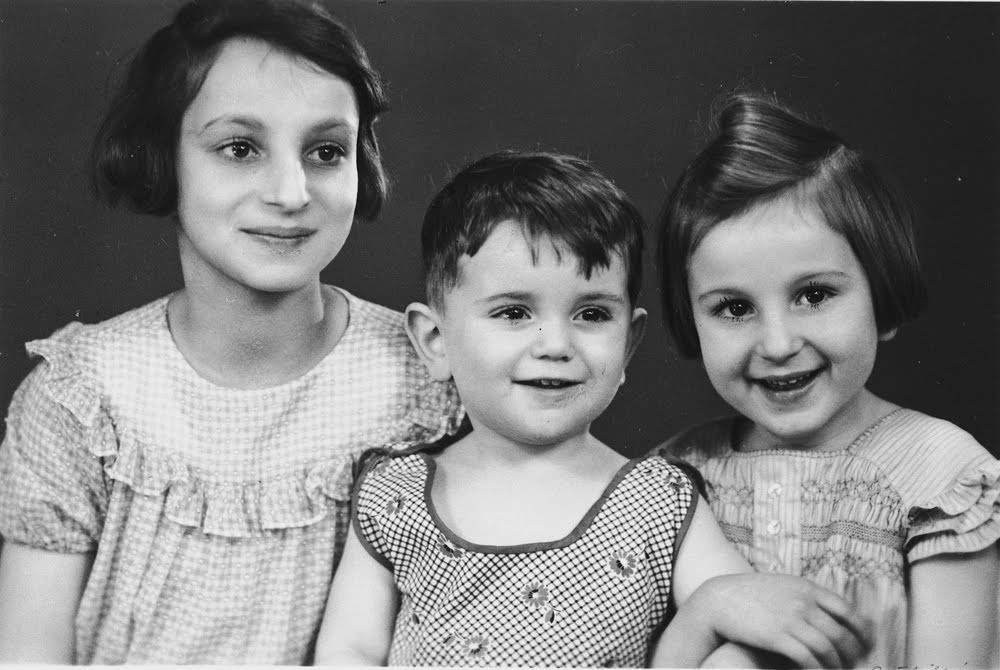
After a brief introduction by (the rather unfortunately named) Bill Benson — an introduction which included several pictures of the Berg family, including the one above of Inge, her sister, and her cousin — Inge sat down with Bill for an informal interview.

A member of an observant Jewish family, Inge lived in a small village outside of Cologne. Kristallnacht was the breaking point for her parents, who had been trying to leave Germany since 1933, but had been denied entry to the United States. (Inge recalled that they had a quota number, but it was so high, she quipped, “I doubt it would have even come up by today.”) Her father illegally left Germany for Holland right after Kristallnacht, and through a cousin who was a lawyer in the then British colony, 17 of her family members obtained visas for entry into Kenya.

Inge’s mother was left alone to manage the clean-up of the family’s house — which had been ransacked, and all items within damaged or destroyed, during Kristallnacht — as well as the orchestration of the family’s move to Africa. In May 1939, Inge, her mother, and her sister left Cologne for good; they made their way first to Switzerland and later to Genoa, Italy, where they caught a German boat to Mombasa. (At that point, the Germans were apparently happy to help Jews leave Europe.) And the boat even provided kosher meals!

Inge, her mother, and her sister lived in Nairobi while her father, his parents, and an uncle and a cousin ran the farm in the highlands. Eventually though, the political climate in Kenya became uncomfortable for the Bergs, who were considered to be Germans by the British and by the Kenyans, and in 1947, they immigrated to the United States.

I especially loved hearing all of the little details in Inge’s story. Her observant family managed to keep kosher even after such customs were outlawed in Germany through a cousin who had been a kosher butcher; after the Nuremburg Laws were passed, his business continued to slaughter animals but fired a shot afterwards, so that anyone listening wouldn’t suspect a ritual killing.

Inge recalled being driven with her grandparents out of her village to the relative safety of the countryside after the day after Kristallnacht. Her grandmother’s leg was in a cast, and Inga related how her grandmother used the cast to keep her on the floor of the car, so she and her sister couldn’t see what had happened to the village.

My favorite story was one that illustrated Inge’s self-described “rebellious” nature. A boy called her “a dirty Jew,” and Inge, tired of such insults, gave him a bloody nose. “And then I ran,” she grinned.

merry strasmas!

First, a hat tip to the Washington Post for that bon mot.

Last night, my husband and I ventured out to Nationals Park to see the much-hyped debut of the Nationals’ new 21-year-old ace, Stephen Strasburg (versus the Pittsburgh Pirates). He didn’t disappoint.

Joe and I left our apartment near downtown D.C. around 5:00 for the 7:05 p.m. start, and the train was still packed by the time we got to Navy Yard. The excitement in the air inside the stadium was palpable, a feeling not at all fitting for a match-up between two sub-.500 teams.

Even the elements conspired in Strasburg’s favor. It was absolutely perfect ballpark weather: 68 degrees, and not a cloud in the sky. Joe and I found our seats in the infield gallery, along the third baseline, in section 306. Among the sold-out crowd (pictured here in a photo taken by Joe on his iPhone), practically every other person wore a “37” red or white T-shirt.

Ken Burns (“not local,” Joe informs me, after checking his iPhone) threw out the ceremonial first pitch, and then the crowd was on its feet as Strasburg calmly jogged to the mound. There were so many camera flashes during his first pitch that I’m amazed the umpire was able to make out the tiny white speck in their midst. But he apparently did, calling . . . a ball.

But Strasburg doesn’t throw balls!

After a rocky start (it took him eight pitches to throw two strikes), Strasburg got the first two batters to line out and ground out, respectively. And when he fanned Lastings Milledge (a former Nat) for his first strikeout of the game, the crowd erupted into pandemonium.

Strasburg ended up striking out 14 over seven innings, including the last seven batters he faced. He walked none. By about the sixth inning, the crowd was again on its feet, cheering every pitch — and booing the home plate umpire when he dared to call a ball.

And the Nats gave their new ace uncustomary run support. Ryan Zimmerman hit a solo homerun in the bottom of the first, reminiscent of his walk-off homer during the park’s inaugural game in March 2008, the last time I saw Nationals Park so packed. Adam Dunn hit a two-run shot in the sixth, which Josh Willingham immediately followed with a solo shot of his own. That turned out to be enough, but Zimmerman managed to score again in the eighth.

The only part of the night that was a disappointment was the Presidents Race. Usually (rather insultingly) billed as “the main event” during the fourth inning, the promotional gimmick pits the four U.S. presidents on Mt. Rushmore in a foot race around the edge of the field from the Nats’ bullpen to home plate. Perennial loser “Teddy” is a favorite of mine, and the internets had been buzzing about whether the powers that be would finally let him win, in honor of the new era for the franchise that Strasburg was said to be ushering in. But alas, while Strasburg walked away from the game with his first “W,” Teddy just racked up another “L.”

Earlier in the day, the Nationals said that they had credentialed more than 200 members of the press for the game. The D.C. Sports Bog reported that Willie Harris, upon seeing the media crowd, remarked, “Damn, is this the World Series?”

Jesus of Nats-areth (h/t Steve Fox), indeed.