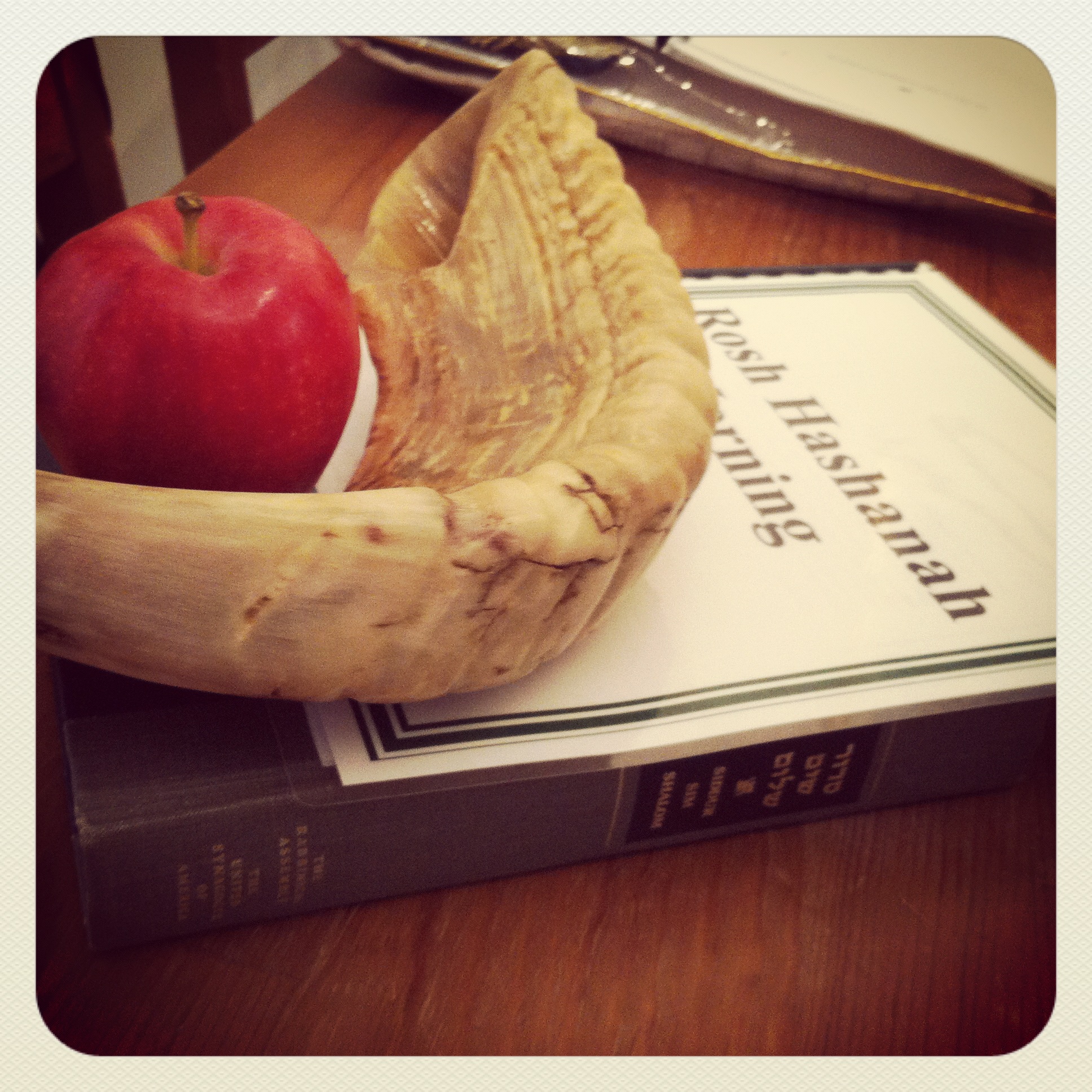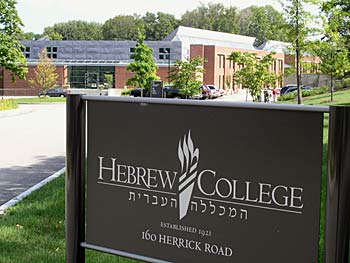
elohai neshama

אלהי נשמה collage; photo by salem pearce (via instagram)

אֱלֹהַי, נְשָׁמָה שֶׁנָּתַֽתָּ בִּי טְהוֹרָה הִיא

אַתָּה בְרָאתָהּ, אַתָּה יְצַרְתָּהּ, אַתָּה נְפַחְתָּהּ בִּי,

וְאַתָּה מְשַׁמְּרָהּ בְּקִרְבִּי, וְאַתָּה עָתִיד לִטְּלָהּ מִמֶּֽנִּי

וּלְהַחֲזִירָהּ בִּי לֶעָתִיד לָבוֹא. כָּל זְמַן שֶׁהַנְּשָׁמָה

בְקִרְבִּי, מוֹדֶה אֲנִי לְפָנֶֽיךָ, יְיָ אֱלֹהַי וֵאלֹהֵי אֲבוֹתַי

רִבּוֹן כָּל הַמַּעֲשִׂים, אֲדוֹן כָּל הַנְּשָׁמוֹת

בָּרוּךְ אַתָּה יְיָ, הַמַּחֲזִיר נְשָׁמוֹת לִפְגָרִים מֵתִים

My G-d, the soul that you put in me, it is pure: You created it, you formed it, you breathed it in me, and you tend it in my core. But you will take it from me and put it back in me in the world to come. For all the time that the soul is in my core, grateful am I before you, Adonai my G-d, and G-d of my ancestors, master of all works, lord of all souls. Blessed are you, Lord, the one who restores souls to lifeless bodies.

Earlier this week, a classmate led our tefila group in a guided meditation through the prayer elohai neshama (so called for the first words of the prayer). As we sat or stood in stillness and silence, listening to the meditation, experiencing this prayer in this way felt exactly right to me. Elohai neshama is an intensely personal prayer, beginning by addressing the divine with the words, “my G-d” and continuing throughout the prayer to speak directly to G-d. Many Jewish prayers are said collectively, in the first person plural (“we”), and talk about — not to — G-d. So having what was in many ways a private experience was a great choice for this prayer.

I love the progression of “you created it, you formed it, you breathed it in me.” In my meditation, I was struck by the image of a soul made for me alone: G-d was thinking of me when G-d gave me my pure soul.

On top of that, G-d is guarding (a tense shift from the previous verbs) — as in, G-d continues to guard, to tend — my soul. G-d created my soul for me, and G-d will also make sure that my soul stays in me, that it stays pure, and that I stay true to my soul and do not lose it. While my soul is in me, the prayer continues, I am grateful lifanecha, “before you,” emphasizing that personal relationship with G-d that is the birthright of my soul.

Lastly, I was really struck by my classmate’s interpretation of ribon, usually translated as “master.” He suggested that this word could denote less of a controlling G-d — and more of an expert (as in “the great masters of the Renaissance”). It resonated with me as an acknowledgement that G-d is really good at creation, and G-d gave me the soul that was right for me.

I don’t think that I want to address here the issue of taking and restoring of soul, as I find it problematic and incongruous to my understanding of the rest of the prayer. (I should definitely work it out at some point, but I’m okay leaving it for now.)

______________________________________________________

This post is part of a series about my year-long tefila (“prayer”) group. Read other posts about the group here. View my artwork inspired by the group here.

the arc of prayer

The rabbinical school curriculum requires that students join what are called “tefila groups,” with a new focus this year: tefila (“prayer”) as a spiritual practice. The idea is for everyone to “practice tefila with a spiritual practice group that shares goals and develops a consistent set of forms for its tefila.”

We were asked to come up with ideas for these spiritual practice groups, and the groups that ultimately formed, after a few weeks of discussion and proposals, included those committed to experience prayer as catharsis, as struggle with the divine (however conceived), as liberation theology, and as obligation. The groups daven together at least once a week and then meet on Thursdays to process the prayer experience as well as the group’s continued goals.

new tallit for rabbinical school; photo by salem pearce (via instagram)

The group I joined is planning to explore the liturgy of shacharit, the morning service, unit by unit, seeking to make a personal connection to each part. As my classmate who proposed the idea explained, he was inspired by a story he heard on NPR about a musician who had digitally remastered Beethoven’s 9th Symphony to make it last 24-hours. His vision for the tefila group was to essentially daven shacharit over an academic year.

We’re working on the selection of liturgical units (unsurprisingly, there are more of them than there are weeks) and schedule for davenning. On the day we pray together, we’re planning to just daven the prayer that we’re focusing on that week (with perhaps the prayer before and after it, so we can look at transitions, too). On Thursday, we’ll be sharing how that experience was for each of us, as well as any creative expression of the personal connection that we’ve made to that prayer.

It’s hard to overstate how excited I am by this prospect. I need to learn the service better (for myself, and as a professional skill), and although technical goals aren’t the point of these groups, I know I won’t but get to know the prayers better.

I can think of so many things that I’d like to do for each weekly unit; knowing that my time is limited, and that I want to push myself in this project, I’d like to commit to making a visual representation — probably a collage — for each prayer. I don’t think of myself as a creative person, so I’m nervous about the prospect, mostly that I won’t be able to achieve something that is meaningful and, more importantly, not cheesy. I’m hoping that a trip to the craft store a) won’t kill me and b) will provide some inspiration. I would also like to write here about my experience each week, hopefully with a picture of my finished product.

We’re starting tomorrow with elohai neshama, a short prayer at the very beginning of shacharit that praises G-d for creating humanity and for helping each person maintain his or her spirit and spirituality. More to come!

living waters

Before the holidays, I visited the mikveh, as I usually do in the early fall, when I officially became Jewish three years ago, completing my conversion with a beit din and a visit to the mikveh.

mikveh at mayyim hayyim; photo by salem pearce (via instagram)

The community mikveh in Boston is called Mayyim Hayyim (“living waters”). It’s egalitarian, which means that both men and women can use it “at the same time.” Most traditional mikvehs are used almost exclusively by women, with prescribed, separate times for men on those rare occasions when they might visit, and the pool is drained and refilled between the times for women and those for men. At Mayyim Hayyim, there are co-ed times, when men and women could both be immersing, though obviously in separate pools. It’s an unusual arrangement.

Every time I go to the mikveh, I think that I should do it more often. It is a truly relaxing and refreshing experience. It’s also a wonderfully solitary experience, which this introvert especially appreciates from among the majority of Jewish rituals that are communal experiences. (There are some immersions which are halachically required to be witnessed, but mine was not, and so I declined the presence of the mikveh attendant.)

The ritual of the mikveh requires complete cleanliness and removal of all clothes and accessories, “[i]n order to remove all physical barriers between you and the water of the mikveh,” as the preparation instruction sheet notes. You shower and clean every part of your body, scrubbing underneath nails and sloughing off dead skin on knees and elbows. You remove all makeup and nail polish. You brush and floss your teeth. Mayyim Hayyim has a beautiful set of meditations for this process.

I actually got a little stuck on the removing of nail polish this time; I’d just gotten a pedicure the week before (I should have timed that a little better). It is so silly that it was so hard for me, and I tried to reason that it was just because I hate to waste money. But I finally decided the polish was emblematic of something that I was trying to hang on to but also needed to let go for the new year. (I’m actually not sure I’ve identified that specific thing is. At least I’ve symbolically let something go?) Off it went.

mayyim hayyim gate: “go in peace”; photo by salem pearce (via instagram)

A mikveh visit typically consists of three complete immersions, with head underneath the water and feet off of the ground, and with blessings said after each one. Mayyim Hayyim has a selection of blessings for various rituals, from conversion to marriage, from coming out to healing. There’s not an existing ritual, as far as I know, for commemorating a conversion (more on that below), so I chose blessings for the new year.
The meditation after the last immersion follows:

May I return to my true self and be strengthened as I continue my journey of tikkun halev—repairing the heart, tikkun hanefesh—repairing the soul and tikkun olam—repairing the world.

As part of the commemoration of my conversion, I also asked for an aliyah at the morning Torah service that week. I told a classmate when he asked that I don’t usually mark the anniversary publicly. As he noted, Jewish tradition holds that once a person converts, it is as if s/he has always been Jewish. Indeed, there is a sense in which I have been Jewish my whole life. But there’s also a part of me that likes to remember that day, which felt like the first day of the rest of my life.

The classmate who was leading shacharit that morning offered the kavanah of gratitude for the service, and she asked me to connect the occasion to gratitude when I came to the Torah.

I am grateful, every day, to be Jewish.

feminist teshuvah

I wrote this two weeks ago as a final assignment for the fall seminar for first-year students, which looked at the Torah and Haftarah portions – and critical analysis of both – for Rosh HaShanah and Yom Kippur. We were asked to reflect on something we found interesting or significant from the readings and to present that reflection to the class. I’ve edited it slightly to make it more accessible to readers not in that class.

Thus for me, teshuva between women and G-d implies not just G-d holding me responsible for the ways I have failed as a human being, but also me holding G-d responsible for failing me as a Jewish woman by giving me a world and a people and a text that continue to betray women, often making it difficult for us to uphold our side of the covenant.

I almost fell off of my bed after I read this passage from Tamara Cohen’s essay, “Returning to Sarah,” in Beginning Anew. To say that it resonated with me would be a vast understatement. I don’t think a piece of text has so perfectly spoken to me in 10 years, since I read Anita Diamant’s Choosing a Jewish Life – the main impetus for the Jewish journey that eventually led me here.

The passage gave me permission to be mad at G-d. The tradition I grew up in did not allow that, and my inchoate theology tends towards a G-d that is not directly responsible for the state of things. Our mischegas is our own.

A world and a people and a text that continue to betray women.

[B]etray women.

This is my experience, from growing up in a tradition of strict gender roles, to working at an all girls’ boarding school in North Carolina, to volunteering at the rape crisis center in D.C.

I am grateful to now be a part of a community whose commitment to egalitarianism seems to be firm, but I know this to be an aberration. (And I know that there will be failures on that front; we live in a world of male privilege, after all.)

My life thus far has been a daily, run-into-a-wall encounter between the way that I experience life and a privileged experience of life. And that’s my experience as an upper-middle-class, straight white woman – to say nothing of the experience of people of color, or queer folks.

I feel that betrayal acutely, in ways large and small.

I feel it when last summer’s debt crisis – which almost led to a default and did lead to a downgrade in U.S. credit by world debtors – ended only when the president agreed to a bill rider that prohibited the District of Columbia from directing its own tax revenues to subsidize abortions for District residents.

I feel it in the lack of basic labor protections – standard for most workers in this country – for domestic employees, the women that care for our children, houses, and elders.

I feel it when our secretary of state – our nation’s top diplomat – is asked which fashion designers she prefers.

I feel it when sports teams at my alma mater are referred to as “the Longhorns” . . . and “the Lady Longhorns.”

I feel it when I get mail, as I did yesterday, addressed to “Mr. & Mrs. Joseph Grossberg.”

Last Wednesday at hesbon hanefesh (“account of the soul”) a teacher asked us to reflect on the issue of anger, and he used a text from Rav Natan as a prompt: “Help me break my tendency towards anger. Help me practice patience in all aspects of my life and overcome my anger. I don’t want to be angry or respond harshly to anything . . . I just want to be able to serve you honestly and simply, and to have total trust in you.”

This is not my prayer to G-d. For me there is a distinction between the feeling of anger and acting angrily. I don’t want to do the latter. But I also don’t want to not be angry, when I generally feel that if you’re not angry about the world, you’re not paying attention. (Patience, on the other hand, that I pray for daily.) My anger, my outrage at injustice, is often what motivates me. It’s one of the reasons I’m here.

And if I’m being honest, I have to say that in the drama of the traditional Yom Kippur “scapegoat” sacrifice in the texts that we read, I feel less like the onlookers or even the high priest – and more like the goat. I feel the weighed down by the burden of our society’s sins against women. Like the goat, I am either abandoned in the wilderness – or thrown over a cliff.

So, how can I do the hard work of teshuva (“repentence”) when a great deal of my reflection has left me angry at G-d? Trust after betrayal is incredibly hard, especially when the betrayal “continue[s],” as Cohen notes.

Cohen’s answer is, at least in part, is for us to complete the stories about and to strain to hear the voices of the women of the Torah. We must write our own midrashim and live our own fully integrated lives. So, I’ll definitely try to get that done in the next 19 days.

Hebrew College founder Art Green, in his introduction to S.Y. Agnon’s seminal text on the High Holidays, Yamim Noraim, suggests another, or an additional, model: He notes that Yom Kippur commemorates the giving of the second of the Ten Commandment tablets. (Moses destroyed the first in his anger at the Israelites’ creation of the golden calf.) Green says, “This time the tablets were to be a joint divine-human project. Moses does the carving, G-d does the writing. Every Jew receives or fashions these second tablets on or around Yom Kippur. This is the season when each of us renegotiates our covenant with G-d.”

If I can frame it like that, I’m able see G-d as a partner in the beginning of my teshuva. But it’s also a good thing that I have next year, too.

first services

On Monday I led my first service all by myself, an hour-long morning service for Rosh HaShanah. (In June, at my bat mitzvah, I just led two parts of the service: the Amidah and the second part of the Torah service.)

rosh hashanah prep; photo by salem pearce (via instagram)

A little over a week ago, the community relations coordinator at an assisted living facility about 10 miles north of Boston emailed the school to ask if there was a rabbinical student available for three one-hour services (on both days of Rosh HaShanah and on Yom Kippur). The director of job placement at the school then emailed the student body with the plea — and noted that it would be a great opportunity for someone with little experience, that it would be a real mitzvah for the center, and that the center would pay for the services. The first certainly described me; the second pulled at my heartstrings; and the third sealed the deal. I volunteered.

Helpfully, the center had a shortened service booklet (above) that had been put together specifically for its services, so I was able to work from that. I added a few parts and wrote a d’var torah; found tunes for parts of the liturgy that I’m not that familiar with (because they’re specific to the High Holidays, which are only once a year); got a crash course in shofar from a fifth year student (who was an awesome teacher!); and outlined and timed the serviced. And I practiced. And practiced. And practiced. At least as much as I could in a few days, during the first week of classes.

After the first day, I was just glad it was over. About two dozen people came, as predicted by the community relations coordinator. A few were the children of the residents, and I think they were my toughest audience. The residents were of varying cognitive and physical ability: about half were from the assisted living side of the center, and the other half, from the skilled nursing side.

I didn’t feel particularly nervous, but I performed with only mixed success. I did the parts I knew well (except when I started the Amidah in the wrong tune, which happened both days for some reason). And I was pleased with what I had written to say: an introduction, a kavanah (intention, or meditation, for the service); a preface to the shofar service; and my d’var. And, per the advice of the rabbi in charge of job placement — who sat down with me last week to offer advice — I greeted, and introduced myself to, and chatted with everyone before the service started. I think this went a long way in earning me some goodwill in spite of my mistakes.

Ah, yes: The mistakes. I just forgot most of the tunes for the High Holiday-specific parts of the liturgy. I do not have much singing ability, despite my performance at my bat mitzvah — which came after months and months of practice. And when I did remember how a part started, I usually got off track in the middle. These missteps were made worse by the fact that the tunes didn’t seem to be known very well — at all? — by the service participants. So it was just my poor singing that filled the room. I had wanted to learn them, though, to break up blocks of just plain reading in Hebrew; I think if I were a more skilled song leader, I could have repeated the refrains and gotten more participation.

I’m pretty sure that after I finished one “song” I heard a woman say, “This is terrible!” My husband maintains that the speaker was probably talking about something else, but I’m not sure she was wrong. I felt terrible at not doing well by the residents in their celebration of the holiday, and I felt even more terribly about representing Hebrew College poorly. I had, after all, told everyone where I studied when I introduced myself.

downtown boston from tobin bridge; photo by lehcar1477

When I left, I felt sick at the idea of going back the next day. I started to calm down as I drove away — and I began to feel better when I started to pay attention to the program that happened to be airing on Boston’s NPR affiliate: author Brené Brown spoke about her new book, Daring Greatly: How the Courage to be Vulnerable Transforms the Way We Live, Love, Parent, and Lead. I almost laughed aloud as I listened to Brown explain that “Overcoming shame, and allowing ourselves to take risks and ask for help is important not only for our personal and professional success, but also for our success as a culture.” Then I began to marvel at the view of downtown Boston from the Tobin Bridge (left), feeling grateful to be living in such a beautiful city and to have such unique opportunities.

By the next morning, I felt much less embarrassed and much more determined to do (and capable of doing) a better job on the second day. And so it went.

I slowed down and made sure to get the transitions from piece to piece right (calling out page numbers, opening or closing the ark, explaining the prayer that followed, etc.). I also decided to take one of the sefer Torahs from the ark. I wasn’t able to read the portion for that day (the akedah), but I knew the songs for the Torah service well, and people generally love to touch the scroll. I didn’t flub the Hebrew, and I remembered the tunes. After the service, I stood at the door and shook everyone’s hands, wished them a happy new year, and chatted briefly. It was a nice way to end the service; I wish I’d done it on the first day. Plus, it gave all of the participants a chance to tell me what a lovely service it was, which many of them did. Many also asked whether I’d be back for Yom Kippur.

Side note: As a rabbinical student (and as a rabbi, too, I imagine), the “holidays” are overwhelming. I spent all my free time before and during the holidays in preparation (for the services or the meals), and then three to seven hours a day at holiday meals. Several families associated with Hebrew College generously hosted me, but the majority of the people at these meals were unknown to me, and meeting new people as a rabbinical student can be exhausting. Rosh HaShanah is now over, and in a way I feel as though it didn’t really happen. Davenning as a service leader bears little resemblance to doing so as a service participant, and I didn’t have any time to do the reflection on the new year that I spent much of the last month preparing to do. Welcome to the rabbinate, I suppose. I need a chag from my chag.

Back at the assisted living facility, I was especially proud of the fact that I seemed to have won over a woman who was very cranky when she arrived. She sat down and basically began heckling me. At 10 minutes before the hour, she called out, “Let’s get this service started already!” Then she offered, “I suggest you introduce yourself to everyone before you begin!” When I told her where I went to school, she shook her head. “I’m very familiar with all of the rabbinical schools, and that’s not a rabbinical school.” Later she asked, “What will you call yourself? A rebbetzin?” She wrinkled her nose and gave me a doubtful look when I said that the term would be “rabbi.”

What took the cake, though, was her remark after the service. She came up to me and beamed, telling me what a great job I had done. She put her hands on my shoulders and looked straight at me.

“You’re going to make just a wonderful rabbi’s wife!”

UPDATE: The community relations coordinator called me on Thursday, two days after the second service to tell me how much the residents loved my services! She said they especially appreciated how I greeted each of them, asked their names, and then took the time to talk with them.

so it begins

I just completed my first week of school (well, sort of). Sunday and Monday were orientation, and Tuesday through Friday were the first four days of a pre-semester seminar. My classes will start in earnest next week.

It’s hard to relate all of the feelings I’ve had in the past week. Frankly, it’s been overwhelming, but in the best way possible. I’ve loved meeting my new classmates, the returning students, and the faculty, as well as beginning to learn as a class and to pray as a community.

I’ve also spent a fair amount of the week in a kind of emotional suspended animation: I’m waiting for the other shoe to drop. “It can’t really be that for once in my life I am in the right place.” “I can’t actually be doing what I supposed to be doing.” I know that not everything about this school and my experience as a student is or will be perfect. But I have never known peace like this.

First things first! The best thing about rabbinical school so far: I get to sing every day, and no one cares if (that?) I sing out of tune. I get to sing during morning prayers, and most communal time starts with a niggun (wordless melody). Even my class does! (Indeed, the fact that my admissions interview ended with a niggun solidified for me that Hebrew College was the right place for me.)

hebrew college’s selichot leader; photo by dena trugman (via instagram)

One of my favorite parts of the last week has been selichot, which unfortunately won’t be a regular occurrence throughout the year. Selichot are poems and prayers said during the Jewish month of Elul, which precedes the High Holidays. They explore themes of penitence and G-d’s mercy — not, perhaps, the most cheerful of topics — and at Hebrew College start at 7:00 a.m., before the morning service — giving an idea of how moving they must be to draw a crowd. (I have a limited music vocabulary, so I can only try to explain why.) In fact, more than one returning student told me that, despite the early hour, they were not to missed. Many of the tunes have strong beats and feature repeating lines, facilitating participation. And the Hebrew College tradition in many of the songs is that anyone can take a verse, while we all take the chorus together; I’ve loved hearing the variety of experience, accuracy, and ability that results. In this setting, not everyone sings well, but anyone can sing. I’ve never had an experience like selichot before, and I find that the songs stay with me all day.

Orientation was great mix of practical and spiritual. We met administrators, did icebreakers, told and heard personal journey stories, and started learning about core elements of the Hebrew College curriculum: personal and spiritual growth, tefila (prayer), beit midrash (literally, “house of interpretation”) and hevruta (study partners), and (good, old-fashioned) learning. I was particularly struck by something the director of admissions said as he welcomed us to orientation. He noted that school begins at an odd moment in the Jewish calendar, during the month Elul, a time of preparation for the High Holidays in which we reflect on teshuvah (literally, “return”). We atone for our sins by trying to make right our relationships with our fellow human beings and with G-d. Taking the first step in a new journey may feel out of sync with the prevalent theme of repentance, but, he said, “I know that for many us this beginning may represent a return in a very real way.”

This combination (which doesn’t even include the practical side of rabbinic education, which is to come in the curriculum), exemplified in the orientation schedule and in the introduction to the core elements of the school’s curriculum, is the essence of what I was looking for in a graduate program. I know I would not have been happy in a purely academic setting (as for example a Ph.D. program). I ultimately want to use my knowledge of Judaism in the service of others, and I am so excited to be an institution that recognizes the importance of spiritual and personal growth.

hannah, whose story is read on the first day of Rosh Hashanah

The seminar for first-year students is about the passages from the Tanakh that we read in synagogue on Rosh Hashanah and Yom Kippur. We’re looking at the primary texts in the Hebrew Bible as well as a variety of commentary on them: sections of Talmud and other rabbinic sources, modern and contemporary perspectives, and Israeli poetry. The rabbi who teaches the course is our class advisor (and will be teaching one of our fall semester courses); he assigned a text, Beginning Anew: A Woman’s Companion to the High Holy Days, as part of his commitment to looking at the primary texts through a feminist lens. I am thrilled that this perspective is given such importance, especially since so many of the High Holidays’ stories feature women.

This week marked for me the beginning of the hevruta study experience, as mentioned, a hallmark of the Hebrew College curriculum. Every morning after selichot, shacharit (morning prayer), and our facilitated Elul reflection, the first-year students split up into pairs to work, in the beit midrash, on the assignments for class that day. We switch partners every day (although we will eventually choose permanent study partners for the year). I was nervous about this part of the learning process. I’ve had a few experiences with hevruta learning, but nothing this consistent or systematic, and I have always thrived well in a very traditional, individual learning setting (lecture by professor and supplementary reading). I wasn’t sure I was going to like working in hevruta. To be sure, I chose Hebrew College in part because of its emphasis on hevruta learning, but I did so with trepidation, anticipating that it would be a challenge, pushing me out of my safety zone.

On Tuesday my first partner, who spent last year in Israel studying in hevruta, told me that it would ruin me for me classroom learning. I’m not sure I’m ready to go quite that far, but I have absolutely loved this week, completely confounding my expectations. It helps that I’ve jibed well with the four classmates that I’ve worked with so far: I’ve really appreciated their different strengths, and partnered learning has helped me to realize my own strengths (to wit, and unsurprisingly, grammar and translation of the Hebrew texts).

My final thought from this first week takes me back to the first day of orientation, Sunday — and my birthday. When I first found out the week’s schedule, I had the fleeting thought that it would be an odd way to spend my birthday (not least because I’d be among a fair number of strangers), but the more I considered, the more I thought that it might actually be perfect. The director of admissions in particular made a big deal of it, leading the group in “Happy Birthday” singing not once but twice, and when I thanked everyone after blowing out my candles, I said, “There is no place or group of people I would rather be on my birthday.”

And it really was true: I am incredibly privileged to be able to pursue this dream. What better gift could I ask for on my birthday than to be taking the first step on that journey?

open thank-you letter

Dear –,

I am writing this here because I don’t know how to write you directly — and because what I have to say deals directly with my journey to the rabbinate, which this site chronicles. I am writing on the off-chance that you have found or will find my blog. I know it is at least a possibility. And if you don’t make your way here, I’ll feel better at least putting this out there in the universe.

I’ve thought about you often in the past year as I applied to rabbinical schools and reflected on my reasons for doing so. Almost every time I answered the question, “Why do you want to be a rabbi?” (and it’s been asked quite frequently, in various contexts), I alluded to you.

Things did not end well between us, and that still does not sit well with me. But I want to tell you how much I valued your support at the beginning of my Jewish journey. I’ve had the opportunity to tell everyone else who helped me along the way.

You were the first Jewish guy that I dated, and maybe the first Jew with whom I was close. You made the fairly obvious to most — but stunningly  liberating to me — observation that I did not have to remain in the religion of my family of origin. It was a revelation. And you knew of what you spoke, because your mother is a convert.

I went to shul with you for the first time, I opened a siddur with you for the first time, I stood on the bimah with you for the first time. You encouraged me to learn about Judaism, and you helped me to realize that I have a Jewish soul. You’re who I think of when reading Anita Diamant‘s words:

[T]he fact is , many people find a home in Judaism as a result of falling in love with a Jew. As one Jew-by-choice wrote, “What better way to discover Judaism than through love? People sometimes say deprecatingly, ‘Oh, she converted for marriage.’ Or, ‘Oh, he converted for her.’  . . . The point is: in these instances, the non-Jewish lover sees the beautiful in his beloved and identifies with it. What is it but the Jewishness of the Jew that he wants? And so he chooses to become a Jew himself. This is not something to scoff at.

It’s hard for me to see how I would have gotten here, on the cusp of the beginning of rabbinical school, without you. We did not last, but what I gained from you lasts yet.

Thank you.

through the looking-glass

I made it.

!ברך אתה יי אלחינו מלך העולם שהחינו וקימנו והגיענו לזמן הזה

Summer classes ended yesterday, and I passed Hebrew 4, as my teacher told me this morning. She asked me to meet with her the day after the final because I panicked during it and couldn’t quite finish. We talked through the text together, and then she gave me opportunity to answer the questions I hadn’t gotten to. This is just one of the ways in which she is a great teacher.

It was disappointing to leave the last class feeling completely frustrated by my performance (although there was also an odd symmetry to having the last class end in the same way the first class did). But yesterday was not at all indicative of my experience in the second four-week class. I got an A- on my midterm, and almost everyday the teacher told me that my homework was “superb.” I felt relaxed in class, and I even made Hebrew jokes (dorkiness acknowledged). Perhaps most importantly, I feel prepared for Hebrew 5, which begins in just a few short weeks, since I will continue with the same teacher. In fact, I pity my future classmates, the ones who did not share with me in the experience of this summer, because they have no idea what they’re in for. She is fair but tough, and I am so glad that I now know what to expect from her class.

Recalling the anxiety, fear, and complete incompetence that I felt during the first course (Hebrew 3), I can still feel the knot in the pit of my stomach that I had almost every day. In this case, ignorance served me well, as I don’t know that I could have knowingly put myself in this situation. (Well, one type of ignorance served me well: I certainly wouldn’t have minded actually knowing more Hebrew before the start of the class.) But as the cliché goes, I am stronger for this experience.

One of the highlights of the summer was the minyan on Wednesday mornings. Two upperclassmen started it, and we had a consistent if small showing each week, a mix of faculty and students who were still in Boston this summer. I loved starting those days with prayer, quiet, reflection, and meditation. It’s not a surprise that I enjoy davening, but it has been a bit of surprise to me how much I’ve loved it. While I enjoy praying on Shabbat, I haven’t had a more regular prayer practice until now. Even when I was facing the possibility of more sleep, I went to minyan anyway, and I was always glad that I did. I felt calmer and more centered — and so ultimately more ready for class on Wednesdays. Various people led the morning service, and the different selections, melodies, and readings made what can become rote into a new experience each time. This is an intentional prayer community, and I am excited to do this regularly in the school year.

Peeps supervises midterm studying; photo by joe grossberg

I have learned more Hebrew in the past two months than I have in the previous two years, when I started studying seriously to be able to enter the rabbinate. I unearthed all of the skills that I developed in college (most of which were based on already having a good grasp on the material) — and learned new ones (based on generally not knowing what the hell is going on). I also got a glimpse of some of what I might be able to expect of myself as an older student, especially in contrast to the other students in my class, all of whom are 7-10 years younger than I am. First and last days notwithstanding, I felt like I generally panicked less and apologized less, trusting that the instructor would both see my effort and know where I was developmentally, as a good teacher does. And she is an excellent educator.

I also realized the difference between a class taken simply to fulfill a requirement, or even to learn something interesting, and one that is the basis of vocational calling. My success in this class is vital to my future as a rabbi, and I had to be mindful not to let my frustration and anxiety about my limitations become dislike of Hebrew, while still giving myself permission to count down the days and be glad that this intensive Hebrew experience is over. A two-hour Hebrew class three times a week is going to feel like a breeze after this summer!

Orientation starts a week from Sunday. Bring it on.

life unrecognizable

Last night I dreamed that I blogged here, so I’m taking the fact that I didn’t conjugate Hebrew verbs in my sleep as a sign that it is time to write again.

Since I last posted (excluding my d’var torah, which wasn’t written for this site), I left my job, celebrated my bat mitzvah, said goodbye to my D.C. life of seven years, moved to Boston (or Brookline, or Chestnut Hill, or West Roxbury, depending on whom you ask), attended my brother-in-law’s wedding in Mexico, and started the first of two intensive Hebrew courses this summer.

Please excuse the completely unoriginal observation that moving, particularly to a new city, is one of the hardest events in the life cycle. My life has indeed become almost unrecognizable to me: I feel so little connection to who and where I was just a month ago, were it not for the anchor of my husband and my cats, I might be convinced that I had landed in an alternate universe. I don’t remember feeling this way (at least not as intensely) when I last uprooted myself and moved from Raleigh to D.C. And I can’t even think about my past life. As I hung my print of Washington, D.C., neighborhoods the other night, I almost started crying as I read the names of the places I know and love — places that seem so familiar and so far away.

The main issue here is, I think, the class. I am taking Hebrew 3 (and next, Hebrew 4) to be ready to take Hebrew 5 in the fall as part of the Mekorot curriculum (the preparatory year at Hebrew College). Four days a week, it’s four-and-a-half hours a day, with perhaps two 5 or 10 minute breaks, and with eight hours of homework each night. I’ve studied many languages, and more than one intensively, but I’ve never had an experience like this.

I’ve done almost nothing but go to class and study for the past three weeks. In the afternoons and evenings, I look at the clock and decide when my next break will be, and I actually look forward to taking 15 minutes to unpack a box or call the pharmacy (that’s what I do for fun these days). I work until midnight or beyond and then get up at 6:00 a.m. to run, shower, and then head to class. I’m not eating much. Joe works from home for now, and even though we’re in the same space more than we’ve ever been, we barely spend time together. My rabbi called last week before she left for Israel for the summer, and my first thought was, “It’s good that she’s leaving the country tomorrow; the phone call can’t last too long.” When today’s holiday was announced, I wondered, “Do we celebrate the Fourth of July here, in this land of never-ending Hebrew?”

Part of the academic struggle is my inadequate preparation: My two years of classical Hebrew and then working my own way through the Hebrew 1 and 2 book did not ready me for this particular class. It is some consolation that none of my classmates seem adequately prepared for the class. Two others have a classical background and are similarly struggling with vocabulary and speaking, while the two who completed traditional modern Hebrew courses are struggling with grammar. I’ve been playing catch-up since day one, and that’s an unpleasant and unfamiliar feeling.

I’m used to being a “good student” in the most conventional way: In previous language classes I’ve understood grammar, learned vocabulary, read texts, absorbed nuances of pronunciation — and all easily. Learning languages, I would have said, is a joy and a strength. I don’t think I realized what an amazing gift that was: The rug has now been not pulled, but jerked, out from under me.

What I am expected to digest and to produce isn’t manageable. I can only figure out some of what I should be working on to improve my skills, and even if I could determine my weaknesses, I would haven’t time to work on them. I make innumerable, embarrassing mistakes because my brain has become Hebrew mush, and right now I can’t even do correctly what I already know. Each morning as I walk into class I wonder if I’ll be able to do what’s asked of me, and sometimes I’m not. The water is at my nose, and I’m struggling to keep my head above it.

So I’m learning how to be a “good student” in a different way. I complete all of the assignments; I make myself say something even though I know my mangled Hebrew must cause my Israeli teacher’s ears to bleed; I ask my classmates for help; I remind myself that there are no grades and that I only have to pass. When the thought “I hate this language!” begins to flicker at the edge of my brain, I reach for my new mindfulness practice of reminding myself that I’m only going to get through the next six years if I love Hebrew. I meditate before class. I do my best and let go of the rest.

hydrangeas at apartment complex; photo by salem pearce via instagram

I had some inkling of this challenge: I postulated in my application that I would likely not have in rabbinical school the same experience as in undergrad, where everything came so easily to me. But I couldn’t have anticipated feeling like this.

And it’s not all bad or challenging. I’ve learned more Hebrew in the past two weeks than I have in the past two years. Along with all of my classmates, I passed my midterm. New England is unbelievably beautiful in the summer. I run almost every day. My husband cooks amazing dinners. I appreciate Shabbat more than ever.

There are things to look forward to as well: Joe and I have tickets to a Red Sox game, and my mom visits in two weeks. This weekend I get to see my friend Emily, up from D.C. We’re planning a day trip for Joe’s mid-month birthday, and I’ll make my first visit to Cape Cod in mid-August. And I just got an email from a fifth-year rabbinical student who is organizing a once-a-week summer minyan: An hour of morning prayer will go a long way in easing my anxiety. Plus, I got my fall semester schedule! I can’t wait for some variety in my studies. I’m taking Genres and Themes of Biblical Literature; Introduction to Mishnah; Cantillation; and Jewish Life and Practice.

And yes, Hebrew 5. The beat goes on.

decision

This is perhaps more than a little anti-climactic now, since it says so in more than one place on this blog, but . . . I’ve decided to go to Hebrew College, the transdenominational rabbinical school in Boston (or, more accurately, Newton Centre).

It was in some ways a very simple choice. When I visited the first time in November, there was a moment — that scared me, that I didn’t talk about with anyone at the time — when I just knew: This is right. This is where I want to be. I didn’t want to say it aloud because I knew I wasn’t going to make a decision based just on a feeling. I was also not ready to put that intention out into the universe.

Besides, one of the most important things I took away from my tour of rabbinical schools is how great all of them are. It was amazing to see how each institution is so seriously engaged in thinking about how best to train rabbis to serve the Jewish people. I loved meeting the deans of admissions, faculty, and students at each school: They are all amazing people. I honestly believe I would have been happy at any of the four I applied to. In addition to other factors, it came down to which I thought would be the best fit. (More about that below.)

The decision was also simple in another, more surprising, way. In mid-March, after I’d received my acceptances, I narrowed the choice down to two schools in two cities: Hebrew College, and Reconstructionist Rabbinical School (RRC) in Philadelphia. I’d gotten the idea that my husband was leaning more towards the latter, and since I really wanted the decision to be transparent and mutually agreed upon and beneficial, I began to prepare for a lengthy conversation. I taped a piece of butcher paper on the door into the living room; it was divided into two sections, one for each city. We began to write down the pros and cons of each city and school. (Some of the more amusing cons were “Pats fans” and then “Eagles and Phillies fans.” In retrospect, we clearly should have added “Bruins fans” to that list.)

Shortly afterwards, I was looking at the paper and my husband came up to me and said, “Do we need to do this? I want to go to Boston.” And that was that.

On my conviction that Hebrew College is the best fit for me: During my interview, both Rabbi Art Green (a professor and one of the founders) and Rabbi Sharon Cohen Anisfeld (the dean) helped me to clarify my thinking on the issue. As Rabbi Green noted, the emphasis at RRC is on history, as reflected in its curriculum; Reconstructionism views Judaism as an evolving religious civilization, so each year is spent immersed in an historical period (biblical, rabbinic, medieval, modern and contemporary). Rabbi Green knows from what he speaks: He was the dean of RRC for six years.

At Hebrew College, the emphasis is on text, as reflected in its curriculum, in which each year is spent immersed in a book of Torah. Let’s face it: I was a Classics major for a reason. I spent my undergraduate years learning Latin and Greek — and then reading texts in the original. (There was a little culture and history thrown in, but not much.) And then I went on to learn German and Russian for the same reason. More than most things, I love reading and translating text. Grammar, syntax, vocabulary, sentence structure, nuances of meaning — they all thrill me. Simply put, I am a text dork.

yeminite beit midrash by geula twersky

But “best fit” also means something else to me. As I realized in my Hebrew College interview, RRC would have been, in some ways, the “safer” choice. The school, its students, and its alums are know for their political engagement (among other things). In that sense, I would fit right in. In contrast, Hebrew College, as a transdenominational school, doesn’t have the same political homogeneity. I anticipate that I will find it quite challenging at times to go to school with people who have different opinions than I do in this area. For one, I don’t have much experience; I tend to surround myself with like-minded people (as do most of us). Relatedly, I don’t have much patience with non-progressives/radicals.

The other aspect of a Hebrew College education that I expect to find challenging is its required beit midrash hours. Beit midrash literally means “house of study” and refers to the places of Torah study that the early rabbis used. In rabbinical schools, the beit midrash is a library that encourages talking, because studying there is done b’chevrutah (with a partner). Part of a transdenominational education is learning from others who may have different (in this case religious) viewpoints. But in general, the school values partnered learning, which means I’ll be required to spend several hours each week studying with someone else. As an introvert who prefers to work alone rather than in a group, I’ll thus have to work hard to make sure I am getting enough recharging time.

I’ve framed these last two factors in a negative way; indeed, it’s the challenge of them that appeals to me. I need to push myself out of my comfort zone. Doing so, I will be a better rabbinical student, and a thus a better rabbi.

Finally — and I can’t emphasize enough how awesome this was — my interview at Hebrew College ended with the room singing a niggun (wordless melody). What’s not to love?