voting

A few of my Facebook friends from Texas began posting this week about early voting, and I wondered whether that is an option here in Massachusetts. But then I remembered that I still don’t know who I’m going to vote for next month. And the choice is not between the president and Gov. Romney, which anyone who knows me might suspect. I am considering voting for a third-party candidate.

inauguration watermelon, just part of the Oba-mania in D.C. in early 2009; photo by salem pearce

I voted for Obama last time, and I was proud to do so — to be a part of history, and as a symbol of my hope for a new era after the horror of Bush years. I didn’t think Obama was going to forever change U.S. politics, as so many of my friends seemed to (a Hillary supporter originally, I was slow to warm up to the eventual candidate), but it was a thrill to vote for the first black president of the United States in that country’s capital, an historically black district. I happily waited in a long line that beautiful morning in November 2008 outside my voting location, the Metropolitan A.M.E Church. And I was proud to cast my vote that day even though Obama was projected to win the district — and of course did with almost 93% of the vote (more about that below).

But Obama as president has disappointed — and on more than one occasion, infuriated — me, as I know he has many progressives. He ran liberal as a candidate and then as president ran straight to the center (although I don’t think he is as bad as President Clinton in that way). To name a few issues:

The president signed into law the National Defense Authorization Act, which includes the “indefinite definition” clause, a provision that allows for military imprisonment of U.S. citizens. (This law also makes the closing of Guantanamo — a campaign promise — more difficult.)

The president has deported an unprecedented number of undocumented immigrants during his term, despite a campaign promise of comprehensive immigration reform.

The president has ramped up federal raids on state-legal medical marijuana dispensaries, despite a campaign promise to end them.

And this Nobel Peace Prize-winning president has quadrupled (unofficially unacknowledged) drone attacks in Pakistan against terrorist suspects.

This is to say nothing of my devastation at the president’s refusal to speak out, as a black man with black daughters, about issues affecting black folks. And as I noted at the time, I was not impressed with his declaration of support for marriage quality.

I recognize that these are not everyone’s issues. And there are also things that the president has done which I’ve loved, such as health care reform and repealing the “Don’t ask, don’t tell” policy. However, I think that at this point my concern outweighs my estimation.

To be clear, I do not consider Gov. Romney any kind of alternative (not the least because he doesn’t differ from the president on the above issues), and I am fairly confident that the president is going to win re-election. More importantly for the decision at hand, the president is sure to win my state of Massachusetts. If I lived in a swing state, the president would have my vote in an instant, and this thought exercise would not exist.

The other choices in Massachusetts are the Libertarian ticket, featuring former New Mexico Gov. Gary Johnson, and the Green-Rainbow ticket, featuring Dr. Jill Stein (a former Massachusetts gubernatorial candidate), both of whom have positions that I find appealing — and who disagree with the prevailing orthodoxy on the four issues I mentioned above. According to this highly scientific website, I agree with Stein on 94% of issues and with Johnson on 82% (and Obama isn’t actually all that far behind with 72%).

But of course neither of them will draw anything more than 1% of the vote in Massachusetts. And I don’t know that I want either of them to actually be president: Stein in particular, by her dearth of political experience, is in no way qualified, and neither has been scrutinized and vetted on a national scale as I would expect to be the candidates for the most powerful job in the nation. Plus, I don’t agree with many parts of the Libertarian platform.

So I know who will carry Massachusetts; a vote for any other candidate won’t affect the fact that the electoral college votes will go to the president. Before I can answer the question of who I should vote for, I need to answer the question of why I vote.

Tritely, I believe that voting is my civic duty, part of living in a democratic society. The possibility of voting engages me with my elected officials and the issues that affect me, and the act of voting is a symbol of my investment in that society. I vote because so many others (particularly legions of felony drug-offenders, whose punishment does not end with serving time and who the vast majority of states strip of the right to vote) can’t.

taxation without representation; photo by salem pearce (via instagram)

I lived for years in the District of Columbia without Congressional representation (despite paying federal taxes as all other U.S. citizens). On principle, that’s enough to propel me to the voting booth as often as I can, if for no other reason than to elect members of Congress who will give D.C. residents representation. Which reminds me of another way in which the president has madden me: He has done nothing to advance D.C. Congressional representation in Congress — and didn’t do so even when he had a super-majority in Congress. He wouldn’t even show symbolic support for the issue — which results in disproportional disenfranchisement of black folks — by putting the “Taxation Without Representation” license plates on the presidential limousine.

As it turns out, voting is not rational, as this 2005 New York Times article articulates nicely. It’s inefficient and ineffectual. There is almost no chance that my individual vote will affect the outcome. If I believe that it is nevertheless important — and many things in this life are both irrational and important (the Libertarian Party probably doesn’t even want my vote now!) — what are the considerations for who gets my vote?

Do I vote for a candidate about whom I have serious reservations but who is going to win, because that projection is based on people like me voting for him, and if everyone behaved otherwise, he wouldn’t win?

Do I vote for a candidate with whom I have more agreement but who has no chance of winning — and who I actually don’t want to see win anyway? Is there value — for myself, for society — in a symbolic vote?

I just don’t know, and I continue to struggle with these questions, which feel very important to me. There’s a chance that I don’t decide until I actually get to my voting place on November 6.
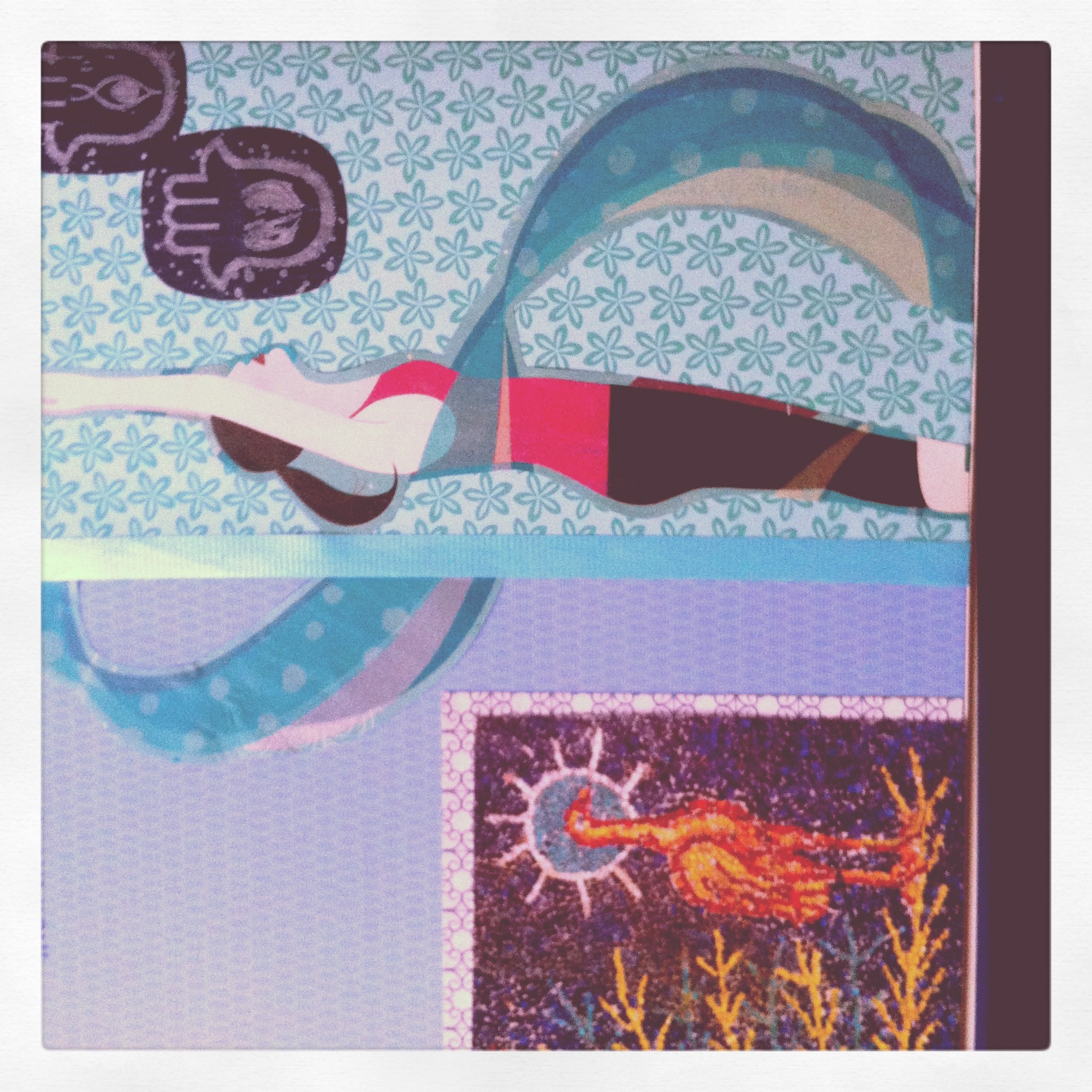
birkot hashachar

ברקת השחר collage; photo by salem pearce (via instagram)

בָּרוּךְ אַתָּה יְיָ אֱלֹהֵֽנוּ מֶֽלֶךְ הָעוֹלָם

. . . אֲשֶׁר נָתַן לַשֶּׂכְוִי בִינָה לְהַבְחִין בֵּין יוֹם וּבֵין לָיְֽלָה.

. . . שֶׁעָשַֽׂנִי בְּצַלְמוֹ.

. . . שֶׁעָשַֽׂנִי יִשְׂרָאֵל.

. . . שֶׁעָשַֽׂנִי בַּתּ חוֹרִין.

. . . פּוֹקֵֽחַ עִוְרִים.

. . . מַלְבִּישׁ עֲרֻמִּים.

. . . מַתִּיר אֲסוּרִים.

. . . זוֹקֵף כְּפוּפִים.

. . . רוֹקַע הָאָֽרֶץ עַל הַמָּֽיִם.

. . . שֶׁעָֽשָׂה לִּי כָּל צָרְכִּי.

. . . הַמֵּכִין מִצְעֲדֵי גָֽבֶר.

. . . אוֹזֵר יִשְׂרָאֵל בִּגְבוּרָה.

. . . עוֹטֵר יִשְׂרָאֵל בְּתִפְאָרָה.

. . . הַנּוֹתֵן לַיָּעֵף כֹּֽחַ.

Blessed are you, Lord our G-d, sovereign of the universe: who gave to the rooster ability to distinguish between night and day; who made me in G-d’s image; who made me a Jew; who made me a child of freedom. G-d gives sight to the blind, clothes the naked, releases the bound, raises the downtrodden, treads the earth upon the water. G-d provided me my every need has made me everything I need, has made ready a person’s steps. G-d girds Israel with might, crowns Israel with glory. G-d is the one who gives to the weary strength.

This week my tefila group focused on Birkot HaShachar (“blessings of the dawn”), a series recited at the beginning of the morning service. The blessings focus on praising G-d for the renewal of the day and mirror the order of activities upon rising. Like elohai neshama, the liturgy speaks directly to G-d, but here as “our G-d” instead of “my G-d.” Some of the reflections are personal; others, more communal.

As part of our commitment to considering the transitions between prayers, we began our session with elohai neshama, singing it a few times through to an arrangement by a classmate. We then went outside for stretching and birkot, and then came back inside for korbanot (next up in the liturgy), a series of blessings that reference temple sacrifice.

As with last week, the form and content of our principal prayer meshed perfectly. It was a great choice to go outside for birkot hashachar; by doing so we were able to see the more literal side of some of the blessings. It was a beautiful, crisp morning, and I looked up at the sun beginning to shine through the trees, and I felt like I could fly as my tallit billowed around me.

We sang birkot hashachar to an arrangement of yet another classmate (so much musical talent in the Hebrew College community!), set to the song “One Voice” by The Wailin’ Jennys. My classmate leading the prayer shared a kavanah from yet another classmate: Over its duration, “One Voice” progresses from “[t]his is the sound of one voice,” to “[t]his is the sound of voices two,” to “[t]his is the sound of voices three” and ends with “[t]his is the sound of all of us.” In a similar way to birkot hashachar, it mirrors what happens as we move through our day. At first it’s just us, and then voice after voice adds to our experience.

I often feel this way about my morning. I get up alone, and when I get to school I begin greeting people, and we begin davenning. Usually at some point in the service, we have one voice in prayer — and it’s an amazing experience. I sometimes stop singing myself and just listen to all the voices.

Before Tuesday I actually hadn’t heard “One Voice.” I did have the sense while we were singing that I wish we could have gotten progressively louder. But there are only six of us in the group. So when I access my memory of our singing birkot hashachar, I imagine us as we were, standing outside, looking at G-d’s creation, singing in “One Voice.” And I imagine that we resound.

one voice – the wailin’ jennys

* Thanks to a classmate, whose translation of the phrase שֶׁעָֽשָׂה לִּי כָּל צָרְכִּי I prefer to my original.
______________________________________________________

This post is part of a series about my year-long tefila (“prayer”) group. Read other posts about the group here. View my artwork inspired by the group here.

why have kids?

First: I don’t know whether I want children. I’ve never felt a strong desire for children. I have felt pressure from my mom and from (what I perceive is, more on that below) Jewish tradition. I’m mostly undecided, and I think I could be okay not having kids. I do wonder though, if it were socially acceptable, whether I would just decide not to. Which is strange to me, since I am not usually ruled by others’ expectations. I think part of it is the fact that relatively few people choose not to have kids, so I wonder if I’m missing something. I also wonder how to know that I won’t regret that decision. Deciding to become a rabbi has only intensified my anxiety about this issue: I don’t know any rabbis without children.

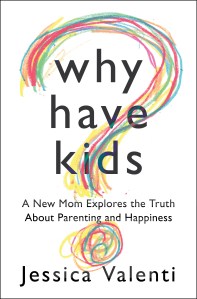
Over the holidays I read (on my Kindle app on my iPhone) Jessica Valenti’s Why Have Kids? A New Mom Explores the Truth About Parenting and Happiness. It’s a short and quick read, and it in no way answers its own question. I was left with the overwhelming feeling that there is no rational reason to have kids. People do it because they want to, because they are expected to, because they were faced with an unintended pregnancy — all valid reasons. But it’s not necessarily going to make you a happier or more fulfilled person (at least not for a long while).

The book is divided into two parts: LIES and TRUTH. The first category includes “Children Make You Happy,” “Breast is Best,” “‘The Hardest Job in the World'”; the former, of “‘Bad’ Mothers Go to Jail,” “Smart Women Don’t Have Children,” and “Women Should Work.” Obviously, some of these are provocative, but Valenti does manage in some way to take on some of the sacred cows of motherhood. Much of the book draws from first-mother accounts, and the stories, quite frankly, are horrifying — and played into my worst fears. The standout in the book is her (unfortunately ill-formed) argument for the need in our country to move from individual to community parenting — thus requiring us to advocate for “government and workplace policies that honor parenting for everyone.” That’s a world into which I would want to bring children. Valenti just doesn’t really offer a way to get there.

Interestingly, related issues were raised last Shabbat in a Jewish context; at Temple Beth Zion, a congregant, the aunt of one of my classmates, gave a d’var Torah about the Biblical imperative to procreate, from the weekly parshah, Bereshit. In the first account of the creation of humans — the only humans at the time — in Genesis 1:28, G-d tells them, “Be fruitful and multiply and fill the earth and subdue it.” The talk was intensely personal, and it deeply resonated with me.

At my request, she sent me a copy of her d’var. Speaking from her perspective as “a Jewish woman who chose not to give birth or be the primary raiser of children,” she talked about her struggle with that decision and her exploration for its validation in Jewish tradition. She grew up in a different time, when women were told that being a mother was part of having a full life. (I’m actually not sure that things have changed that much, though perhaps the messages are less explicit.) She began to speak with women older than she and discovered that this might not be the case. After much agonizing, she related, “I felt at the end of the day that primary parenting is a huge responsibility and a lot of work that, while potentially quite wonderful, was not one of the major life works that I wanted to take on.”

She explained that she made that decision with the belief that it was in opposition to Jewish law and practice. At the time, she identified as a secular Jew, so whether there was support for her choice in Jewish tradition was not of import. When she became more religious mid-life (when having children was no longer an option), she began to explore what Jewish texts actually have to say on the issue. There are in the Tanakh examples of women who do not have children — most notably Dvora — which is to say nothing of the men and women who cannot have children. She also cited the story of Jacob’s reaction to Rachel in her despair over not having children; a 15th century rabbi interprets it as anger at her forgetting her basic worth as a human being.

Wrapping up, she asked, “What does it mean to be a mensch (human) in regards to procreation and the domination of the planet by human beings in the 21st century? What is our holy work and what is our holy work today as we explore our connection back to the very first mitzvah — of procreation?” Citing the writing of Rav Kook (the first chief rabbi of British Mandate Palestine) on the issue — his view is that procreation is not mere instinct but pursuit of divine goodness, to be found everywhere — she concluded,

From my point of view this means that procreation originally set the precedent for human holy activity that now includes all activity that nurtures the human race.

Oh my God! I forgot to have children!Thus, her work as a mentor and advocate for Jewish women is her holy work — born of the Biblical mandate to “be fruitful and multiply.”

This decision weighs on me, and it’s something I’ll continue to wrestle with as my window for having children continues to close because of my age. The d’var giver joked that she didn’t want to have the realization of a woman in a t-shirt she saw: “Oh my God! I can’t believe I forgot to have to have children!” Like her, I want “to make an active, intelligent decision about whether or not I [am] going to give birth and raise children.”

elohai neshama

אלהי נשמה collage; photo by salem pearce (via instagram)

אֱלֹהַי, נְשָׁמָה שֶׁנָּתַֽתָּ בִּי טְהוֹרָה הִיא

אַתָּה בְרָאתָהּ, אַתָּה יְצַרְתָּהּ, אַתָּה נְפַחְתָּהּ בִּי,

וְאַתָּה מְשַׁמְּרָהּ בְּקִרְבִּי, וְאַתָּה עָתִיד לִטְּלָהּ מִמֶּֽנִּי

וּלְהַחֲזִירָהּ בִּי לֶעָתִיד לָבוֹא. כָּל זְמַן שֶׁהַנְּשָׁמָה

בְקִרְבִּי, מוֹדֶה אֲנִי לְפָנֶֽיךָ, יְיָ אֱלֹהַי וֵאלֹהֵי אֲבוֹתַי

רִבּוֹן כָּל הַמַּעֲשִׂים, אֲדוֹן כָּל הַנְּשָׁמוֹת

בָּרוּךְ אַתָּה יְיָ, הַמַּחֲזִיר נְשָׁמוֹת לִפְגָרִים מֵתִים

My G-d, the soul that you put in me, it is pure: You created it, you formed it, you breathed it in me, and you tend it in my core. But you will take it from me and put it back in me in the world to come. For all the time that the soul is in my core, grateful am I before you, Adonai my G-d, and G-d of my ancestors, master of all works, lord of all souls. Blessed are you, Lord, the one who restores souls to lifeless bodies.

Earlier this week, a classmate led our tefila group in a guided meditation through the prayer elohai neshama (so called for the first words of the prayer). As we sat or stood in stillness and silence, listening to the meditation, experiencing this prayer in this way felt exactly right to me. Elohai neshama is an intensely personal prayer, beginning by addressing the divine with the words, “my G-d” and continuing throughout the prayer to speak directly to G-d. Many Jewish prayers are said collectively, in the first person plural (“we”), and talk about — not to — G-d. So having what was in many ways a private experience was a great choice for this prayer.

I love the progression of “you created it, you formed it, you breathed it in me.” In my meditation, I was struck by the image of a soul made for me alone: G-d was thinking of me when G-d gave me my pure soul.

On top of that, G-d is guarding (a tense shift from the previous verbs) — as in, G-d continues to guard, to tend — my soul. G-d created my soul for me, and G-d will also make sure that my soul stays in me, that it stays pure, and that I stay true to my soul and do not lose it. While my soul is in me, the prayer continues, I am grateful lifanecha, “before you,” emphasizing that personal relationship with G-d that is the birthright of my soul.

Lastly, I was really struck by my classmate’s interpretation of ribon, usually translated as “master.” He suggested that this word could denote less of a controlling G-d — and more of an expert (as in “the great masters of the Renaissance”). It resonated with me as an acknowledgement that G-d is really good at creation, and G-d gave me the soul that was right for me.

I don’t think that I want to address here the issue of taking and restoring of soul, as I find it problematic and incongruous to my understanding of the rest of the prayer. (I should definitely work it out at some point, but I’m okay leaving it for now.)

______________________________________________________

This post is part of a series about my year-long tefila (“prayer”) group. Read other posts about the group here. View my artwork inspired by the group here.

the arc of prayer

The rabbinical school curriculum requires that students join what are called “tefila groups,” with a new focus this year: tefila (“prayer”) as a spiritual practice. The idea is for everyone to “practice tefila with a spiritual practice group that shares goals and develops a consistent set of forms for its tefila.”

We were asked to come up with ideas for these spiritual practice groups, and the groups that ultimately formed, after a few weeks of discussion and proposals, included those committed to experience prayer as catharsis, as struggle with the divine (however conceived), as liberation theology, and as obligation. The groups daven together at least once a week and then meet on Thursdays to process the prayer experience as well as the group’s continued goals.

new tallit for rabbinical school; photo by salem pearce (via instagram)

The group I joined is planning to explore the liturgy of shacharit, the morning service, unit by unit, seeking to make a personal connection to each part. As my classmate who proposed the idea explained, he was inspired by a story he heard on NPR about a musician who had digitally remastered Beethoven’s 9th Symphony to make it last 24-hours. His vision for the tefila group was to essentially daven shacharit over an academic year.

We’re working on the selection of liturgical units (unsurprisingly, there are more of them than there are weeks) and schedule for davenning. On the day we pray together, we’re planning to just daven the prayer that we’re focusing on that week (with perhaps the prayer before and after it, so we can look at transitions, too). On Thursday, we’ll be sharing how that experience was for each of us, as well as any creative expression of the personal connection that we’ve made to that prayer.

It’s hard to overstate how excited I am by this prospect. I need to learn the service better (for myself, and as a professional skill), and although technical goals aren’t the point of these groups, I know I won’t but get to know the prayers better.

I can think of so many things that I’d like to do for each weekly unit; knowing that my time is limited, and that I want to push myself in this project, I’d like to commit to making a visual representation — probably a collage — for each prayer. I don’t think of myself as a creative person, so I’m nervous about the prospect, mostly that I won’t be able to achieve something that is meaningful and, more importantly, not cheesy. I’m hoping that a trip to the craft store a) won’t kill me and b) will provide some inspiration. I would also like to write here about my experience each week, hopefully with a picture of my finished product.

We’re starting tomorrow with elohai neshama, a short prayer at the very beginning of shacharit that praises G-d for creating humanity and for helping each person maintain his or her spirit and spirituality. More to come!

living waters

Before the holidays, I visited the mikveh, as I usually do in the early fall, when I officially became Jewish three years ago, completing my conversion with a beit din and a visit to the mikveh.

mikveh at mayyim hayyim; photo by salem pearce (via instagram)

The community mikveh in Boston is called Mayyim Hayyim (“living waters”). It’s egalitarian, which means that both men and women can use it “at the same time.” Most traditional mikvehs are used almost exclusively by women, with prescribed, separate times for men on those rare occasions when they might visit, and the pool is drained and refilled between the times for women and those for men. At Mayyim Hayyim, there are co-ed times, when men and women could both be immersing, though obviously in separate pools. It’s an unusual arrangement.

Every time I go to the mikveh, I think that I should do it more often. It is a truly relaxing and refreshing experience. It’s also a wonderfully solitary experience, which this introvert especially appreciates from among the majority of Jewish rituals that are communal experiences. (There are some immersions which are halachically required to be witnessed, but mine was not, and so I declined the presence of the mikveh attendant.)

The ritual of the mikveh requires complete cleanliness and removal of all clothes and accessories, “[i]n order to remove all physical barriers between you and the water of the mikveh,” as the preparation instruction sheet notes. You shower and clean every part of your body, scrubbing underneath nails and sloughing off dead skin on knees and elbows. You remove all makeup and nail polish. You brush and floss your teeth. Mayyim Hayyim has a beautiful set of meditations for this process.

I actually got a little stuck on the removing of nail polish this time; I’d just gotten a pedicure the week before (I should have timed that a little better). It is so silly that it was so hard for me, and I tried to reason that it was just because I hate to waste money. But I finally decided the polish was emblematic of something that I was trying to hang on to but also needed to let go for the new year. (I’m actually not sure I’ve identified that specific thing is. At least I’ve symbolically let something go?) Off it went.

mayyim hayyim gate: “go in peace”; photo by salem pearce (via instagram)

A mikveh visit typically consists of three complete immersions, with head underneath the water and feet off of the ground, and with blessings said after each one. Mayyim Hayyim has a selection of blessings for various rituals, from conversion to marriage, from coming out to healing. There’s not an existing ritual, as far as I know, for commemorating a conversion (more on that below), so I chose blessings for the new year.
The meditation after the last immersion follows:

May I return to my true self and be strengthened as I continue my journey of tikkun halev—repairing the heart, tikkun hanefesh—repairing the soul and tikkun olam—repairing the world.

As part of the commemoration of my conversion, I also asked for an aliyah at the morning Torah service that week. I told a classmate when he asked that I don’t usually mark the anniversary publicly. As he noted, Jewish tradition holds that once a person converts, it is as if s/he has always been Jewish. Indeed, there is a sense in which I have been Jewish my whole life. But there’s also a part of me that likes to remember that day, which felt like the first day of the rest of my life.

The classmate who was leading shacharit that morning offered the kavanah of gratitude for the service, and she asked me to connect the occasion to gratitude when I came to the Torah.

I am grateful, every day, to be Jewish.

survivor

holocaust victims; photo by salem pearce (via instagram)

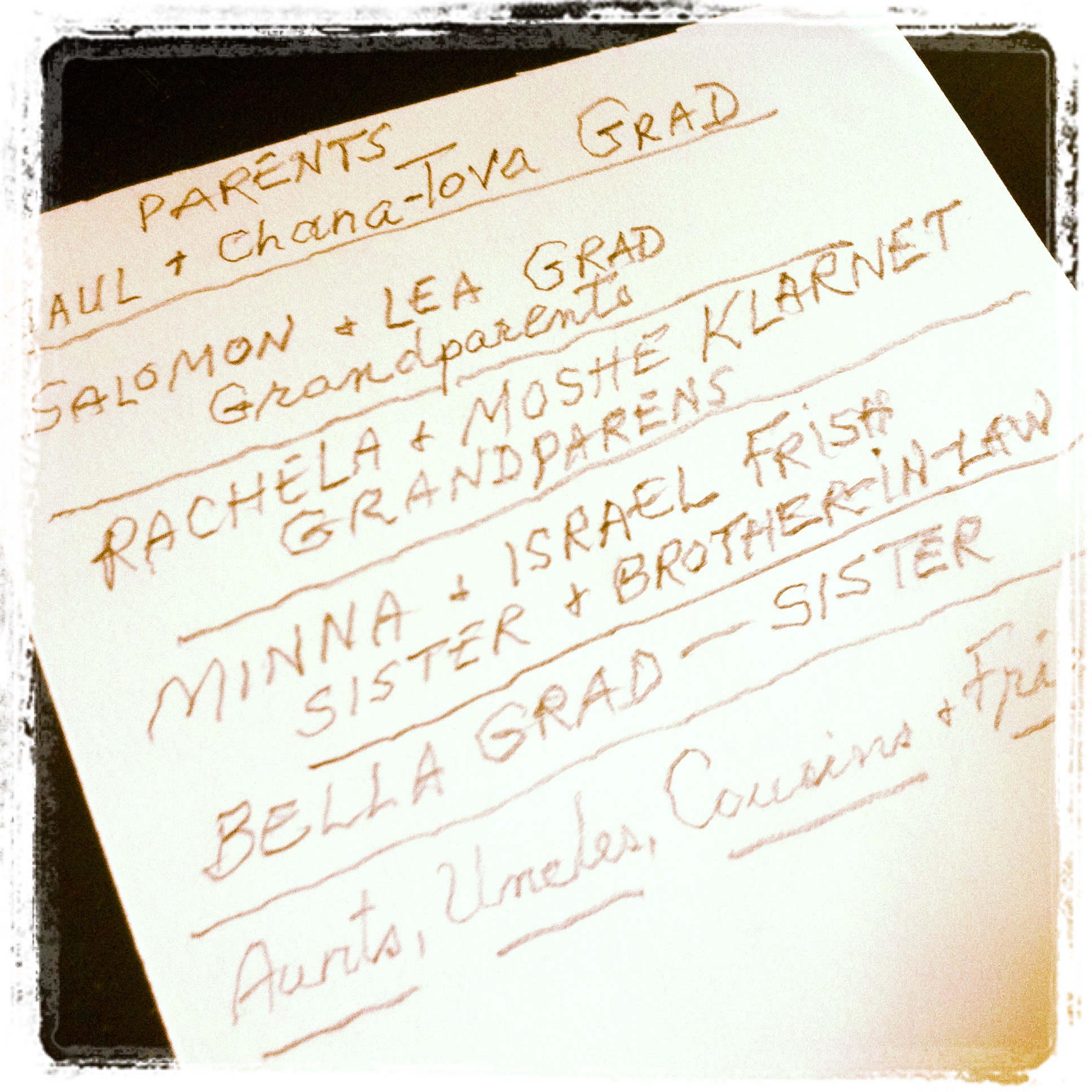
Two weeks ago on Yom Kippur I returned to the assisted living facility at which I led first and second day Rosh Hashanah services. Before the service, a resident came up to me and handed me a piece of paper (right) with names. She asked me to read them during the service. “I’m the only one who survived,” she said. The list included her parents, both sets of grandparents, two sisters, and a brother-in-law. It ended with “aunts, uncles, cousins, and friends.”

I wish I had had the opportunity to talk with her more then, and I missed her after the service with so many people to greet. I don’t know what to do when faced with the enormity of such an revelation. I only heard a Holocaust survivor speak for the first time a few years ago. That history is not my family’s, and both sides of my husband’s family had long since departed Europe by the war.

A few days after I read these names, the Times published an article and photo essay about young Israelis who have voluntarily gotten the same number tattoos that were forced on their grandparents. Predictably, the trend has been met with mixed reactions, from reverence and pathos to shock and anger. As the articles notes, “[I]nstitutions and individuals are grappling with how best to remember the Holocaust — so integral to Israel’s founding and identity — after those who lived it are gone.” I’m not sure what to think about this way of remembering, except that it is, like the woman’s request, an attempt to make the transition from lived to historical memory. Will her descendants keep this list?

return

empty road sign; photo by salem pearce (via instagram)

I opened the front passenger-side door and sat down, glancing at the three other people waiting for me in the car as I shut the door. He smiled at me: “You miss home. Not just your family. You must if you’re taking pictures of a sign by the side of an empty road.”

I felt the tears begin to form. “I do miss home. Sometimes so much I can’t allow myself to think about it.”

I’ve never been to this particular place before, but I instinctively feel it as familiar.

I’m at a rest stop in Ellinger, Texas, on Highway 71 between Austin and Houston. I stand at the edge of the small parking lot, on a curb that gives way to a shallow ditch that runs alongside that empty road that passes by green fields and that seems to end at the horizon a couple hundred feet away. Even in mid-September, the heat rises from the road in shimmery waves, the exhaust from cars on the highway and in the parking lot adding to the 90-degree air temperature.

The empty road dead ends into the highway, and across the intersection the arrows of two black-and-white signs, both with “71” inside an outline of the shape of Texas, point in opposite directions: north and south. A few abandoned tin-walled structures sit behind the wooden fence that separates highway from field.

Back on my side of the highway, three signs give the distances to the local Baptist, Lutheran, and Catholic churches, down the empty road that must become fuller past the horizon. Another sign advertises pecans for sale beyond the furthest church.

Peh-CANHS, I think. That’s how we say it here. Not PEE-cans, as they do elsewhere.

Walking across the empty road to take my photograph, I see an enormous white canvas that the church signs have obscured. “Romney-Ryan 2012” is backwards, since the logo faces the highway. I wonder whether it sits on public land at the same time that I know that few will care. This stretch of highway and this empty road is red.

Small white clouds only intermittently dot the expansive blue sky, which I always think seems bigger in Texas. Or was I just taught to think it so? Would I really recognize this landscape as Texas if the outline of the state were removed from the road sign?

I am a Texan, but I haven’t lived in Texas in 12 years. And there’s a chance that I might not again. When my nephew was born, the hospital gave his parents a discharge sheet congratulating them on “the birth of your new little Texan.” Will my children be so-called? What does it mean that he is a “Texan”? What does it mean that I am?

I love my family and Tex-Mex and Shiner Bock and Longhorn football and Astros baseball and bluebonnets and mesquite trees and the hill country and the car ride from Houston to Austin on a hot day.

I don’t love the death penalty and retrograde politics and homegrown presidential candidates and heat and humidity and traffic and suburban sprawl. I’ve become an East Coast urban Jew, like my husband, and so much of my former home has become an anathema to me. And perhaps I have become an anathema to it.

Molly Ivins said, “I dearly love the state of Texas, but I consider that a harmless perversion on my part, and discuss it only with consenting adults.” She knows the mixed feelings that come with loyalty to a state that is often easy to deride as buffoonish. How can I be homesick and horrified at the same time?

In his memoir of his life under the ayatollah’s fatwa, Salman Rushdie writes about his and others’ dilemma as Indian writers but expats in the United Kingdom:

Who were they, and to what and whom did they belong? Or was the idea of belonging itself a trap, a cage from which they had been lucky enough to escape? He had concluded that the questions needed to be rephrased. The questions he knew how to answer were not about place or roots, but about love. Who do you love? What can you leave behind, and what do you need to hold on to? Where does your heart feel full?

He is surprised when a writer still living in India explains that his writing, that of a native son, is “highly problematic” in the country.

I claim Texas, but would Texas claim me?

As I fly back to Boston, it doesn’t feel like home. I like it, and I may one day grow to love it, as I did D.C. I think that home is Texas, and I always leave a part of me there. It’s a part that wouldn’t know what to do in Boston.

Rushdie calls this migrant consciousness. I moved because I couldn’t do what I want to do there. So I’m here now, and I am grateful and blessed. But the move required the construct of a new identity. You can’t ever go home again.

My parents have lived in Texas for more than 40 years. My grandparents were born and went to school in Texas – and moved back in retirement; my aunt and uncle did the same. My cousin moved to Madison after college for graduate school and then work and moved back several years later. My brother never left.

Re-entry into my “real life” has been very hard this time around. Enrollment in rabbinical school has amplified the differences between who I was and who I am. Will I ever feel whole in either place?

riddle, wrapped in a mystery

Trigger warning: One of the books reviewed here contains a brief episode of sexual assault, which I allude to in my review.

I had originally planned to pair the first book in this post, Gabrielle Hamilton’s Blood, Bones & Butter: The Inadvertent Education of a Reluctant Chef, with another book that I read at about the same time, before I left D.C. in May. However, I just finished Deborah Feldman’s Unorthodox: My Scandalous Rejection of My Hasidic Roots, and I think it’s a better fit with the former.

Both are memoirs (my favorite genre) written by women who struggle in becoming who they are, Hamilton’s journey less purposeful than Feldman’s. Both women suffered by my curious googling after finishing their stories.

At the end of April, while in New York for a conference, I met my friend Megan (and another friend of hers) for dinner. They had chosen Prune, Hamilton’s small East Village eatery. Both had read her memoir. After the fantastic (although not so vegetarian- or kosher-friendly) food, I decided to check it out. I don’t eat most of the food that Hamilton loves or prepares or writes about, and my mouth still watered. She has a simple aesthetic as a cook: To use simple, real ingredients to make delicious food. Even a non-foodie like me knows how rare that is. I remember and still think about some of the dishes she describes, and I wonder if they are really as good as she says — and if I’ve wasted years being a vegetarian and then observing kashrut.

Two quick asides about the cover: First of all, I had no clue that the art was an upside-down chicken head. Seeing the digital image in this post now makes that mistake seem ridiculous (it took my husband to disabuse me of the notion that it was an odd kind of shellfish mentioned in one of her recipes), but I think it was hard to get the distance necessary to discern the image correctly at a book’s usual distance from one’s face. The second thing is the endorsement by Anthony Bourdain. He proclaims, “Magnificent. Simply the best memoir by a chef ever. Ever.” This never failed to make me giggle each time I resumed the book: How many chef memoirs are out there? (Yes, yes: probably more than I know.) But more to the point, Anthony Bourdain wrote his own memoir about his professional life as a chef. I am not running to check it out from the library, because it is clearly at most the second best memoir by a chef.

Hamilton came by her style — and her success — the hard way. The book takes the reader from her childhood in rural Pennsylvania, where her cooking education began in her mother’s kitchen, to her teenage years in New York as a coked-out waitress, to college and graduate school, and back to New York, where she worked terrible catering jobs until she started Prune. The story finally ends in Italy, the mecca of good food, where her husband’s family lives (more about that later).

Hamilton is a great writer. Her graduate work was in creative writing, and she tells wonderful stories. She also has the distance from most of the events of the book to be able to make them coherent and shape them into a larger narrative (perspective which Feldman lacks, but more on that below). What was missing from Hamilton was explanation and motivation, particularly for some of her more unorthodox (see what I did there?) choices. After a lot of turmoil in her childhood (her parents’ divorce, financial troubles), Hamilton struggles to make it to and to stay in college. And then she dispatches her four years there in mere sentences — and is then suddenly off to graduate school, with nary an explanation for her choice of post-undergraduate education. She is also by then in a relationship with a woman, who follows her to Michigan and returns with her to New York.

Her foray into restaurant ownership is just as, if not more, mysterious. As Hamilton tells it, a neighbor happens to drop by to ask if she wants to see some real estate he owns. Her catering jobs leading to no foreseeable career, Hamilton essentially decides to buy the space, once home to a failed restaurant, on the spot – but with no indication that she has ever before considered this step. Just as suddenly, the restaurant is not only up and running – again, without explanation of how she started the business, which by her own admission she knows nothing about – but hugely successful, with lines, stretching down the street, of customers waiting for Saturday and Sunday brunch.

And! Hamilton is by this time pregnant with her second child. The father of both is an Italian doctor whom she started seeing while still living with her girlfriend, each without knowledge of the other. The reader is again offered almost nothing to understand this choice. Please note: I generally believe that folks do not owe others explanations of their sexuality, but as this is a memoir, and the choice, unusual, a fuller exploration seems warranted, especially in light of her clear ambiguity about the relationship with her children’s father.

Hamilton never lives with him, though they co-parent. This decision, however, seems less by design and more by inertia – like the pregnancies. She falls for the doctor after he cooks her a delicious, authentic Italian meal from scratch; indeed, the attractions of his extended Italian family in Rome, his mother’s cooking, and their rural villa in Puglia seem more compelling than he himself.

Later in their relationship, he attempts to cook the wooing meal for her again but forgets a key step in the process, rendering the homemade pasta disappointingly edible. Hamilton feels similarly about his family as their charms began to wane, the Roman apartment becoming cramped and hot, the food becoming predictable and uninventive, and the villa becoming provincial and isolating. The book ends with the impending dissolution of her relationship.

Curious about so many unanswered questions, I googled Hamilton for more information. The (perhaps unsubstantiated) gossip indicates that her divorce was less about her growing disaffection for the Italian side of her chosen family than the fact that she was having an affair with her sister’s husband. A potential second affair – and I use that word carefully, since there is no evidence that the parties involved either time had open relationships – combined with the bafflement about her life’s trajectory – ultimately made the story end for me on a sour note. I don’t know know what to believe about her experience, and that seems odd in a memoir.

Since I started by judging Hamilton’s book by its cover, I begin by judging Feldman’s by its name. As my husband pointed out as soon as he saw me reading it: “I’m sure it’s a great read, but that title is terrible. Did the editors have a contest to see who could come up with the most clichéd name in the shortest amount of time?”

Unorthodox was featured in Lilith magazine along with several other books about women’s experiences with Orthodox Judaism. Feldman grew up a Satmar Hasid in the Williamsburg section of Brooklyn speaking only Yiddish; was given the minimal high school education – complete with the daily hour of “English” that allowed the religious school to maintain state accreditation – as befits a girl in that community; was married to a man chosen by her family at age 17; and became a mother at age 19. She left her husband a few years after her son was born.

Feldman’s telling makes it clear from the outset that she simply doesn’t belong in the world of her family of origin. She wants to read books in English – and sneaks into the public library to get them, hiding them in her room – and instinctively feels that the Hasidic approach to mental illness (from which bother her uncle and her father suffer) and to sexual assault (of which she is a victim), of not seeking professional help from the outside world, is troubling. She is fated to leave the community, as her mother did years before. She feels it instinctively and deeply, and from her position on the other side, that feeling certainly seems to have been validated.

The book begins with Feldman sitting down to a meal with her estranged mother, to whom she hasn’t spoken for years. Writing a book about her experience requires brutal honestly, she figures, and she wants to start with answers from her mother. But this beginning seems only to serve to burnish her credentials as a writer – she’s telling us she set out to be honest, so what follows must therefore be so! – because we’re aren’t actually privy to what her mother says. It’s only later in the story that we discover, along with Feldman when she watches the documentary Trembling Before G-d, about queer folks in Orthodox Jewish communities, that her mother is gay.

The memoir is a quick read, and I zoomed through it, especially when I realized that tales of her married sexual life were forthcoming. (Yes, I am that prurient.) That part of the story did not disappoint: Her marriage begins with a year of physically and emotionally painful attempts to actually have sex, a problem made worse by the fact that everyone in the small community knows about and weighs in on the saga as it occurs. Whatever the root cause of the difficulty, it is also exacerbated by the profound lack of sexual education in the community: Feldman recounts the story of her neighbor, whose husband’s haste, force, and ignorance on their wedding night caused her colon to rupture when they inadvertently had anal instead of vaginal intercourse. Feldman and her husband are similarly clueless. It’s lurid details like this, along with many others, about religious doctrine and anti-Israel rallies, about arranged marriages and purity laws, and that make this a fascinating glimpse into a notoriously insular community.

As the narrative winds down with her decision to leave her husband and Hasidism, she describes the difficulties that this will entail, particularly in gaining at least joint custody of her son. But, in a bizarre omission, nothing of her preparations or the legal battle are recounted. The book ends with her and her son in a new apartment, but we have no idea how they got there.

And so I googled Feldman. Unsurprisingly, the book has come under vitriolic attack by the Satmar Hasidim she describes. And unfortunately, at least some of their objections seem to be warranted: One of the more gruesome accounts in the book (which I do not need to recount here; it will be immediately obvious) was revealed after the book’s publication to be dubious as best. She also omitted the existence of a little sister, and the timeline of her mother’s abandonment has been called into question. Custody of her son was won only after she hid with him at various friends’ houses for several months and survived protracted legal action by her husband’s family.

Unlike Hamilton, Feldman ultimately comes across as young a naïve – she’s writing mere months after her departure, and she is scathing in her indictment of almost everyone in her family. As I finished the book, I wondered whether time would allow her to take a more charitable – or at least more balanced – view of their actions, and if she might end up regretting some of her words.

feminist teshuvah

I wrote this two weeks ago as a final assignment for the fall seminar for first-year students, which looked at the Torah and Haftarah portions – and critical analysis of both – for Rosh HaShanah and Yom Kippur. We were asked to reflect on something we found interesting or significant from the readings and to present that reflection to the class. I’ve edited it slightly to make it more accessible to readers not in that class.

Thus for me, teshuva between women and G-d implies not just G-d holding me responsible for the ways I have failed as a human being, but also me holding G-d responsible for failing me as a Jewish woman by giving me a world and a people and a text that continue to betray women, often making it difficult for us to uphold our side of the covenant.

I almost fell off of my bed after I read this passage from Tamara Cohen’s essay, “Returning to Sarah,” in Beginning Anew. To say that it resonated with me would be a vast understatement. I don’t think a piece of text has so perfectly spoken to me in 10 years, since I read Anita Diamant’s Choosing a Jewish Life – the main impetus for the Jewish journey that eventually led me here.

The passage gave me permission to be mad at G-d. The tradition I grew up in did not allow that, and my inchoate theology tends towards a G-d that is not directly responsible for the state of things. Our mischegas is our own.

A world and a people and a text that continue to betray women.

[B]etray women.

This is my experience, from growing up in a tradition of strict gender roles, to working at an all girls’ boarding school in North Carolina, to volunteering at the rape crisis center in D.C.

I am grateful to now be a part of a community whose commitment to egalitarianism seems to be firm, but I know this to be an aberration. (And I know that there will be failures on that front; we live in a world of male privilege, after all.)

My life thus far has been a daily, run-into-a-wall encounter between the way that I experience life and a privileged experience of life. And that’s my experience as an upper-middle-class, straight white woman – to say nothing of the experience of people of color, or queer folks.

I feel that betrayal acutely, in ways large and small.

I feel it when last summer’s debt crisis – which almost led to a default and did lead to a downgrade in U.S. credit by world debtors – ended only when the president agreed to a bill rider that prohibited the District of Columbia from directing its own tax revenues to subsidize abortions for District residents.

I feel it in the lack of basic labor protections – standard for most workers in this country – for domestic employees, the women that care for our children, houses, and elders.

I feel it when our secretary of state – our nation’s top diplomat – is asked which fashion designers she prefers.

I feel it when sports teams at my alma mater are referred to as “the Longhorns” . . . and “the Lady Longhorns.”

I feel it when I get mail, as I did yesterday, addressed to “Mr. & Mrs. Joseph Grossberg.”

Last Wednesday at hesbon hanefesh (“account of the soul”) a teacher asked us to reflect on the issue of anger, and he used a text from Rav Natan as a prompt: “Help me break my tendency towards anger. Help me practice patience in all aspects of my life and overcome my anger. I don’t want to be angry or respond harshly to anything . . . I just want to be able to serve you honestly and simply, and to have total trust in you.”

This is not my prayer to G-d. For me there is a distinction between the feeling of anger and acting angrily. I don’t want to do the latter. But I also don’t want to not be angry, when I generally feel that if you’re not angry about the world, you’re not paying attention. (Patience, on the other hand, that I pray for daily.) My anger, my outrage at injustice, is often what motivates me. It’s one of the reasons I’m here.

And if I’m being honest, I have to say that in the drama of the traditional Yom Kippur “scapegoat” sacrifice in the texts that we read, I feel less like the onlookers or even the high priest – and more like the goat. I feel the weighed down by the burden of our society’s sins against women. Like the goat, I am either abandoned in the wilderness – or thrown over a cliff.

So, how can I do the hard work of teshuva (“repentence”) when a great deal of my reflection has left me angry at G-d? Trust after betrayal is incredibly hard, especially when the betrayal “continue[s],” as Cohen notes.

Cohen’s answer is, at least in part, is for us to complete the stories about and to strain to hear the voices of the women of the Torah. We must write our own midrashim and live our own fully integrated lives. So, I’ll definitely try to get that done in the next 19 days.

Hebrew College founder Art Green, in his introduction to S.Y. Agnon’s seminal text on the High Holidays, Yamim Noraim, suggests another, or an additional, model: He notes that Yom Kippur commemorates the giving of the second of the Ten Commandment tablets. (Moses destroyed the first in his anger at the Israelites’ creation of the golden calf.) Green says, “This time the tablets were to be a joint divine-human project. Moses does the carving, G-d does the writing. Every Jew receives or fashions these second tablets on or around Yom Kippur. This is the season when each of us renegotiates our covenant with G-d.”

If I can frame it like that, I’m able see G-d as a partner in the beginning of my teshuva. But it’s also a good thing that I have next year, too.