praying with my feet

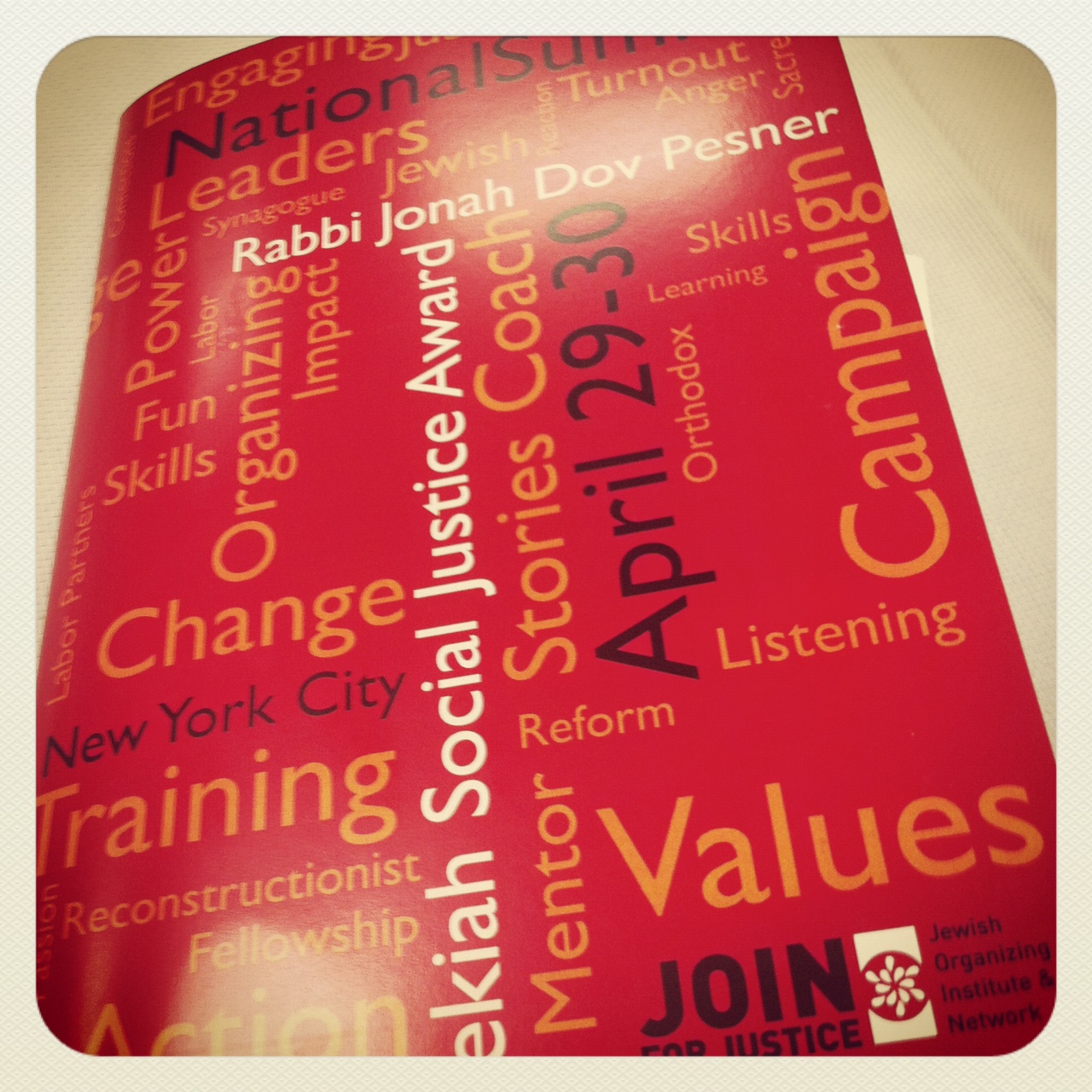
JOIN national summit program; photo by salem pearce (via instagram)

I spent last Sunday and Monday in New York, at the HUC-JIR campus, attending the Jewish Organizing Institute and Network for Justice (JOIN for Justice) first National Summit, the organization’s first. I heard about it through Jews United for Justice, one of my favorite D.C. organizations. As a rabbi, I want to do organizing, so it was a good opportunity to network with other Jews doing social justice work. Indeed, those two days I walked around thinking, “Yes. These are my people.”

Simply put, the conference was awesome, for little and big reasons. I am dork, so I really liked that everything ran on time and stuck to the schedule. (Not everyone showed up on time to sessions (myself included on one occasion!) but that’s a different kettle of fish.) Every session I attended had a written agenda of what was to be covered, and in good organizing fashion, the agenda was reviewed and affirmed before each session. What can I say? I like knowing that presenters know what they’re doing.

The conference also got me super excited about moving to Boston. Bostonophiles had told me what a great city it is for social justice, but seeing is believing. I heard about so much good work going on and/or based there (where JOIN itself is located!), through Moishe Kavod House, Jewish Association for Law & Social Action, Massachusetts Senior Action Council, Boston Workman’s Circle, Keshet, Jewish Community Relations Council of Greater Boston, and more. I’m thrilled about the potential opportunities I’m going to have in rabbinical school.

And I heard some downright inspiring speakers: In the opening assembly, Simon Greer of Nathan Cummings talked about the Jewish legacy and future of social justice: “At the March on Washington, Jews blended in; at Occupy Wall Street, Jews stood out.” Ai-jen Poo of the National Domestic Workers Alliance spoke about community/labor coalition building: “All progressive movements, worker-related or not, bank on the utilization of the labor movement. We have to lift it up.” Marshall Ganz of the Kennedy School highlighted the necessity of a moral aspect to social justice work: “One cannot long last as a light to the world and a darkness at home” (in reference to the occupation of Palestinian lands). Gordon Whitman of PICO emphasized the importance of religious Judaism: “We can’t have just a secular Jewish social justice movement.” Nancy Kaufman of the National Council of Jewish Women: “Social justice comes from Jewish values — but has universal goals.”

One of my favorite sessions was “Mindfulness and Organizing Work,” led by Rabbis David Adelson and Lisa Goldstein. I really identified with Rabbi Goldstein’s section on text study as a mindfulness practice. As she noted, looking at a piece of text is the default Jewish spiritual practice in organizing — but doing so often puts participants into an intellectual space that can be anxiety-producing and can lead to tearing others down. “How can I demonstrate that I know more about Judaism than others? What if I don’t understand what someone else says? How can I show my independence of thought by disagreeing with the author?” Instead, Rabbi Goldstein suggested looking at text from mindful perspective: “What it wise, beautiful, true, or helpful about this text? What does this text teach me about myself and about where I am in the world?”
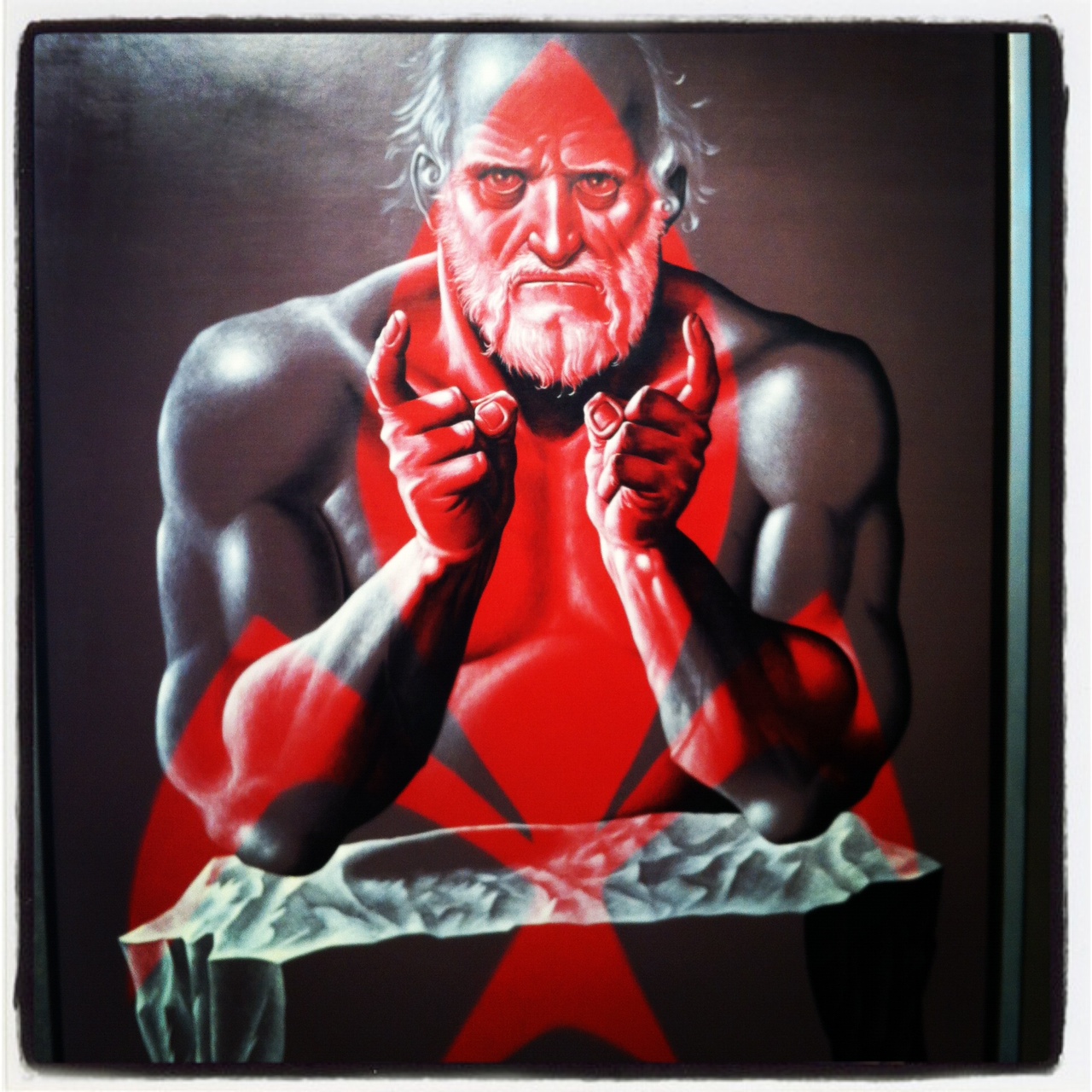
the prophet isaiah (i love the prophet art at huc!); photo by salem pearce (via instagram)

Personally (as opposed to professionally), my favorite part of the conference was seeing my old friend David Segal (now Rabbi David Segal). We hadn’t seen each other since high school, when I was his yearbook editor. We’d friended each other on Facebook within the past couple of years, so we had some idea of what the other was doing. But because of the time built into the schedule for relational meetings (thanks, JOIN!), we were able to make that deeper connection as adults and as organizers. I got to hear about his path to the rabbinate and to Aspen, and I got to tell him about my path to Judaism and to the rabbinate. When we parted, headed to different sessions, he told me a story that gave me chills.

A friend of his, also a convert and a rabbi, shared with him a midrash (or perhaps a midrash on a midrash?): Between creation and when the Israelites went out of Egypt, G-d is said to have visited and offered Torah to all of the nations of the earth, who ultimately rejected it; only the Israelite nation, at Mount Sinai, accepted it — becoming the “chosen” people. David’s friend noted that in each of the rejecting nations, though, a few people in the back of the crowd raised their hands and said, “Wait! I want it.” That is him, he said.

That is me, too.
decision

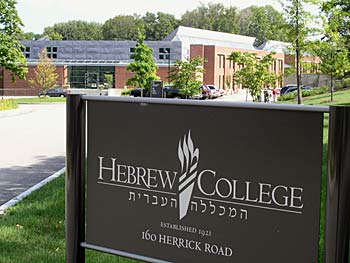
This is perhaps more than a little anti-climactic now, since it says so in more than one place on this blog, but . . . I’ve decided to go to Hebrew College, the transdenominational rabbinical school in Boston (or, more accurately, Newton Centre).

It was in some ways a very simple choice. When I visited the first time in November, there was a moment — that scared me, that I didn’t talk about with anyone at the time — when I just knew: This is right. This is where I want to be. I didn’t want to say it aloud because I knew I wasn’t going to make a decision based just on a feeling. I was also not ready to put that intention out into the universe.

Besides, one of the most important things I took away from my tour of rabbinical schools is how great all of them are. It was amazing to see how each institution is so seriously engaged in thinking about how best to train rabbis to serve the Jewish people. I loved meeting the deans of admissions, faculty, and students at each school: They are all amazing people. I honestly believe I would have been happy at any of the four I applied to. In addition to other factors, it came down to which I thought would be the best fit. (More about that below.)

The decision was also simple in another, more surprising, way. In mid-March, after I’d received my acceptances, I narrowed the choice down to two schools in two cities: Hebrew College, and Reconstructionist Rabbinical School (RRC) in Philadelphia. I’d gotten the idea that my husband was leaning more towards the latter, and since I really wanted the decision to be transparent and mutually agreed upon and beneficial, I began to prepare for a lengthy conversation. I taped a piece of butcher paper on the door into the living room; it was divided into two sections, one for each city. We began to write down the pros and cons of each city and school. (Some of the more amusing cons were “Pats fans” and then “Eagles and Phillies fans.” In retrospect, we clearly should have added “Bruins fans” to that list.)

Shortly afterwards, I was looking at the paper and my husband came up to me and said, “Do we need to do this? I want to go to Boston.” And that was that.

On my conviction that Hebrew College is the best fit for me: During my interview, both Rabbi Art Green (a professor and one of the founders) and Rabbi Sharon Cohen Anisfeld (the dean) helped me to clarify my thinking on the issue. As Rabbi Green noted, the emphasis at RRC is on history, as reflected in its curriculum; Reconstructionism views Judaism as an evolving religious civilization, so each year is spent immersed in an historical period (biblical, rabbinic, medieval, modern and contemporary). Rabbi Green knows from what he speaks: He was the dean of RRC for six years.

At Hebrew College, the emphasis is on text, as reflected in its curriculum, in which each year is spent immersed in a book of Torah. Let’s face it: I was a Classics major for a reason. I spent my undergraduate years learning Latin and Greek — and then reading texts in the original. (There was a little culture and history thrown in, but not much.) And then I went on to learn German and Russian for the same reason. More than most things, I love reading and translating text. Grammar, syntax, vocabulary, sentence structure, nuances of meaning — they all thrill me. Simply put, I am a text dork.

yeminite beit midrash by geula twersky

But “best fit” also means something else to me. As I realized in my Hebrew College interview, RRC would have been, in some ways, the “safer” choice. The school, its students, and its alums are know for their political engagement (among other things). In that sense, I would fit right in. In contrast, Hebrew College, as a transdenominational school, doesn’t have the same political homogeneity. I anticipate that I will find it quite challenging at times to go to school with people who have different opinions than I do in this area. For one, I don’t have much experience; I tend to surround myself with like-minded people (as do most of us). Relatedly, I don’t have much patience with non-progressives/radicals.

The other aspect of a Hebrew College education that I expect to find challenging is its required beit midrash hours. Beit midrash literally means “house of study” and refers to the places of Torah study that the early rabbis used. In rabbinical schools, the beit midrash is a library that encourages talking, because studying there is done b’chevrutah (with a partner). Part of a transdenominational education is learning from others who may have different (in this case religious) viewpoints. But in general, the school values partnered learning, which means I’ll be required to spend several hours each week studying with someone else. As an introvert who prefers to work alone rather than in a group, I’ll thus have to work hard to make sure I am getting enough recharging time.

I’ve framed these last two factors in a negative way; indeed, it’s the challenge of them that appeals to me. I need to push myself out of my comfort zone. Doing so, I will be a better rabbinical student, and a thus a better rabbi.

Finally — and I can’t emphasize enough how awesome this was — my interview at Hebrew College ended with the room singing a niggun (wordless melody). What’s not to love?

a new spring

(probably not) cherry blossoms in scott circle; photo by salem pearce

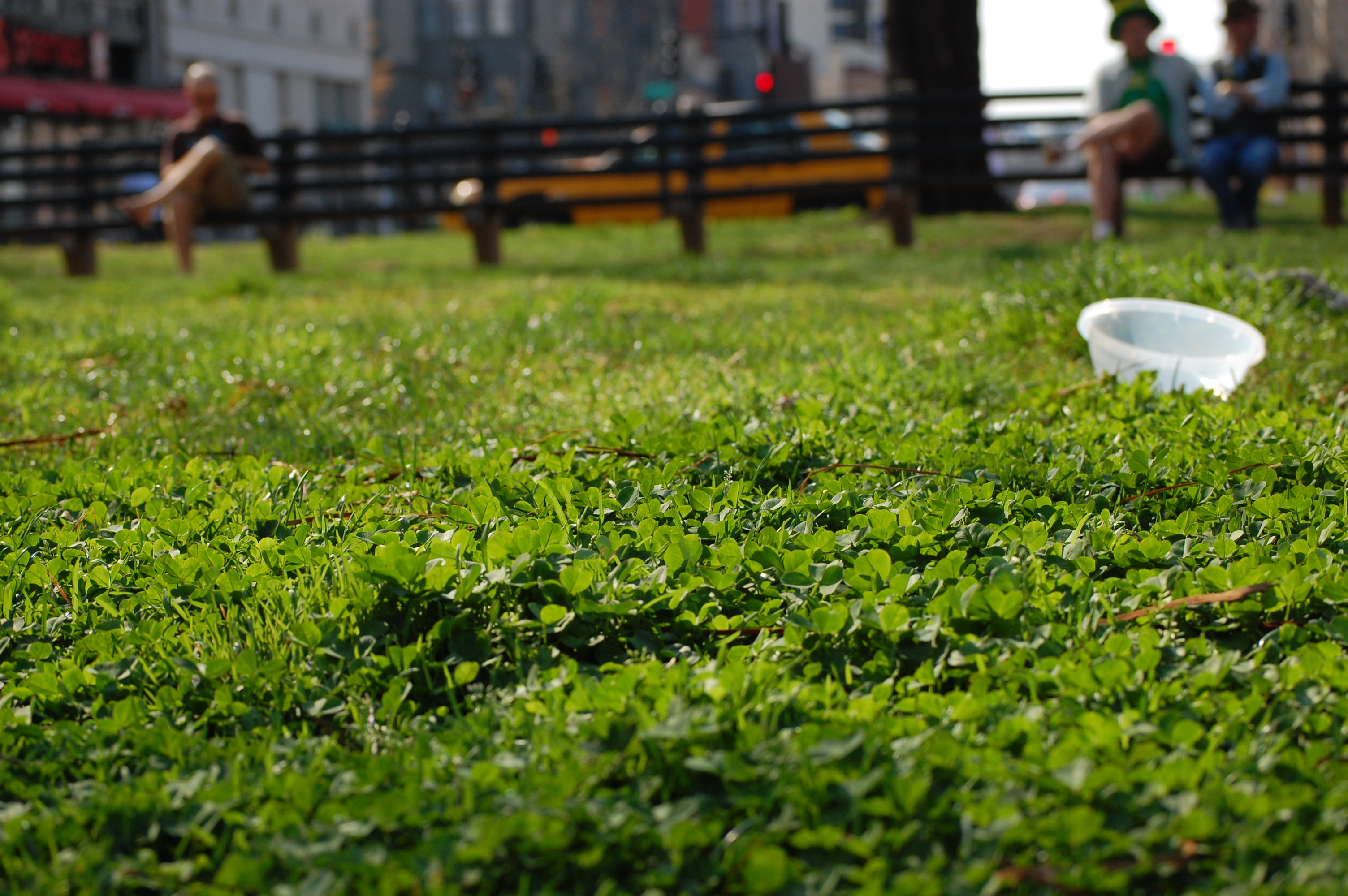
Yesterday, Saturday, was a gorgeous day here in the nation’s capital. It was sunny and 70 degrees, and Shabbat was made sweeter by the fact that I had found out the day before that I was accepted at the third rabbinical school to which I applied. After morning services, I sat in Dupont Circle with my husband and felt like I could relax for the first time in at least six months. I read (Patti Smith’s Just Kids) and took a few photographs (right and below).

Yesterday felt like a new beginning in another way, as well: I led part of the Shabbat morning service for the first time! Sixth & I hosted a Learner’s Minyan in the morning, led by Rabbi Shira Stutman. The rabbi who is teaching my adult b’nai mitzvah class, Lauren Holtzblatt, arranged for the class to lead the parts of the service that we’re planning to in June during the official ceremony. I’ve volunteered for the second half of the Torah service (putting the scroll away) and for the mourner’s kaddish.

st. patrick’s day green grass at dupont circle; photo by salem pearce

Unfortunately, the past month of travel hasn’t left me any time to practice, so I had to beg off of the Torah service part. I decided to go ahead with the mourner’s kaddish, which I realized while I was leading is actually a little unnerving. The only people who are standing and reciting most of the prayer with the leader are the few in mourning or observing a yahrzeit (although I did ask those whose custom it is to stand to do so). Even so, I could only hear myself in the large sanctuary that was hardly filled, and saying the mourner’s kaddish by (what feels like just) myself is quite different than saying the hatzi kaddish with the whole congregation, when it doesn’t matter if I stumble over a word or two. I’ve got some practicing to do.

Despite my nerves, though, I was able to say to the congregation yesterday that I was leading and saying the mourner’s kaddish for the family of Trayvon Martin. This clear abrogation of justice has troubled me all week: I am proud and privileged to be an American, but I sometimes loathe my country’s institutions.

But the long road is coming to an end: I’ve gotten into (in alphabetical order) Hebrew College (in Boston), HUC-JIR (in New York), and Reconstructionist Rabbinical College (in Philadelphia). I am tentatively leaning towards one school, and I am pretty sure it will be a choice between two of them. But I’m not ready to make that intention more explicit at this point.

I now move on to the decision-making part of the process, which I hope to wrap up in the next few weeks. Stay tuned!

tu bishvat

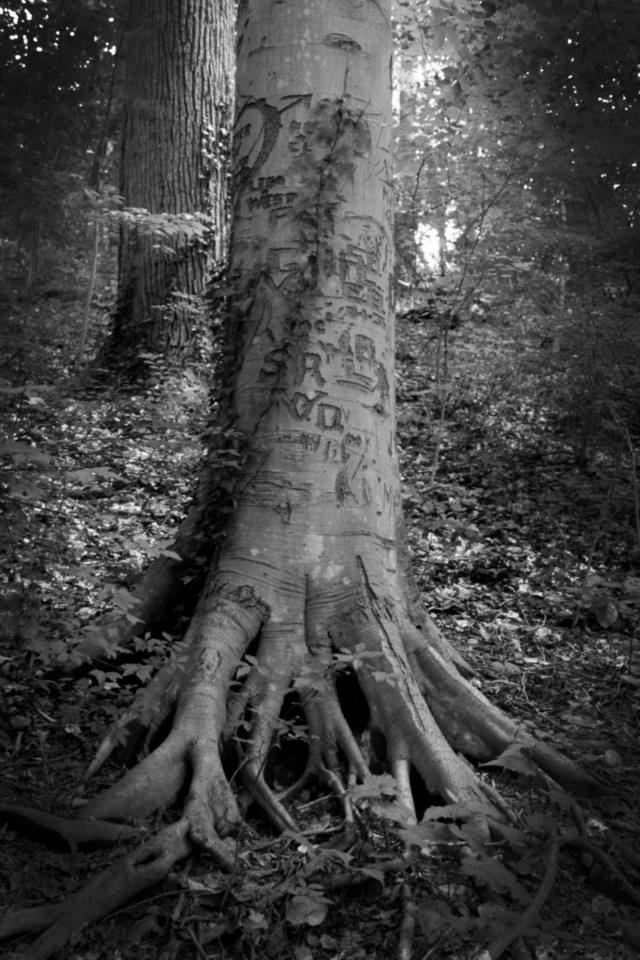
“a carved tree in rock creek park”; photo by rachel tepper (first prize in Washington DCJCC’s “Every Person is a Tree” 2012 Tu Bishvat photography contest)

Today is the Jewish holiday called Tu Bishvat, literally the 15th of the month Shevat. It’s the new year for trees. (There are technically four “new years” in the Jewish calendar: The new year for kings, Rosh Hashanah; the calendar new year, Nisan (the first month); and the new year for tithing animals (the least well known one), Elul.) Originally a date to help farmers obey a Torah prohibition not to eat of a tree’s fruit until its fifth year, it’s come to be a minor festival. Today in Israel Tu Bishvat is celebrated with tree planting ceremonies, while in the Diaspora some give money to plant trees in Israel. There are also Tu Bishvat seders, as well as various ecological or environmental programs.

This is not a holiday that I’ve given much thought to in the past, but when I started this blog I committed myself to reading, reflecting, and writing about the Jewish holidays each year. Consulting several sources, I have learned more than I knew. I’ve attended at least one Tu Bishvat seder in the past, and we talked about the holiday last night at my b’nai mitzvah class, saying blessings over almonds, raisins, and olives). When I got home, I made almond mandelbrot.

But if I am being honest, I don’t feel much connection to this holiday right now. Lots of rabbis and other Jewish educators have said beautiful things this year and in the past about the meaning of Tu Bishvat and the Jewish people’s connection to trees, but I am just not there. I haven’t read or heard anything so far this year that has spoken to me. It’s probably best to just acknowledge that and see what happens next year, when, G-d willing, I’ll be in my first year of rabbinical school. How will things have changed by then?

Until then, I’ll join the ranks of at least two Tu Bishvat curmudgeons. In 2009 I began a weekly adult education class via the Florence Melton Adult Mini-School, offered by the local Partnership for Jewish Life and Learning. Over a year we covered both the “Rhythms of Jewish Living” and the “Purposes of Jewish Living” curricula; the former concerned the Jewish lifecycle. In late winter, one of the class instructors, the Hillel rabbi at an area university, shared his theory about Tu Bishvat. He felt that the rise in prominence of Tu Bishvat among Jewish holidays in modern observance was the Hebrew school cycle. Holiday-wise, there’s not much between Chanukah and Purim, so Tu Bishvat becomes more important just because of when it occurs in the Jewish calendar: Tu Bishvat as a glorified Jewish Earth Day. He was adamant about his interpretation of recent history — a point generally lost on us — and rather upset by it. Maybe I’ll be, too, after six years of rabbinical school? However, I don’t think that I’ll ever be as upset as my friend Ben over the spelling of this holiday. But I do appreciate his grammatical fervor.

To end on a high note, I do love this story about Theodore Herzl when he planted a tree near Jerusalem. It seems to prove his famous dictum: “If you will it, it is no dream.”

torah portion

parshat naso; art by siona benjamin

Since October, I’ve been taking an weekly young adult b’nai mitzvah class at Sixth & I, where I got married.

Isn’t that how the life cycle goes? Marriage, bat mitzvah two years later, followed shortly by rabbinical school? No?

My participation in the class is a little strange, since I am in a more than slightly different place than most of my classmates. (As far as I know, no one else is applying to rabbinical school.) And the experience of my classmates is pretty varied: Some are products of mixed marriages, so didn’t grow up Jewish, but are now connecting with their Judaism; others had a bar or bat mitzvah as a kid but didn’t feel like they got much out of it and want to learn more now. And still others grew up nominally Jewish and just didn’t have b’nai mitzvah. There is at least one other convert.

I’m in the class to learn the order of services, the prayers, and trope, and to have the experience of leading services and chanting Torah. To be sure, I’m getting that, even if the class occasionally veers a little too much into the “Introduction to Judaism” realm. Plus, I love the instructor, the beyond awesome Rabbi Lauren Holtzblatt of Adas Israel.

The ceremony will be this summer at Sixth & I, and our parshah is Naso, from the book of Numbers (the longest of the weekly Torah portions). The parshah addresses priestly duties, purifying the camp, the wife accused of unfaithfulness (sotah), the nazirite, the priestly blessing, and consecrating the Tabernacle. The four or so lines that I will be chanting (Numbers 4:28-5:2) are the end of census instructions and the beginning of those for camp cleaning.

We talked about the full parshah last week and began to work on our d’vrei Torah. Most of our discussion in class focused on the ritual of the sotah, because it’s just wacky. There’s really no other word for it, at least at first glance. It’s like a scene from Monty Python and the Holy Grail. We began discussing it more seriously than an initial reading would suggest it merits, but I don’t know that I’ve gained much insight into the passage yet.

And so, I leave you with this: “What also floats in water?” “Bread! Apples! Very small rocks!”

crying to the walls

Note: I updated this post on 12/21/11 with a photo that better illustrates it.

On Thursday night I went with my friend Noah to see singer-songwriter David Broza at Sixth & I Synagogue. It was an awesome night, not least because, since the concert was sponsored by the America-Israel Cultural Foundation and the Israeli Embassy, it was free! Noah first introduced me to Broza years ago, with the song “Crying to the Walls.”

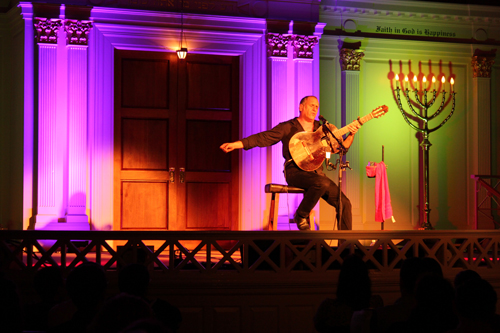
As with most concerts at Sixth & I, Broza played in the sanctuary, on the bimah. Noah and I were in the balcony, looking down on the “stage.” I followed the lights that were coloring the wall behind Broza to the ark. Two nights ago, I had stood in front of the ark with the members of my adult b’nai mitzvah class while the rabbi explained the significance of its architecture.

david broza at sixth & i; photo courtesy of embassy of israel

And then I had a moment that made sound fade away and time slow down: I realized I was looking at a scene that perfectly expressed the confluence of the past, present, and future of Judaism. Thinking back, it seems so simple; I feel like this should have occurred to me before, at previous events. But of course, I’ve been thinking a lot about this topic recently.

The ark at Sixth & I holds four sefer Torahs, each of which had been hand-lettered by a scribe’s quill on pieces of animal skin that were stitched together into scrolls — as they have been created for generations. The features of the ark itself — the parokhet (curtain), ner tamid (eternal flame), menorot (candelabras), and ten commandments’ tablet — all have their roots in the first temple.

An Israeli, Broza himself presumably led to the search of attendees before the concert — byzantine security measures that have come to characterize any event in the United States having to do with the modern state of Israel. And he sang that night to a crowd of diaspora American Jews in Hebrew before the Israeli ambassador addressed the crowd.

Sixth & I is an unique space: a synagogue, turned church, almost turned nightclub, turned non-membership, non-traditional, non-denominational synagogue. It’s where young Jews connect to their Judaism in often non-religious ways. (I saw Ani diFranco in the same place six weeks earlier.) Attendance at its events continues to increase even while synagogue membership is down.

The ancient, the contemporary, and the world to come, all swirled together in a mix of rainbow lights and guitar strums and stained glass. I looked at the salmon-colored walls of the building and thought, “Remember this.”

Crying to the Walls